SMILE AND NOD!

One of the first things a person does before addressing a group is to find out about the audience.  For example, what is their educational background, what do they know about the topic, are these experts in the field, etc.?  We must also determine what it is that we are hoping to achieve. When we are called into a meeting/one on one/face to face, etc., we do the same.  We want to know who the person is, and we tend to do a little digging to learn. Usually what we find out determines our approach, generally.  Either that, or we have already had some access to the audience, or we are learning as we go along, so we proceed accordingly.  It is like when you have an interview, you “fix” yourself and perform in your role as interviewee in a manner that you “believe” is required of you within context.   Whether you are writing or speaking, it is important to understand your audience so you are able to adjust your “language” and tone, so that communication occurs. 

The definition of communication that I find the most useful is “Communication is the transference of meaning between intelligences” (the source evades me now).  In other words, if a person does not get the meaning you intended, then communication has not occurred.  Fundamentally, the main ingredient in the process is for both sender and receiver to “speak” the same “language”.  Unfortunately, communication is not as simple as it appears, because we do not always have access to what is required in an interaction to communicate effectively.  Plus, people do not only respond to words in the communication process; we also respond to body language, perceptions, misconceptions, personal biases, etc.; some of which are brought into the communication process without our knowledge and/or our ability to understand, which will obviously interfere with meaning transference.

Recently, I was reminded of this when I was asked a question (that I deduced needed a genuine response).  Within the context of the question and who I perceived the “audience” to be, I responded in a manner that I believed would have been the most appropriate.  As soon as the response fell from my lips and I observed the body language of the message recipient, I realized that my response was not suited for this specific audience, despite it being “clear, coherent, courteous, concise, complete, concrete and correct[1].”  From my perspective, the issue was not so much that the 7Cs of communication were present, it was that I did not properly read the “audience” to understand that within that particular context I needed to have simply smiled and nodded and that would have yielded better feedback – one that would have facilitated a better interaction, going forward.  Even though, in this case, SOME meaning was transferred within the context of the words that were uttered, they were not taken in the spirit I had intended.  Evidently, it would have been prudent for my response to have been received the way I intended, but I would not have known prior that:

  1.  A particular question would have been asked.
  2. The person would not have taken kindly to my response (albeit honest and clear, etc.).
  3. The person asking the question had certain biases that would have been triggered by my response.

After that interaction, I found myself ruminating on the communication process and how challenging it is to transfer meaning when we do not have access to those things within our audience that may trigger their negative response to our message, or block their complete understanding, thereby thwarting the meaning.  For example, they may have heard and understood the words, but they may have also perceived the message as an insult because of their own personal experiences with something else that has nothing to do with us.  Truthfully, it may very well have something to do with our positionality that we do not realize, because we do not have access to the recipient’s private thoughts.  In my case, the communication process was incomplete, because my intention was to not only communicate the words, but to also communicate the intention/spirit/posture behind the words.  Evidently, this was not achieved. 

I operate on the premise that there is always a lesson in everything, regardless of the outcome.  Therefore, having introspected and deconstructed that thwarted communication process, I was reminded of the significance of smiling and nodding.  Admittedly, this feels like a cop-out, but for those of us who operate with honesty, there are times when it is best to simply “smile and nod.”  It doesn’t mean that you are lying; it means that you are not sure of your audience and the best bet is to be safe in your response.  The truth is, a person could also misread your “smile and nod” and be offended by it, but at least there would be no words to “use against you” in the future.

As restricting as this is, sometimes life requires us to operate outside of the communication standards we have set for ourselves and simply go along to get along.  Maybe this is a part of emotional intelligence that many of us have not yet mastered (but that is for another blog).

The “Just smile and nod” tactic is generally useful when I want to avoid additional/unnecessary interaction, but I will now re-imagine its use when asked a question, and I am uncertain about how my honest response will be received by the audience.

So, I’mmo simply smile and nod to avoid the unintentional foot-in-mouth.


[1] https://www.invensislearning.com/blog/7-rules-of-effective-communication-with-examples/

A song and a head bop remind us….

With both ears plugged and the bass pumping, I am sitting behind my laptop doing some gender analysis while listening to some “Groove Theory” and bopping my head.  How do I manage to read a serious document, write and bop at the same time you may ask?  The answer is simple:  music and dance combined (because a head-bop is a dance too) is one of my happy places.  So is anything gender-related.  So, I am in my zone. 

I didn’t realize that I had a smile plastered across my face until the song was almost finished.  It was in this instance that I was prompted to write this piece, and I literally paused my work to do so.  It had me thinking how easily it is for us to forget the little things that make us smile – truly smile from the core of who we are.  You know the kinda smile that makes your soul feel light despite the crap that attempts to break you?  The troubles that present themselves in the form of human beings who try to break us are liars from the pit of hell designed to let us feel hopeless in a sea of hopefulness.   

When the events designed to break us present themselves, we have to dig deep into the recesses of who we are and whose we are and be reminded of that thing – that one thing  (that is easily accessible in the moment) – that makes us light up, like the people of a higher being we are – and sit, stand or dance in that space.  These little things are created for a reason.  They are little things designed to remind us… they are those things that are not hard to get, because they are there just waiting on us to access them when the evil of life attempts its trickery. 

As I advance the gender analysis, I have also moved on to Hindley Street Country Cover Band featuring Kat Jade (Aint Nobody cover) and my shoulders now accompany my head bop and smile, and I am as light as a feather (at least my mind is), because I am present in the things I TRULY love – music, dance, and writing…..

To the person who needs to hear this, take a moment and rediscover that thing that makes your soul smile….that thing that doesn’t require reliance on anyone else….that thing that regardless of who or what is around would still exist.

I have now transferred the computer stand to its standing position and have incorporated an actual dance into the routine, so you know my happy is at its next level.  To be honest, I am now on my third dance break.  The point is that we each have that thing that is within us that brings us some amount of peace.  Be reminded that it is yours to access and use whenever you so choose, because it is your thing!

Later peeps… I’m gone back to my gender business, two body rolls and the Earth, Wind and Fire that has just started to play…. (this song requires two fast claps and three feet stomps), so bye!

PS:  Put in your earphones, turn the music up, sing along/dance, smile, and drown out whatever manifestation of soul-disturbing oxygen-thief that may come your way…. (or whatever is your version of this).

…..Next on the line-up is “Return of the Mack”. 

A yah so nice!

The Respect Debate

“Do you respect me?” he asked. 

“Am I respectful to you”?  she asked respectfully?

“It is not about whether you are respectful or not.  I just know you do not respect me, and that’s the problem I have with you”, he pontificated.

She pondered her retort.  “Within this context, why should it matter if I respect you if I am operating respectfully?  How I feel is my business, and I should NOT be required to share that with you.  I am respectful, and that is all that should matter.”

_______________

Should it though?  Is that really all that should matter?  Should we care if we are actually respected if a person is respectful toward us?

Well, lemme chime in on this respect debate. 

I can’t tell how many times I have observed people arguing about whether or not someone respects them and the anger or strong emotion they expressed at the thought that they may not be.  In this respect debate, I find it curious how completely enthralled we become in whether or not we are respected by others (even those we do not respect) that we do not even stop to think:

  1. Why is it so important to us to be respected by all?
  2. Will everyone we encounter/interact with/know respect us?
  3. Should we care that everyone doesn’t respect us?
  4. Do we truly even want the respect of everyone?
  5. Is it a realistic expectation that everyone we meet will respect us?

There isn’t a shortage of respect quotes – some of which are instructive while others are simply words on paper that do not carry much weight.  I will, however, borrow two (sources unknown), which will serve as the backdrop for this piece, somewhat.

  1. “You cannot force someone to respect you, but you can refuse to be disrespected.”
  2. “respect is earned”

The Oxford Dictionary defines “Respect” as a feeling of deep admiration for someone or something elicited by their abilities, qualities, or achievements.”  Though conceptualized decades ago, Hoban (1977) asserts that respect is conceived as “an openness to others, esteem for others because of their human decency and degree of excellence of their performance[1]” (p.232).   Notably, both definitions provide insight into the premise on which the complexity of the respect debate lies, because I am getting from both that respect hinges on the respecter and not so much on he/she who wishes to be respected.  Essentially, only I alone can determine what value I place on what you deem your “qualities, abilities or achievements” to be.  When picked apart, the definitions speak for themselves.  One uses the phrase “elicited by…,” while the other highlights a link between another person’s action and the recipient’s  response to that action, i.e. “…esteem for others because….” Key word: “because”.   In my mind’s eyes, when you are respectful toward someone, this is more about the standards you have set for yourself – standards that may dictate that regardless of who a person is and how you feel about them, you will treat that person with the dignity that a human being deserves, no matter your true feelings toward that person.  The problem with this is that there IS going to be someone who believes that your respect-expression does not reconcile with their respect-expectation.  In any event, the way I see it, to respect is subjective and very personal and tied to a person’s value system and thereby a personal choice; whereas, being respectful is a performance that can be given to anyone regardless of their value system and perceived behaviours and is more a reflection of you than it is on the person you are being respectful toward.

Clearly, you can be respectFUL without respectING?

To further deconstruct this respect debate, it follows that I should attempt to respond to the five questions asked earlier:

Why is it so important to us to be respected by all?

To some, to be respected serves as a validator of self.  Others crave respect, because it provides a “regular acknowledgement” which adds to their identity and social status, thereby adding to a sense of belonging[2].   From my perspective, many of us are more focused on being liked by everyone that when total acceptance is not meted out, this is translated as disrespect.  Therefore, it is hard to function in that space of feeling disrespected if it isn’t so. 

Will everyone respect us?

My discussion, thus far, answers this, so I guess this is an obvious one.  ABSOLUTELY NOT. The truth is, we will never be respected by everyone nor should have that desire.  I know this is an extreme scenario (but not farfetched), but why would it be so crucial to anyone to be respected by a predator, a white-collar criminal or liar.

Should we care that everyone doesn’t respect us?

No, we shouldn’t.  Value systems are not created equal.  Plus, we do not have access to people’s private thoughts, so we shouldn’t be too caught up on the validation of man, but rather on how we treat a person, regardless and how we are treated.  It shouldn’t matter who it is; in fact, we should let the respect we have for ourselves guide how we respond to another person, ideally; but we do not live in an ideal world, evidently.  Further, the way we show AND give respect will differ.  Some people expect to be revered, while others expect to be catered to.  Fundamentally, the standard of respect that we get should be incumbent on basic human rights and decency.

Do we truly even want the respect of everyone? 

It doesn’t matter if our answer to this one is yes, because realistically, we will NEVER have the respect of everyone, nor will everyone be respectful toward us, even those who claim to respect us… and get this, we don’t even respect everyone we meet – so there’s that.  

Is it a realistic expectation that everyone you meet will respect you?

The hope is that the people we meet and interact with for a short or extended period will be civil and not infringe on our personal space and rights – that they will be respectful.  Despite this hope, we should understand that the expectation that everyone will respect us or show us respect is an unrealistic one, regardless of our achievement, performance or abilities.   With this basic understanding, I believe that the respect debate won’t cause so many of us to get our panties in a bunch or cause us to have sleepless nights worrying about who respects us and who doesn’t.

So what then?

Ultimately, the question that begs to be asked is, should we be concerned about how a person truly feels about us or should we be more concerned about how we are treated and how we treat others?

Ponder on this, or don’t….

At the end of the day, let us simply endeavour to be respectFUL, because half of the time how we feel about someone (or how they feel about us) is just that – a feeling and not a fact!  Bottom line, being respectful doesn’t require for you to actually have respect…; it requires for you to show it – to perform basic human decency toward another.  Essentially, the performance of respect is not a guarantee of what is… furthermore, we do not have access to people’s private thoughts, even those with whom we are very “close”, so we will never truly know.


[1] Hoban, C. (1977). Educational technology and human values. Educational Technology Research and Development, 25(3), 221–242.

[2] http://changingminds.org/explanations/needs/respect.htm

TRUTH COMMUNITY

I happened upon a clip of Gabrielle Union talking about how as women or as people as a whole, we go through things – usually that which is “difficult” – and then we look for community to help us through. For example, she highlighted the following questions:

  • Am I a bad mother? 
  • Is this just happening to me?
  • Do you understand?
  • Can you relate? 
  • Do you know what I mean? 

She states that people, most times than not, may say “no…. I can’t identify.” But guess what?  She is right, and I couldn’t agree with her more!  While that particular conversation was more geared toward her surrogacy and relationship experience, I took from it the general feeling that many often undergo with certain experiences that leave them feeling alone – like it’s only happening to them – regardless of the situation.   

Interestingly sad.

As I listened to her in this 2 minute compilation of her book tour/promotion, I related.  I related, because I, too, have been in (or observed) situations where there was an expectation that someone – especially those of your hue, sex or even intersectionality would stand up and speak on your behalf  – to relate on something that they too have gone through – and often they don’t.    One of the points that she highlighted was the notion of being “vague and closing the door on real truth” and how that prevents community-building and in turn fosters isolation

As I listened to her articulate her experiences, I gave her an air hug and a proverbial high five.  This is exactly what is missing from the way we communicate/write/share experiences, etc. as a people – as women AND men – we are not always truthful (but how can we when we are not honest), so other women (and men) who go through similar things feel alone.  Her postulation of “REAL TRUTH” as the core of who she is now (by her own admission, she wasn’t always like “this”), represents that which I promote.  At the start of this new year, 2021, I published in my blog 20 things that 2020 has taught me and one of the things I wrote was, “just because her boat looks like yours doesn’t mean that she will help you paddle upstream.”  This quote was subsequently published in my first poetry anthology, because of what the book was designed to do – chronicle truth.  I love truth, even in its “uncomfortability”.  If I am asked, I may tell.  I say “may”, because not everyone is prepared or even have the brain capacity to appreciate from whence you come – your positionality – your lived experience, so I choose, from time to time, with whom I share.  The way I see it, situational silence is okay too. 

By why is “truth” so important, one may ask.  So before I respond to that, let us get some understanding on what truth is.  For me, truth is the opposite of LIE.  Lie is not the truth. One is a real and one is a pretended account. Interpretation is also not the truth.  The truth is what it is and not what we hope for it to be.  But in all seriousness, let me tell you what the experts have defined “truth” to be.  Webster says truth is a “verified and undisputable fact”.    The Bible says that “Jesus is the truth.”  The philosopher’s overarching theme in explaining truth is that the truth has many perspectives and requires deconstruction of several variables and theories to get to it (at least that’s what I got from their very complex explanation).  Simply put, one smart philosopher states, “we can define truth as a statement about the way the world actually is.”   When perspectives are combined, we see the truth for what it is… 

So to get back to Gabrielle’s argument about community-building through truth, one could say that the truth is what has happened to us as individuals without us trying to make it into something that it is not.  Therefore, in order to build community and create a space where people do not feel like they are operating in isolation, we are required to state our own “undisputable fact”.  For example, the woman who has been abused and does not state her truth but instead presents a façade of what she wants others to see is not living in her truth, thereby making other women who are experiencing similar abuse feel like they are alone.  Or the man who cries when he is sad or who prefers to be alone may not share, because of how his truth may be perceived.  Or the people who are clinically depressed, who do not provide layman experiences of depression because it is easier to be silent.  The outcome of being vague on truth is as Gabrielle says; it fosters isolation – the outcome of which can be sinister.  When we do not see our plight being represented in discourse, people tend to feel alone and isolated thereby exacerbating that which causes despair and isolation.

This is why it is important for people to tell the UNCOMFORTABLE “truth” about life in written discourse and in conversations.  It is always important to state the what-is and not the what-we-want-it-to-be.  I do agree that the truth is not always “ugly”, so I am obviously not suggesting that those who have NEVER experienced turmoil or pain shouldn’t speak on their “never-ending” joy (touché).  Nor am I suggesting that the person whose truth is pain has never experienced happiness.  What I am saying is that truth is the-all-of-it – the good, the bad, and the ugly, so we should share it, so that others are able to understand that when their truth feels unbearable, they are not alone in this thing called life, because there is always a community of people who know EXACTLY what it is that you are going through, because they have experienced it too – infertility, broken marriages, HIV/AIDS, depression, rejection, loneliness, illnesses, parenting challenges, LGBTQ+ issues, GBV, workplaces woes, misogyny, male gaze, obesity, body dysmorphia, narcissistic abuse, poverty, cluelessness, introversion, etc.

It is as Michaela Coel said in her Emmy Acceptance speech on Sunday, September 19, 2021,  “write the tale that scares you – that makes you feel uncertain – that isn’t comfortable, I dare you….”  When we do this, we create a truth-community that heals.

ARE WE ONLY AS GOOD AS OUR LAST PERFORMANCE?

Approximately  3 years ago, in the days when we could speak unmasked, I was required to give an impromptu address to a group of around 100.  Now, this was nothing major.   In fact, it sounds more exquisite and important than it was.  It was literally just me responding to something I was asked within context.  Plus, the topic is something that I KNOW.  Upon getting up to respond, my heart started to palpitate, and I could literally hear it beat in my head… it felt like it would have jumped out of my chest. 

I responded, but I felt like was going to die! (may be a tad over-exaggerated, but you get the gist).

Now, I have operated in several capacities where I have been required to stand (or sit) before a group for an extended period and “present” on topics, etc.  so this should not have happened.  True!  But it does.  People experience situational malperformance, for one reason or another.  This, I know, is not a me-thing, but the knowing doesn’t make it any easier to navigate when it happens.  In fact, it happens to all different types of people in different situations more times that I can mention here.  I have witnessed it happen to others I know are more than capable, and have also been privy to the effect it has on the “performer’s” psyche.  Regardless, I cannot tell you how I felt in that moment when nothing that I wanted to say came out the “right” way.  In my head, I was a complete wreck and could have kicked myself for having blundered so badly on responding to a topic that my track record has already shown is second nature to me.

Those experts who have studied behavior argue that there are many reasons for someone with a good track record to perform poorly in familiar situations. I am literally chuckling about this, because I am sure someone is remembering those very familiar situations when they did not perform as well as they are capable of…. (take your mind out of that place).

So the questions that beg to be asked are, “are we only as good as our last performance?”  Does our track record mean anything.  Or are we required to prove ourselves every single time we are asked to respond to a scenario that needs for us to showcase our ability effortlessly and meticulously as we run the full leg of the race?

Some time after that mishap, I was a part of an interaction that made me question everything about myself, because my delivery was not what I had hoped it would have been.  In fact, my sub-par representation was hardly a true indicator of my track record.  In the end, no one cares about track record if you do not operate how you are expected to.  Because of this thought process, we tend to be very hard on ourselves when we “underperform/malperform”, etc.

As I ponder on this, it brings to mind a very decorated female Olympian, who would have already proven herself the unbeatable contender, having won several races. Even though in recent years she continued to be beaten by her counterpart, the track record of this female Olympian kept her in the minds of people as one of the best to have ever competed, and no one seemed to care that she was no longer “winning,” per their standard or hers.  There were track and field connoisseurs who expressed a number of variables to have been the reason for her loss but gave her an extended allowance because of who she had already proven herself to be.    Her blunders were forgiven, and she maintained her status despite the losses.  In fact, during an after-race she admitted that it was not her intention to have lost, since she didn’t enter the race without an expectation to win.  That is the case for most of us who enter into a competitive space.

Indeed, when we get up to perform, in whatever capacity a scenario requires us to, we do so with the intention to win – to achieve that which we would have set out to do.  Unfortunately, what happens is not always what we desire, even when our track record attempts to forecast the outcome.  On the day of the literal and proverbial race, we may, for whatever reason malperform causing our audience to cast judgement based on this particular performance only.  We won’t all be so lucky as the Olympian with the impeccable track record to be considered as good as her best performance – those races that she would have won prior to the ones she no longer wins.  The spectators would have already gotten to know her. 

In the race of life, we won’t all be so fortunate to perform in front of spectators who are privy to our track record, nor will they care.  The focus is on the race that is happening in the moment.  These spectators, who are our judge and jury, care about how we run the course of the race from start to finish – that is the premise on which we are being judged. To them, a person’s track record is inconsequential if the end result is not indicative of a winner.  While this is the case, it is important what we KNOW about who we are.  We won’t always have a great start nor will we always able to reach our top-end speed to emerge the “front-runner”.  The situational malperformance happens for a number of reasons unique to each “runner”.  What is important is how we treat with those bad starts and not-so-good finishes.  We tend to be so hard on ourselves when we lose that we do not give ourselves room for situational blunders.  Those who know their worth and capabilities tend to allow themselves to feel the disappointment that comes with the loss, but eventually rise to run again.

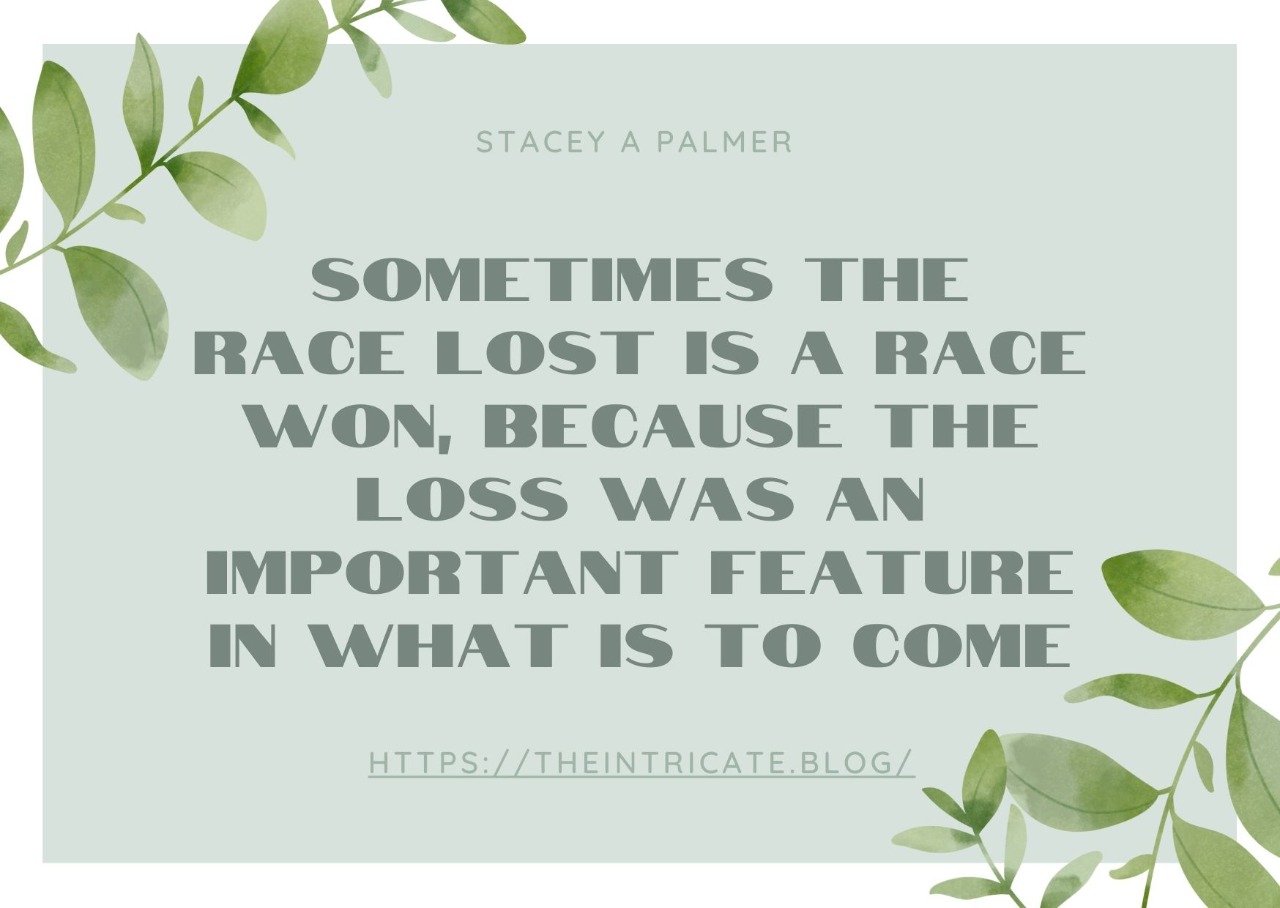
The truth is that we are not supposed to “win” every race – at least not in the way that winning typically occurs – nor will we.  Sometimes a race lost is a race won, because the loss was an important feature in what is to come.  We do not always see it that way, because life tends to promote a narrative that pushes the win mandate and one that appears the same all the time.  Also, in some cases the typical win is important, because it is needed to keep us alive….  Therefore, our response to the loss is as a result of our personal desires.  It doesn’t matter how we feel going into the race; the bottom line is that we do not always win.  Whatever the reason for not emerging the winner is not enough reason to accept that we are only as good as our last performance. 

PANDEMIC FATIGUE OR NAAH…. PLEASE STEP BACK!!

The sign reads clearly:  PLEASE REMAIN SIX FEET APART.  Additionally, the store has operated above and beyond to lay feet markers on the floor, in the event that we, the customers, have no concept of what 6 feet look like.  Good for us, right?! 

So, we are all standing in the queue waiting to be cashed; I am the last person in line (for now).  From my vantage point, everyone in the store is maintaining their distance and properly masked.  Everyone is also required to sanitize at the door before entering.  Evidently, the store has played its part to ensure that the customers oblige with the general protocols suggested by the CDC and put in place by our government. 

Fine – ‘cause NO ONE wants to get COVID, nor does anyone want to be guilty of passing it on – or so I thought (since many transmitters are Asymptomatic).

It is now my turn, and there is no one behind me, so I walk up to the cashier and lay my items on the counter.  This is a pharmacy/convenient store, so people come in for anything between a pin and an anchor.  The cashier rings me up, and as I was about to hand her my cash, a family of three comes and stands directly behind me – a pregnant woman, her toddler daughter and a man.   They couldn’t be any physically closer to me if they were my handbag.  In fact, the little girl, who appeared to be about 4 years old, was touching the hem of my garment.  I looked down at the child and looked up at the parents, square in the eyes then I step to the side, because in my mind, these two adults could never be serious; the child is being guided by them, so this is not on her, obviously.  As I step to the side, they move closer …. To ME and the counter.  My items are on the counter, and it is obvious – at least to me and to the cashier who is awaiting my payment.   The cashier looks at them in bewildered disbelief but says nothing.  By now, they are occupying the feet cut-outs that should have been occupied by me.

I stretch from afar and hand the cashier my money and move farther away from the family.  The cashier continues to observe and looks at me and then back at them.  She wants to hand me the change and my items, which have now been bagged, but I refuse to go back to the counter since they have now completely taken over the entire standing space and counter; plus, these people are not a part of my bubble, so why should I be forced to interact this closely with them.  I mean, I am all of 5ft 8 inches and not as slim as I used to be – certainly bigger than I was last year (COVID nyammings), so my presence is very evident.  

The pregnant lady (who is obviously the leader of the clan) sees that I am standing still and not moving to retrieve my bagged items (sitting on the counter) or my change (because silence and body language are just as effective communication, if read properly).  The cashier finally musters the courage to tell them to step back. 

Reluctantly, they do.  The woman, in her very advanced stage of pregnancy hisses her teeth and blurts out “None of us here have COVID” (referring to herself and her family).  She continued, “you people in ****** are riddled with Covid and no one has it where we live”.  She grabs the hand of her child and hubby (I am assuming he is, because of their interaction) and pulls them out of my way (protocol now observed) quite bothered that she is being required to distance herself from ME. 

The vocal side of my brain had a retort for her, while the other side of my brain – the introvert that does not like to speak unless I ABSOLUTELY must – stapled my mouth shut.  Needless to say, I said nothing! When they were appropriately distanced, I retrieved my items, said thank you to the cashier, whose disbelief was even more pronounced, and I walked out. 

The gall of this woman to be so bothered by the fact that she, being in an advanced state of pregnancy, would be required to maintain her distance from a total stranger during a raging pandemic is baffling, but sadly not surprising.  The fact that she wanted to put me in my place by asserting that she and her family and all the people in her community were COVID-free told me that she was not altogether here.  What made it worse is that she was, in fact, clueless about my COVID status.  How did she know that I wasn’t the one carrying the virus and was trying to be responsible by stepping away from her, in her very advanced stage of pregnancy, her toddler child and overweight partner?  All of whom, as a unit, by CDC/WHO standard are considered a “vulnerable group,” pun intended!

Instead, she received my action of moving away from them and the cashier’s instruction as an insult to them.  Never mind that we are all required to social distance.

Had it even been 2018, I wouldn’t have wanted you this close to me.  Lady gwaan yaah!

The bottom line is that people seem to be going crazy.  For example, one is not allowed to tell another to pull up their mask over their nose in a public space.  You are not allowed to tell them to maintain their distance.  There are those whom you must approach gingerly when you insist on them sanitizing their hands.  Bottom line, you are not allowed to COVID-protocols-instruct anyone without them wanting to put you in your place and in some cases incite violence.  I have heard some sinister stories.

Are people experiencing “COVID madness” or were people just always inherently undisciplined and lacking social responsibility.  We could argue this forever – the debate would be never-ending.  One person on their twitter post highlighted that the mental strain of COVID was actually worse than the virus itself.  If I allow myself to think about this, I am more inclined to agree on the premise that whatever the end result, the mental anguish for everyone, all covid things considered, is insurmountable (loss of job, death, social and physical distancing, self-imposed isolation (and the list goes on).

Whether we agree or not that human beings lack discipline, the experts postulate that the pandemic has, in fact, caused people’s mental health to be affected in one way or another (this, I have stated in several posts prior) – irritability being a direct consequence.   Instead of calling it “madness,” like I have, the World Health Organization (WHO) has informed that that this irritability is due to what is known as “Pandemic Fatigue,” which is the “demotivation to follow recommended protective behaviours, emerging gradually over time, and affected by several emotions, experiences and perceptions”.  They also declare that this is a natural response to a prolonged global health crisis, which often manifest in an unwillingness to follow guidelines and recommendations[1]

Well, there you have it!!! 

Additionally, a recent study conducted in the USA reported significant poor mental health outcomes as a direct result of the pandemic.  The study further shares that “during the pandemic, about 4 in 10 adults in the U.S. have reported symptoms of anxiety or depressive disorder, a share that has been largely consistent, up from one in ten adults who reported these symptoms from January to June 2019” (Panchal, et al 2021)[2].  The different studies of groups and experts agree that the outcomes are often shown in behavioural changes.

It seems the experts do agree (like the twitter user) that the mental strain is just as significant a challenge.

Clearly, I have no idea this family’s real reason for not wanting to social distance nor do I understand why a person would want to fight another for politely asking that masks are properly worn.  What is clear to me, from a layman’s perspective, is that things, times and people are not “normal” …. Everyone is feeling the pandemic fatigue on some level.

Even with what the experts are saying I am still wondering, are some people using this pandemic as an excuse to show who they really are at the core or are people’s response (or the lack thereof) to these protocols as a result of them being over it and genuinely frustrated?!

Whatever the level of pandemic fatigue that we each may be experiencing,  I encourage us all to…..TAKE A STEP BACK!!!


[1] https://apps.who.int/iris/bitstream/handle/10665/335820/WHO-EURO-2020-1160-40906-55390-eng.pdf

[2] https://www.kff.org/coronavirus-covid-19/issue-brief/the-implications-of-covid-19-for-mental-health-and-substance-use/

MY DISQUIETED STILLNESS

Each time I blog post, I am “led” to do so, one way or another.  As it stands now, there are about five pieces stored in my repertoire that I have written over the past three months and have not yet posted, for one reason or the other.   Simply put, I have been feeling quiet.

Needless to say, life has been happening and I have been simultaneously distracted, swamped and “still”.  With this, I have just not been led to post, despite my desire to maintain my blog momentum and honour the commitment that I have made to myself…   Admittedly, I revamped this space during what I could argue to be one of the roughest times in human history and one of the most challenging times of my life.  I did it though.  So the space continues to be significant, for me.

But life happens.  I am always in observe mode – that is a constant.  However, lately, I have just been soaking in what has been happening around me and observing everything more quietly than I typically do, and my prayers have been more frequent and internal.  As much as I have been forcing myself to finish a very relevant piece that I have been meaning to post, I simply could not.  My spirit has been both quiet and disquieted.

My assertion that everyone on this planet has something that they are grappling has not shifted in the least; in fact, my observances continue to validate this daily.  As for me, there are several matters that I am trying to navigate and resolve within myself and around me.  Accordingly, I have been spending less time talking and more time observing and processing and doing.  In the midst of it all, one can’t help but observe that the world is a very scary place at the moment.  There is a looming doom that has just permeated the air, and one can’t help but think about the deaths, the many threats to humanity and the ensuing impacts on our natural environment brought on by humanity, among other things.  Added to that, are the many debates and reports about the vaxxers vs anti-vaxxers, the mask-wearers vs the anti-mask wearers, the continued rise of Gender—based violence, the rise in gas prices, the lack of resources, hunger, loss of job, among other major worldwide challenges that are affecting us now. 

In my quest to try to understand and make sense of it all, I feel clueless about the why, when, where, how and what of it all.

  • What is the purpose of what is happening? 
  • When will it end?
  • Why are we responding the way we are?
  • How will we move forward to bring this thing to an end?
  • Where will humanity be days, months or years from now?

It is no wonder, that everything I have written, though important on some level, seem so inconsequential in the grand scheme of things.  The existential crisis is real.

I learned a long time ago that as important as it is to speak up and to respond to your environment is as important as it is to be still.  To listen – truly listen, which you can’t fully do when you are participating in the noise. The noise now is the pandemic and everything that is as a result of it. 

It was pure happenstance that I came across a twitter post from a user, who matter-of-factly stated that the pandemic was mentally and physically draining.  As obvious a statement this is, not many are quick to initiate a conversation about what these mental and physical problems are.  However, my click on the comment section revealed that different people from all walks of life shared the exact sentiment and went on to express the challenges they, too, were experiencing, despite their ability to still be able to provide for themselves or regardless of from whence they come (rich, poor or in between).   It was as if people were waiting on someone to admit it, so that they could vent.  What remained clear throughout the thread is that people’s level of coping were both varied and dwindling. 

All in all, what I do know is the obvious:  we do not know the what, where, how, when and why of tomorrow.  Because of this, cabin fever is real.  As much as some of us appear to be going stir crazy and existing in reckless abandon regardless of the mandates and protocols in place, there are those of us who are gung-ho about trying keep ourselves, etc. circumspect as well as trying to make sense of it all without even understanding why we should.

In spite of it all, I am reminded that when you feel clueless and your spirit is disquieted, the best thing to do is to sit and BE STILL in the space where you have the most to say and the most to do.  Hardly anything gets solved or resolved in the middle of confusion and madness; it helps to stop and process.  After all, nothing lasts forever.  Soon, all of this will be a thing of the past.

The Parent Actor: a necessary show.

The Parent Actor:  A necessary show.

Since she was able to properly formulate a sentence, the routine has always been that she would provide me with either a blow by blow of her day or a synopsis of the main happenings of her time away….  Not much has changed since she was a toddler, except that now the conversations have evolved to a more complex subject matter (pun intended) and my engagement requires more depth.

When they are toddlers, they rely on us to validate that which they report after their day at preschool, because the conversations are typically light and identifiable:  counting, The Three Little Bears, Paw Patrol, the letters of the alphabet etc.; those have nothing on us.  We are able to actively participate in the discussion.  For example, when my sister asked my 2 ½ year old niece about her day and she says things such as “Alexa didn’t listen today”, her mother knows exactly how to respond, and she steers the conversation in whatever way she believes is necessary to facilitate the parenting/growth process. 

But this stage doesn’t last, obviously.   These types of conversations progress as they go through the different stages, especially as it relates to their academic endeavours, and it doesn’t matter how many degrees you possess or how street smart you are; you are not always au fait. Fast forward to a 17 year old smart young lady, who is sitting her final exams.  As much as the routine continues, the ability to actively participate changes… completely.

I come in from work, and she joins me for our usual tête-à-tête.  During this exam period, my role is to listen and engage, which usually entails anything from an exclamation or two, a question about the invigilator, listening her relay the reaction of her peers about the exam,  her report on how she believed she performed and/or her taking me through the exam paper.   For the most part, I am able to confidently participate, because these are things with which I can identify except on the matter of exam paper deconstruction. 

Now, this is where it gets tricky.  Today is that day!   After the mundane and relatable are highlighted and discussed, her report advances – it takes a turn… for me.  

What the heck do I know about Physics?

3…..2…..1…. ACTION!

“So, how was it?” I asked.

“There were no surprises.  I was able to answer all questions.  There were only two questions that provided somewhat of a challenge, but I managed to fight my way through”.

“Well, that’s awesome.  I am happy to hear that”, I responded.

She continued to explain what happened in the exam room before they began the actual test and indicated the helpfulness and professionalism of the invigilator.  Overall a good report, I am thinking.

Then things take a turn….  I wouldn’t say for the worst… but it took a turn around a clueless corner… for me.

In her quest to provide her usual blow by blow, she started to explain the complexities of the Physics paper and why she thought a question was problematic….

“….the direction of the magnetic field … the field lines go from north pole to south pole….”  She then went into an extended explanation.

“oh.  Okay.  I see.  Yes,” was all I could muster.  I am doing everything you do to show you are fully engaged.  I am making eye contact.  My phone is face down… I am actively listening.

Her explanation continues. 

“…the atmospheric pressure is 100,000 pascals…..”

“oh wow…. Hmmmmmm…”  was all I could truly say as I looked at her speak about this physics paper of which I am clueless, to say the least.  The terminologies … the concepts… MOSTLY foreign to me.  By themselves, a few of the words, one could argue, were maybe semi-identifiable, but as concepts….? Just call me Clueless Cassandra. 

At some point, I also heard something about “alternating current” and that “there was only one resistance question”.

This continued for about 20 minutes, and she was unstoppable in her relay of her physics exam experience.  Truthfully, I enjoyed listening to her talk about her experiences…  

I am sure that there are those who could say that I could have asked her to expound… but that would be a firm NO for me….

Evidently, she is a smart cookie, so I know she is aware that her mom is simply allowing her to do that which she needs to do.  Clearly, all she needs from me is for me to be there and to “engage” in a manner that meets her parent-child need, within the current situation.  Her face said it all.  Plus, she already knows that the sciences were not my forte in high school and certainly would not have been anywhere near my university experiences.

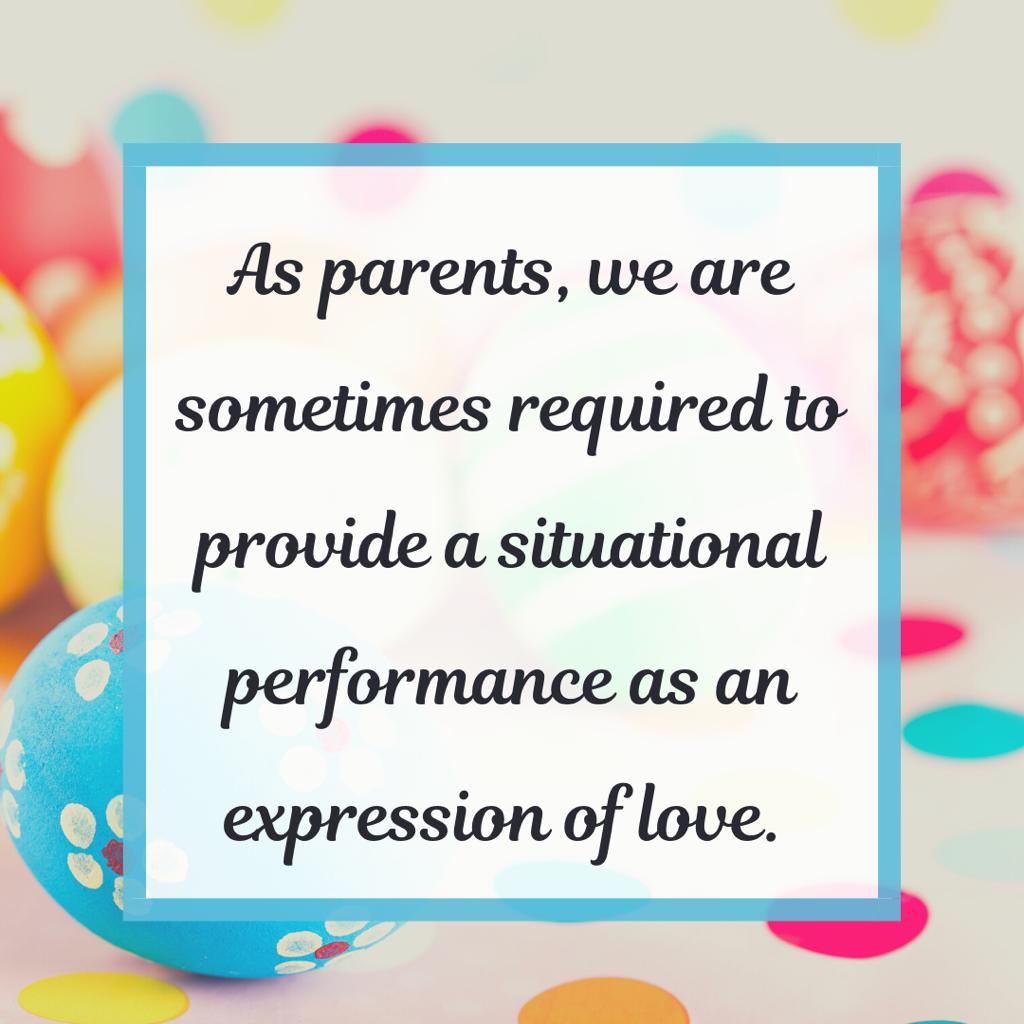
The point is that as parents, we are often called upon by our children to engage in events that are of zero interest to us.  But we have a responsibility, so we provide a situational performance as an expression of love.  When they are my niece’ age, they do not know that we do not know nor do they care that we do not know what we do not know.  They want to see mommy and/or daddy being there to support – in whatever way that support looks within context.  They want to know that we are LISTENING – that we are present.  Once we have introduced them to us being present (even when we have no real interest in the specific subject matter), it becomes an expectation and something of fundamental value in building them (in one way or another). 

After 17 years, I would have already engaged in many conversations about many things (not to mention attending a multiplicity of school-related events and performances – but that’s for another discussion); but as she gets older, the conversations become more intense and sometimes out of my realm of understanding.   These are not always within the degree of physics-cluelessness on my part.  Whatever the subject matter, our role is multifaceted and never-ending, because it doesn’t stop the older they get.  Sometimes we are required to perform our understanding and then seek the answers later from ALEXA (provided she is listening) or some other source.  Of course, in this case, I did not look up anything about the “direction of the magnetic field,” but I acted as interested as I could muster on topics of no interest to me.   In other words, I have zero interest in physics but interested in how her day went.  Evidently, she knows this and is appreciative of it, because she got what she needed from the exchange of my presence, which didn’t require my understanding of the topic (not this time around); she, instead, required my ear, my engagement and my positive reinforcement.  So while, I performed my responses, I was present and listened and supported.

Parenting requires situational role play – a little acting goes a long way, especially when you are interested in doing right by your children.  Parents/guardians, etc. should be reminded that they won’t always get everything right –  I didn’t and I don’t, but continue to play your part and make sure to perform at your best in the necessary parenting show.

Blessings!

Ashamed of Love!?!

My last two posts have inadvertently been about operating in love in one way or another, and today I feel compelled to extend the conversation, but from a slightly different perspective. Interestingly, “love” has also been the topic of discussion from several perspectives in at least six conversations with six different persons – all unrelated. Additionally, I have seen so many memes and quotes about encouraging people to stop loving those they have either broken up with or stopped being friends with.  Over the years, I have also encountered persons who have, in fact (or in pretend), openly expressed hate for ex-friends and/or ex-lovers, etc.  In this same vein, I recently happened upon the following quote on Instagram that had thousands of “likes”, and I thought, here we go again. 

“you don’t know pain until you have to force your heart to stop loving somebody”.

But why should this be the go-to alternative though?  To stop loving someone…. Sounds to me that maybe we should stop ASSOCIATING the LOVE we feel with what we THINK we should do….

As far as I know it, the opposite of love is hate.  When you force yourself to stop loving someone, does that mean that you are now teaching yourself to hate them or are you indifferent toward them….?  

And why should that be necessary anyway?

It appears that somewhere along the lines, many of us have blundered in learning and teaching how and when to let go and therefore confused about what to do once we have let go or have been let go.  Not only have we blundered, but we continue to perpetuate and romanticize the “hate narrative” to validate the end of a relationship. 

Silly human beings we are! 

Evidently, the end of “time spent” is not an automatic signal of/to hate – or at least it shouldn’t be.  As I stand by this assertion, it is not difficult to imagine that there are many of us in these streets performing something that that we may not necessarily feel.  Either that or we have not learned (directly or indirectly) the healthy way to operate when we still feel love for the person from whom we have permanently walked away or for those who have walked away from us.   As a matter of fact, to still love the person whom has wronged us or whom we have wronged without having an interest of re-engaging like “normal” is very freeing, light, and Christ-like; this, I know, is NOTHING to be ashamed of.  As I imagine it, hate is heavy!  While I have never hated anyone, I have been the recipient of hate – raw and undiluted – (or the performance of it), so I cannot imagine walking around with that level of negative intensity toward anyone. 

I don’t remember who said this (Iyanla or Oprah), but I am just gonna rest this right here, only because it seems fitting (so process it however you see fit – within context)….

…..“you can’t hate someone that strongly unless you have once loved them”

Relationships (friendships, marriages, etc.) are as important as they can be great when they are, but when the end comes things tend to become sour, and we have been taught that with that souring there should be an accompanying hate. We have also been taught that we should wait on hate/disdain to be present to walk away.  Nothing could be farther from the truth; thus, it is within this thought process that the unlearning has to occur.  Loving someone has nothing to do with staying, the same way we should not wait for hate to walk away. It makes no sense to pretend that you hate someone in order validate that you are done.  What good will that do?

Do not be ashamed of love. 

We need to seriously normalize the admission of love instead of propagating the hate narrative.  For more reasons than one (some more obvious than the next), it makes sense for those actors and/evils among us to unlearn that “hate narrative,” so that we are not forced to perform it when we leave or when we are left.  It is perfectly fine to walk away from that which is bad even when we feel love. This is applicable in every situation that requires it – work, friendship, lovers, etc.  It is way better to heal in love than to navigate and/or perform hate and then attempt to heal yourself in that negative space (naah go happen); I imagine this to be an unnecessary inconvenience and an exhausting uphill bother.

Ain’t nobody got time for dat!

Obviously, boundaries are necessary in every aspect of life.  Thus, I understand why some find it important to send a clear message once a situation has “ended,” i.e. to indicate “hate” as a demonstration of boundaries – even if it is only to maintain a façade.  One source points out that when people declare their dislike for others, it helps another to understand the boundaries between social circles.  The source further asserts that this is a powerful motivator for people to form bonds[1].  In other words, if I show my disdain for one, the other may believe my loyalty to them.  I get that (I expounded on this in a blog a while back).  But how exhausting. 

At the end of the day, we are all struggling with something in this very crazy epicenter.  Love shouldn’t be one of those struggles.  Love who you love, because love, as defined, is a beautiful thing and nothing to be ashamed of, even with the complexities we have been told that it comes with.  I end, however, by stating that it is not the love that is complex, it is what we have been taught to do with it and how to respond to it that makes it complex.  UNLEARN THAT!   Bottom line, be honest with yourself about love and who you love, but be the first to skedaddle if you must (IN LOVE).

Blessings!


[1] https://www.scienceofpeople.com/hate/

A LIVING CHANGE!

“Live your life in a way that suits you,

but don’t set out to hurt people.

Apologize when you are wrong,

And don’t hesitate to walk away

from that which doesn’t

serve your soul.”

Stacey A Palmer, 2021

On this journey called life, we either change or we remain the same.  Many have actually said that this current situation has highlighted much of societal ills as well as those ills that exist in us.   In other words, we can’t help but notice the world as a whole an ourselves as individuals.  Many of us would never openly admit our flaws, but we have to live with them.  On this pandemic journey, some of us have changed for the better, others of us have changed for the worst, then there are those of us whom have remained stagnant, usually by choice or by fear.  There are those who are literally out in these streets making other people’s lives a living hell, with very little regard for the repercussions.  Either way, the way we choose to respond to life – to our situations – especially as the world struggles to completely recover from this ensuing pandemonium, is really up to us, within our individual context.  Whatever the case, the way I see it is, we have a choice to live our lives on our terms, but we must understand and be prepared for what will follow, because good or bad, something WILL follow.   

A few days after my soup and patty customer service situation (last blog post), I had an interesting experience with someone (not a stranger this time) that was cause for pause.  ‘twas one of those situations that tested my internal evolution – that part of me that I have to live with and must answer to when no one is around – the part of me that stays in prayer and not connected to any mere mortal.  Within that “interesting experience”, I had two options:  I could have stung with my retort or I could have silently walked away in love.  I chose the latter.   Having experienced pain at its highest level and having learned how to use pain for purpose, it is the most difficult thing, today, for any human being to ruffle my feathers deeply.  I may feel the emotion of an “insult,” for example, because I am smart enough to know what a person is attempting, but it doesn’t stay with me – certainly not for an extended period.  I outgrew that when the lesson of “Pain’s Purpose[1]” became cemented into my psyche. 

The way I see it, every day presents itself as an opportunity to reflect and to correct.  In fact, I relish AND crave growth.   Change is hard, especially once a person has decided to become a better human being.  Once we have made this commitment to ourselves, we do not have a choice but to work toward changing those habits that we have been comfortable with for a long time, especially those that do not serve our souls or that which have been damaging (in one way or another) to ourselves and to others (this includes the the unkind things done to us).  This is where we MUST make the choice to be intentional about our growth.    

In so doing, we must be prepared to answer to ourselves in our quiet and sacred spaces, reserved only for those who belong there.  The more we interact and the wiser and more deliberate we become, is the more unapologetically resolute we are about those we WANT there.  That, to me, is the most freeing and enlightening thing ever!  When we discover what brings that internal peace – true peace that cannot come from anything else outside of us – we operate on our own terms by living a life that makes our soul smile. 

With that being said, one of the kindest and most valuable gifts we can give ourselves is learning to walk away in love.  By that I mean, when exiting stage left, we harbor no ill-will or hatred toward those who have wronged us, those who have offended us, and/or those who do not honor who we are or are becoming – those who do not mean us well.    When you get right down to it, there is truly no need for a repetitive and counter-productive back-and-forthing about that which you need.  You simply leave that space, for good, but with LOVE!  That is an awesome feeling of intentional self-care built on the foundation of LOVE.  As a “walk-awayer” and a textbook introvert, I learned a long time ago that not everyone is for us, and we are not for everyone.   I don’t think there is any human being who knows this more than me.  Truly!  As the Bible reported it, many people hated Jesus and openly showed Him that disdain.  Why, then, would I be so pompous to believe that everyone is going to like/love me, and why would I walk around being flustered by those who don’t?  Pointless!  Therefore, when we discover that people do not mean us well, for whatever reason, walk away – with LOVE!

To complement the ability to walk away (in love) is being able to apologize for that which we may have done to others, because none of us is always blameless.  The complex thing about an apology is that a person may not require it or may not even accept it (this is also applicable when the apology is being given to the “walk-awayer”. You may accept it and still decide to skedaddle with love).   What is important is what we feel internally in that sacred space – that place that gives us inner peace.   Once you know that you are operating from a genuine place, let it go and move on.  The truth of the matter is that the more we are going to blunder about so many things as we traverse life’s road, including those we entertain that we shouldn’t, because we ignored those red flag moments or for whatever other reasons we may have opted to entertain these people.  None of it is a mistake… all of it is a lesson.  Learn it!

As we continue to navigate this pandemic and struggle to return to “normalcy” (whatever that means to each of us), we have the choice to live our lives in a way that suits us without deliberately causing harm…

As for me, I will continue to live on my own terms and let that which pains me (on whatever level), propel my growth!


[1] Pain’s Purpose, from “The Chronicles of a Woman:  The Truth-Teller” by Stacey A Palmer available on www.amazon.com