Featured

“GO TO CHURCH.”

“You would never catch me in a church; church people are the wickedest set of people I have ever encountered.”

I can’t tell you the many times I have heard variations of this sentiment from people of all walks of life who are adamant about never again setting foot in a church or who have seriously resolved to never “giving in” to Christianity.  I am almost sure that, at some point, I too would have echoed this sentiment.  While one could argue, to some extent, the validity of the statement, I caution the acceptance of this resolve on the premise that people are people wherever you go (especially church), despite their desire to embody the Fruit of the Spirit and operate in a Christ-like manner.  I do agree that it is a different level of pain when a sister or brother in Christ treats us the way “the world” does.  I know someone reading this will say, “but church people are supposed to be different and not cause pain to others….”  To those people, and the ones who have sworn off church, I also say, the expectation of perfection among church people is a fallacy that has been fed to us, and which has done a remarkable job of interfering with the effectiveness of the true nature of discipleship (in the church) and what it is intended to achieve.  If we understood that the church consists of those struggling with “self”, which gets in the way of how we should be always operating, we would change our perspective and understand that the reason for going to/being a member of the church has nothing to do with having an unrealistic expectation of people.  

The church, according to the Bible, is the Body of Christ, meaning all believers united in Christ with Jesus as the head, which means that the universal church consists of everyone, everywhere, who has a personal relationship with Jesus Christ. Though the church is more than the building, the church is a place where those who believe in Christ and who have surrendered their lives to Christ, gather to worship and share/spread the gospel.  The church is also where people who believe in God and not yet surrendered and are seeking some semblance of leading and teaching go to find answers on how to survive the evils of this world, as well as how to be less evil than we are (because only God is good).  In a nutshell, the church is significant because people gather for a myriad of reasons, but ultimately to glorify God, despite the weakness of their humanness.

For some clarity, in the church you will find (group A):

  • Unlovingness
  • Unforgiveness
  • Betrayal
  • Kowtowing to sin to maintain numbers
  • Infidelity
  • Lust
  • cliques
  • Biblical fallacy
  • Prideful members
  • Intentional sinning
  • Compromised leaders/elders/members, etc.
  • Believers who have no interest in serving God (Remember, that Satan believes).

But it is more than the sin that its members come with every day.  In the church (meaning the building and the community), you will also find (group B):

  • Share groups
  • People who are killing their flesh daily
  • Testimonies of overcoming something…
  • Those who have been delivered from spiritual warfare.
  • A community of believers who are serious about their walk
  • People who are struggling with different vices
  • People who are experiencing spiritual warfare
  • People who are healing from different traumas
  • Pastors who care
  • Prayer warriors
  • Consistent corporate and individual praying and fasting
  • A loving community
  • Sound and consistent Bible study
  • Accountability
  • Repentance

I am inclined to tell you that often groups A and B are one and the same.  Today, “church people” (hereinafter referred to as “we”) are one way and the next day we falter then we repent and try to change.  God’s Word tells us that “no one is good, except God alone,” which highlights the sinful nature of man, despite surrendering to God.  Most believers who are honest about their walk will tell you that it is a daily struggle to kill our flesh (something that we are called to do EVERY DAY) and not give in to the desires of the world.  Those desires include, but are not limited to:

  • Listening/dancing to Secular music
  • Unforgiveness
  • Fornication
  • Porn addiction
  • Gossiping
  • Revenge
  • Disloyalty
  • Gluttony
  • Unaccountability
  • Lack of self-awareness

I can hear someone saying, “but we are supposed to be set apart,” according to Romans 12:2, which tells us to not conform to the pattern of this world but to be transformed by the renewing of our minds…  This is also the Truth.  I assert that it is our accepting of what God did for us on the cross, our daily surrender, our repentance, and our love, first for God, and then for each other that sets us apart and helps us with the renewing of our minds; it is not our perfection, because we are imperfect.  The church is a microcosm of the larger society, the sense that every category is present there.  In the same way you will find people of all sizes, description, profession, background, propensity to sin, capacity to understand (or the lack thereof), desire to study or change, is the same way you will find the same category of people in the church and who are struggling to do what is righteous, despite their many years of giving their lives to Christ.

I have learned the hard way that because a person has two decades of churchgoing, and having the memory to quote scriptures, does not make them mature in their walk. In fact, a person with two decades of being in the church can still struggle with pride, lack self-control and accountability, and still struggle with making Jesus Christ the centre of their life.  Obviously, this interferes with the type of Christian they are.  Some people are better at the performance of Christianity than changing the actual posture of their heart to be more like Him.  Invariably, you WILL have unpleasant experiences with members of the church.  In fact, expect it. I agree that the body of Christ is supposed to help us; it doesn’t always do that. Instead of helping us, they will sometimes chastise us, fight against us, isolate us, ignore us, gang up on us, and not pray for us or correctly guide us. This is because the “church still struggles with sin.” As one writer discussing the struggles of sin puts it, “Christians can run the race of life well only by laying aside any impediment that hinders one from putting forward his best effort.” Unfortunately, many are still dabbling in “the world”, so the best effort is not being achieved, which makes sanctification difficult. Then there are those who recognize their weakness and are “drawing near to God with a sincere heart.”

The next time you let your interaction with a “church person” prevent you from wanting to serve God or set foot in a church, remember that like you, every church person has a vice/idols (which many of us are too prideful to admit) and which requires intentional prayer and the daily killing of flesh and surrendering   to God.  It is important to note that “Christians will not walk out their holiness perfectly.”  Not at all.

In partial transparency, the events of 2025, specifically the last four months have been dramatic, to say the least.  In my estimation, it has been as such that could make the normal folk in my position easily decide to not have “church” friends or return to church. Admittedly, I am fighting this outcome.  I agree, however, with Pastor Paul LeBoutillier who said, “We can allow pain to sanctify us our turn us away from God.”

As it turns out, we often have more faith in our brothers and sisters in Christ than we do God.

An uncomfortable truth is that being a committed believer who has completely surrendered will not stop us from getting hurt.  We are going to be discarded and belittled by those we call friends; we are going to be betrayed; we are going to be isolated and shamed, but that is the road we must travel on the earth.  Guess what some will not admit, we are also going to be the one to do all those things to our loved ones.  We are not always as innocent and “pure” as we often declare – no one is.  In any event, it is the pain that we endure (or have caused) and how we endure our suffering (or repent) that build our faith and hope and bring us closer to God. 

People are people; in other words, we are all sinners.  It is our convictions (as church people) that allow us to recognize our sins, be accountable, and repent.  Unfortunately, some of us church folks are quicker to do that than others.  While relationships are important to advance the Kingdom, our trust should ONLY be in God.  Therefore, before you decide to never interact with “church people” ever again, or to set foot in a church building, remember that the church consists of people continuously working on killing our flesh so that we can abide in the Fruit of the Spirit to be more like Christ, because we are NOT YET THAT – not in every instance, and certainly not every Sunday or Saturday or whatever your day of organized worship. We are weak. We need His strength daily.

I will again borrow from Pastor Paul, who stated: “Are you going to believe your experience or are you going to believe God’s Word? God’s Word is paramount and trumps every other expression of truth.”

Therefore, if it is your desire to truly serve God, maybe once you have accepted God as your Lord and Saviour, you could assist with discipling those of us who still need help with embodying the Fruits of the Spirits in EVERY aspect of our lives.  No matter what you do, make sure that you study the Bible, apply the Word, and “Go to Church.”  The community needs you too, especially when the evidence of 2 Timothy 3:2-4 is prevalent (in and outside of the church), now more than ever!

Featured

Beautified Abuse

Good for you if you have never offended anyone or if anyone has never offended you.  Clearly, you are living under a rock.  Obviously, we are all going to offend/hurt each other (in great or small ways) at some point in our interactions with each other – friends, family, coworkers, strangers-in-passing, etc.  Once we coexist at home, in the workplace ecosystem, church, etc., it is bound to happen.  The issue is that some of us do not have the interest in letting bygones be bygones; we possess, instead, the capacity and desire to punish – to let the offender pay – until we think we are satisfied with the sanction we have inflicted.   And many, because of the position we occupy in the different systems we occupy, find very creative and clever ways in which to do so.   Therefore, woe unto that man or woman who has stepped out of line and offended he/she whose messianic ways do not allow for the offence to go unpunished – those who refuse to let forgiveness be the order of the day.

Every year, across the globe, there are several days out of the year that are recognized as days against something abuse-related and are therefore dedicated to raising awareness and establishing strategies geared toward ending a particular abuse type.  For example, Violence against Women Day in November; Human Rights Day in December; World Day for the Prevention of Child Abuse also in November, Males Victims of Domestic Abuse Day, and the list goes on.   Unfortunately, victims of certain silent abuse tactics do not have the space to end the abuse, or for it to even be acknowledged as such.

The thing about punishers whose ill-intention and ill-actions go unnoticed is that they operate in the awareness of the obvious abuse patterns and therefore avoid those.  They, instead, beautify their punishment/abuse, so it goes unnoticed or unchecked.  They recognize that certain actions often are too violent and understand that there are worst things than death, so they thrive in that space.  For example, imagine hearing someone on the job say of someone who offended them, “I can make their life a living hell” and then watch them do that, unchecked, and for an extended period.  Those who understand that there are, in fact, worse things than death, thrive in the space of utilizing access to systems and spaces that will support certain actions for which they are not held accountable and/or are allowed to continue.  Guess why? The idea that everything can be beautified makes it easier for certain abuse to occur without being detected.  Cambridge online dictionary defines beautification as “the process of improving the appearance of someone or something.”  In other words, though abuse is obviously bad and ugly, it can be beautified based on the who, when and how.

There are people who understand the position they occupy, especially within a hierarchical system, and are intentional about how they go about using those systems to assist in the beautification of their abuse.  Even without the obvious hierarchical systems in certain informal groups, there are systems that guide those who are at the helm and who have certain influences (at home, on the job, at church, etc), and the people who are a part of this understand and remain silent in observance of certain subtle, but dreadful and damaging abuse-patterns, for more reasons than one.  The beauty in this, for those who insist that offenders experience “worst things than death,” is how easy it is for them to utilize everything about their influence to let offenders feel this.  This beautification tactic may occur in multiple ways, but some of those most used are as follows:

  • Publicly highlighting someone else’s contribution and ignoring yours
  • Acknowledging everyone else in a respectfully chirpy way but barely acknowledging you or ignoring you altogether.
  • Publicly giving everyone a well-thought-out gift, but yours looks like it was grabbed-on-the-go.
  • Issuing of a back-handed compliment
  • Providing access for everyone else (but you) to have that “thing” they know you have always wanted.
  • Warning everyone in the group of imminent danger but ensuring that you are not told.
  • Cleaning up after everyone else but ignoring your “mess”.
  • Making a big hullabaloo over something minor you did, while giving allowance to everyone else for making mistakes.
  • Always criticizing you/your work (openly or privately).
  • Deliberately planning events where you are never invited or where they know you would be uncomfortable attending.
  • Intentionally withholding key information from you
  •  Deliberately doing things that they know (but others may not realize) will get a rise out of you.

Much of this inexhaustive list is hinged on the ways in which the abuser’s/punisher’s space responds to them.  In other words, who they are in the space and the power they yield.  What better way to ensure that you feel their wrath than to be “kind” to everyone else and not you.  That way they have discreetly engaged the masses to see them as better and you as deserving of whatever it is that they are doing to you.  Though it may be obvious that you are being treated differently, it might be viewed as justified within the context of their general “kindness” to everyone else. 

But they know what they are doing.  And you know what they are doing.  And they know that you know what they are doing, which is why they have taken great measures to beautify their abuse.  But they are not the only ones who can be strategic.  Even the abused can find a way to see the beauty in the abuse and heal from it.  That oxymoronic statement (beauty in the abuse), in and of itself, feels abusive, but ruminate on the following points to see if this method to the madness is making some sense:

  • Knowing is half the battle:  Understand that the beauty in recognizing that abuser and their abuse tactics is that you understand you will overcome and are better able to navigate once you know what is happening.  Typically, once we are aware, our responses can be measured and intentional, so can our healing process.
  • Though the background and pains of the punisher is not your concern, generally, the beauty is understanding that abusers are typically people who have deep-rooted challenges, insecurities, and traumas that they are yet to address.  This knowledge may help you to better balance/manage your response, especially if this is happening in spaces where you spend most of your time (school, home, work, etc.). 
  • Evil exists.  And evil doesn’t always appear the way the story books tell us.  Evil can be pretty and dolled up and at the top of the food chain.  Evil is clever in their attempts to harm.  It is why the beautification tactic works.  Knowing, therefore, is growing.

The next time you are being silently but publicly abused in unconventional ways, fret not thyself.  There are resources available to help with this, such as getting the help from qualified mental health professional; speaking to someone you trust; and finding ways to uplift yourself. While it is not the easiest thing to navigate as this is meant to break you and bring emotional/psychological harm to you, you can overcome it once you are aware.  Experts agree that getting out of the situation is the goal; however, if that is not immediately possible, for example if it is happening on the job, it is important to believe in yourself and learn to trust yourself.  This means that you recognize what is happening and trust yourself to find an ally that can help you navigate it, especially if you decide to record and report the situation to HR. While this type of abuse will likely continue unchecked, it is always important for victims to explore ways that they can help themselves to mentally navigate these spaces until they are able to leave.  Psychologists agree that a key step to overcoming abuse, even those that have been beautified, is to first recognize what is happening.  Beautified abuse is a form of Covert abuse that doesn’t just occur in intimate partner relationships.  This type of abuse happens in any setting where people co-exist and ultimately offend each other in one way or another. 

Other References

Some Thought about Victimization, Anger and Abuse.  https://www.mentalhelp.net/anger/victimization-and-abuse/

Darji and Howard (2023).  Covert Abuse:  Signs, Effects, and How to Get Help.  https://www.choosingtherapy.com/covert-abuse/#:~:text=Covert%20abuse%20is%20characterized%20by,verbal%20threats%2C%20or%20physical%20harm.

Featured

“Surviving Self-Awareness” IS A Thing!

As far as I was concerned, I was taking a long sabbatical from writing poetry and was gonna be completely focused on different types of continuous prose.  However, poetry decided that it wasn’t done with me, and in the midst of my departure, poetry instructed me to engage, by sometimes literally waking me in the middle of the night with pieces that wouldn’t allow me to go back to sleep until I gave birth to them.  The outcome of this is The Broken Repair, my newest publication.  This book of poetry was inspired by pain and overcoming it:  the pain of rejection, the pain of betrayal, the pain of isolation, the pain of shame, and the pain of self-awareness.  In my lukewarm quest to promote the book (because certain types of engagement is still a challenge for me), I mentioned the core features highlighted just now.  Someone who saw “surviving self-awareness”, curiously said, “surviving self-awareness?!”  And I quickly responded “Yes.”

As I attempted to explain the concept, I could tell that they were not necessarily buying into the idea that we can or even need to survive self-awareness.  Surely, self-awareness is not something that anyone would necessarily say that they “survive”, right?  I beg to differ.

A few blog posts ago, I discussed self-awareness as an important aspect of life along with the necessity of operating in the awareness once we discovered same.  This blog asserted that self-awareness is an uncomfortable act because it requires honesty (read more here).  As I continued to experience life first-hand and through the vantage point of others (close friends, family, the general global community via the media, etc.), I realize that anyone interested in exploring their role in how their lives (or a situation) have turned out, good or bad (according to their own definition or according to the standards of righteousness that God has called us to be), it is inevitable that we must look within and honestly confront ourselves for the role we have played, one way or another.  Without repeating my self-awareness blog post of months ago, I have observed, in myself and others, that coming to a point of awareness and operating in that awareness is not something that many are willing or prepared to do, because many of us do not possess the capacity, care, or understanding of how to do that.  Furthermore, when we become aware of self, there are only a few things we can do:

  • Fix ourselves and operate like new
  • Operate in the awareness of the confirmation of who we have always been
  • Acknowledge the awareness but continue in our comfort because the worldly benefits to be derived are more attractive.

Hence, my assertion that “surviving self-awareness” is an actual thing that takes some deliberate and intentional work, once you are serious about doing it right.

Let’s use myself, in parts, as the subject of this explanation.  A lot has happened in my life in the last two decades, or so, that have caused me grief and several things have happened that have brought me happiness.  As far as I am concerned, the difference between a lot and several is significant.  It almost feels like the bad has outweighed the good.  But that’s what bad does:  it feels heavy and likes to cloud the good things in our lives, even when they are not as many – making it feel like it is more significant than the good.  Be that as it may, I like to introspect.  I like to ask myself what my role was in a particular thing.  Even though I like accountability and am honest about recognizing my role, I do not always operate in that awareness. When I started, however, to introspect in Christ, it was a different kettle of fish. I started to look at myself through His lens – i.e. through His words – The Commandments – The Fruit of the Spirit – what He deems Righteousness and Unrighteousness to be, and let me tell you something, it has not been pretty (all this with the understanding that NO ONE IS PERFECT).  Before coming to this renewal – self-awareness hinged on the Lord God Almighty – it was easy to accept what I deemed my flaws to be, what I allow, etc. and move on from that acceptance to being accountable.  Now, it is way different because I am guided by something greater than myself that forces me into a new dispensation of self-examination.  This reconnection has also allowed me to see more clearly those people in my life that have caused me immense pain and sometimes the reason for it, but more importantly that which I am responsible for/what I have allowed, etc.  With this, I have seen how I have caused myself grief, and I also see the grief I have caused.  But how do I survive this different type of clarity about myself and the people around me?  What do I do now that I see me – through Him – flaws and all?

  • I examine myself
  • I accept myself
  • I change myself
  • I pray for myself
  • I pray for others
  • I honor myself
  • I forgive myself
  • I forgive others
  • I accept responsibility
  • I hold myself accountable
  • I seek forgiveness
  • I accept the season of isolation
  • I shun shame
  • I shun evil
  • I love myself
  • I love others
  • I give myself grace

As simple as it looks in black and white, none of it is easy.  When we examine ourselves in Christ, we are called to a different level of honesty or even exposure, because we cannot hide none of who we are, at our core, from Him.  We must rely on the presence of the Holy Spirit to guide us, and when that happens, it is going to be raw, and uncomfortable, and painful, and lonely.  And this is not just for those parts of us that are “bad”.  When the Holy Spirit highlights the good in us and shows us how we have been trampled, it is just as painful as being shown how our bad ways have affected others.  Sometimes, the highlight triggers our old pains.  But this is what must happen for us to move forward and come to our renewal in HIM; ultimately, all of it is worth it. Therefore, we must be willing to survive this process of self-awareness, for it is just that – a process – which is happening with the understanding that despite our greatest efforts, we are all imperfect beings.  Guess what though? Not many of us are prepared to do this.  When we start looking at ourselves through the lens of God, there are many questions or statements that we will ask/make, for example:

  • I was wrong for doing that
  • I should not have done that
  • That was not Christ-like
  • Forgive me, Lord
  • Change me, Lord
  • Fix/heal me, Lord.
  • I am ashamed of myself.
  • They have shamed me.
  • I have shamed myself.
  • How do I navigate isolation?
  • How do I navigate the shame I feel?

All of this requires us, in totality, to do the work, and that is where it gets complex.  No one wants to admit that they were wrong, especially if they have to do it by making the admission to the person they have wronged, OR we do not want to admit that we idolized the people in our lives and that’s why God allowed the betrayal or the shaming, etc.  We do not want to admit that we harbored ill-feelings.  We do not want to admit that we were prideful, even if we are making the admissions only to ourselves.  The truth is that many of us (despite our capacity to readily quote scriptures) know that we are walking around with certain spirits that we need to rid ourselves of but we are not willing to do the work or are more set on the temporal benefits to be derived from those destructive spirits, for example:

  • The spirit of greed
  • The spirit of gossip
  • The spirit of hate
  • The spirit of jealousy
  • The spirit of pride
  • The spirit of sexual deviance/immorality/lust
  • The spirit of fornication
  • The spirit of discord
  • The spirit of anger
  • The spirit of gluttony
  • The spirit of idolatry
  • The spirit of fear
  • The spirit of unfairness

The admission is only part of the work.  What do we do once we have seen these things in ourselves and are desirous of change?  We must, then, learn how to walk in the change that God is making in our lives, which will often mean a number of things (not exhausted here):

  • We lose the people we wanted in our lives
  • People will begin to chastise us for “changing”
  • People will use our awareness against us
  • We may even become transparent (too transparent)
  • We may no longer have pain as our crutch (this is something I will discuss another time)
  • We may even enter into a period of isolation and alienation.

To those who may never accept “surviving self-awareness” as a thing, I say try introspecting, self-reflecting and moving toward fundamental change in Christ and then tell me what has happened.  Let me know how easy it was for you to adjust your walk and operate in the newness of asking for forgiveness and forgiving those who hurt you, and loving those who hate you.  Let me know what has happened once you became exposed to you and you have decided to fix/heal yourself and be an improved version of yourself in HIM.  Let me know how easy it was for you to deactivate your hate toward a person who hurt you, etc. Also, PLEASE let me know if you are TRULY loving yourself through it all. Regardless of what anyone says, I still say, none of it is easy, but all of it is worth it.  “Surviving self-awareness” is what you must do to escape the old you and get to the other side of who you are called to be, in Christ.

Whether you agree or not, please grab yourself a copy of The Broken Repair (volume 1).  The book is a presentation of poems about those things that cause us pain and our attempts at confronting, surviving, and healing ourselves.

Blessings!

Featured

THE KILLING WON’T STOP.

Kill (verb)  to cause someone or something to die:

Humans have been fighting with and against each other for as long as humans have been around.  At the end of these fights, someone or something may die, literally or metaphorically. While many will say that a metaphorical death is incomparable to a literal death, others will argue that there are things worse than death.  There are instances in fights where we recover, and there are instances when we do not or feel like we cannot.  Either way, there is usually a category of injury that one or both parties will end up nursing, because of something we consider inconceivable and irreconcilable from which we do not easily heal and that which will, according to some, literally make our lives a living hell. 

Once we interact with others, there is a very great chance that we would, at some point in those interactions, experience a “killing” of sorts – literal or metaphorical.  Some of these killings are fleeting while some of them are organized warfare.   If we are honest, we may even see that we have done some “killing” ourselves, even if we agree or argue that the depth of the “death” was not significant enough to cause long-term harm (how pompous of us to think we know the long-term effects of our actions, but I digress.)

We all experience hardships, which fall under any of the following categories or even a combination of them all:

  • Financial
  • Spiritual
  • Mental
  • Emotional
  • Physical

These hardships are a part of human nature.  Once we are alive, we are, in some way, affected by our environment.  Hardships, at varying degrees, are inevitable.  Then there are those hardships that are directly attached to someone’s deliberate intentions to make our lives a living hell – to kill us or to kill something in us.  This can be because of who we are perceived to be.  This can range from people just simply not liking the way you speak, or they do not like your successes and even hate the way you handle your failures.  It can be anything.  All of what I just said is a given, right?  And we are expected to navigate all of that, and move on with our lives, right?  Well, if only life could be that simple. 

Since we do not exist in isolation of our environment, there is always someone observing us and making the decision to punish us for something we did (intentionally or unintentionally) and in some cases did not do.  This can occur in our homes, at school, in our friendships, in our romantic relationships, on the job, as well as at church – pretty much anywhere humans coexist.  Unless we are told (directly or indirectly), we don’t typically have access to the impact we have on people because of our actions/inactions, especially since people’s views are often thwarted by their perception and/or imaginations.   Some people are quick to forgive, others, not so much.  Unfortunately for many, when a person offends us, we become preoccupied with the offense and the way it makes us feel.  While “feelings” are not bad, on their own, they are often attached to our internal (and often irrational) compasses that determine how we should respond, even if how we “feel” is not necessarily valid, contextually.  Generally, we “feel a certain way” about different things for reasons not always attached to the specific action/offense, to include (but not limited to):

Be that as it may, when we feel some type of way because of something that someone did or said (valid or invalid), we either forgive them and move on, or/and let nature takes its natural course.  Then there are those who will sit in the offense, stew on it, then strategize the demise of the person it is believed to have cause the offense.   In this “organized warfare” mindset, all hell will break loose.

The killing (literal and metaphorical) will, therefore, not stop.

We are living in a time when people will activate the evil within them to inflict the punishment they believe others deserve for what they deem to be a crime against them.  These “crimes” can include any darn thing, such as:

  • Questioning their authority
  • Getting the job they should have gotten
  • Advocating against inequities
  • Driving a “better” car
  • Earning more
  • Earning less and not understanding how to operate in that “belowness”
  • Having a great marriage
  • Being single
  • The appearance of confidence
  • The appearance of strength
  • Stepping out of one’s place (some people like when we remain beneath them)
  • Speaking up
  • “Disrespecting” them

But why do we resort to “killing” – hurting someone else.  Based on my own observations, people do this to assert dominance and to escape their own internal struggles – to mask their own pain.  Psychologists agree that people inflict hurt (physical or mental/emotional, etc.) to escape their own pain or even to “signal their own goodness” (Rai, 2022).  A study also revealed “that people often hurt others because in their mind, it is morally right or even obligatory to be violent[1]”.  In other words, if you hurt me, or step out of line, it is my duty to put you back in your place or “cut you down to size” by inflicting the level of pain or disrespect I feel because of your action (perceived or actual) toward me.


[1] https://rady.ucsd.edu/why/news/2022/06-21-study-suggests-people-hurt-other-people-to-signal-their-own-goodness.html

While it is true that we may not know what we are doing to hurt others, there are other times when know that our actions are offensive.  That’s a given, right?  Consequently, while some will literally put a bounty out on your head, another person will kill you in other ways that if you do not possess a countenance of Job, you will wish you were dead, especially in the workplace.  A few ways that some will kill you outside of physical murder are through:

(read poem, “The B Word” by Stacey A Palmer)

Arguably, while none of these things will cause someone to die, they can all cause something (in us) to die and create irreversible damage.  These things that may die can include, but not limited to:

  • Self-worth
  • Self-esteem
  • Reputation
  • Finances
  • Connections
  • Will to live
  • Ability to function

When a person strategizes on ways to kill and “kill”, the damage can be irreversible; our bodies can die or our will to live may die.   People who respond to their feelings – valid or not – with vengeance (deliberation and organization) are fully aware of potential mental anguish.  In their minds, your punishment and ensuing death, because of their organized warfare, are well deserved.

How do we combat this? 

In my estimation, we can never be fully prepared.  We can, however, understand that evil lurks and often does not look as ugly as evil is.  After all, humans lie to and on each other to maintain relationships. Nevertheless, if we pay close attention, I am sure we will agree that people show us, in one way or another, their propensity for harm.  Even so, there are still a few things we can do:

  • Expect the “killing”, but don’t fear it.
  • Examine ourselves.
  • Address/fix those things in us that cause harm to others.
  • Pray
  • Trust God.

Though the killing won’t stop, we can prepare ourselves to manage our response to it.

Featured

WHEN IT’S TIME TO GO, WE KNOW.

Ever been in a situation (work, romantic relationship, friendship, partnership, interactions, etc.) where you feel like you have overstayed your welcome?  Have you ever felt like you have outgrown a space/person or that the space/person has outgrown you?  Have you ever felt like you are just simply not on the same page with someone you are getting to know or have come to see that the long-term relationship you have fostered was bad for your mental health? Have you ever gotten the vibe that people don’t want you around but are simply tolerating you? Have you ever felt in the pit of your stomach that it is time to exit stage left?  Have you ever felt any of those things at the core of who you are but then convince yourself that maybe – just maybe, you need to give the situation (job, relationship, friendship, courtship, interaction, business partnership etc.) another chance, because maybe – just maybe – you are nitpicking?  But then when you go to sleep, you can’t; you are tormented because the discontent is overarchingly strong?  Even so, you remain.

There are so many of us who are existing in a situation or several situations that are slowly killing us, and we still ask the question, “how do I know if I should really go?”

But let’s be honest, that’s a rhetorical question that we are using to bide, buy, or kill time.  I would go further to say that it is a lie we tell ourselves so we can validate and simultaneously hide the fear we have of leaving.  

When it’s time to go we know.

To address this slow death, we must first ask ourselves a simple question and answer it honestly: 

“What is preventing me from just leaving?”

The answers/response that you may honestly tell yourself may include, but are not limited to are:

  • I am afraid I won’t be able to pay my bills.
  • I am afraid I won’t be able to find another partner/job.
  • I have been in this situation for too long; it’s all I know.
  • I am afraid of or do not like the unknown
  • I have been trying to leave but I can’t right now.
  • My assets are tied up
  • I have know them since I was six
  • I have loans
  • I have tried, but I keep returning.
  • They will not force me to leave; I will leave when I want to
  • I am too old to do anything/anyone else.
  • Where am I gonna go? 
  • Whose gonna want me anyway?

Whatever your response to your specific situation, you may be forced to do several things that may or may not bring about a positive change in relation to your situation, which may include, but are not limited to:

  • address the matter head on,
  • bring you into a state of awareness that will cause shame or guilt
  • freeze – curl up and stay
  • execute a plan with a timeline to leave for good.

To argue that we are sometimes not truly sure about whether we should go is what happens before the stage of which I refer.  To those who will still say “but sometimes we just don’t know,” I say, this “I don’t know” stage does not last in prolonged situations where things do not change for the better – they only get worse – or remain stagnant. 

The bottom line is that when we know, WE KNOW because:

  • Our gut tells us.
  • The situation makes it clear.
  • The shame we feel tells us.
  • The betrayal tells us
  • The continued infidelity tells us
  • The abuse we endure while remaining in that space tells us.
  • The Holy Spirit tells us.
  • The Plans that He has for us tells us.
  • The way they treat us tells us.
  • The disloyalty tells us
  • The discord tells us
  • The degradation tells us.
  • The ostracization and alienation tell us.
  • The subtle messages they send tell us.
  • Our discernment tells us.
  • The lies tell us.
  • The lack of respect tells us
  • The affect tells us.

It is not worth the long-term effects on our physical, emotional, and mental health to remain in any space that does not serve us or that we are not serving them.  We owe it to our today and the possibility of a tomorrow to remove ourselves so that we can give ourselves the love that we deserve (and even allow them the love they deserve).  I agree that there are many significant factors why we remain in situations that require us to leave, but the number one factor that all the gurus (psychologists, life coaches, counsellors, etc.) have expressed is “fear”.  I agree. 

Regardless of the situation, I am yet to meet an adult during an endurance test (because that’s what I will call it now) who did not know when they finally got it that it was time to go. 

There are some of you who may debate, but I maintain my stance:  WHEN IT IS TIME TO GO, WE KNOW.

If you don’t, the situations will chew you up and spit you out and you will be left with a version of yourself that you do not like or cannot recognize.  Either way, once you admit that the assertion is true, let’s address why you are still where you are not supposed to be.

Featured

The POWER of Keeping your WORD.

For the first time in five years (thank You, Jesus), I became ill with what appears to be the common flu (although I am told that such a thing no longer exists).  Despite not feeling like it, one of my friends encouraged me to go out into the sun.  I did more than just step outside; I drove to the supermarket, which was approximately five minutes from home to get a few needed items to make my “get-better-soup.”    While I had the option of a friend running that errand for me, I wanted to do it myself.  I went to the supermarket with my list of ten items and was out of there in a jiffy.  As I got to the traffic light, which was right by the supermarket, there was a gentleman selling some of the biggest lemons I have ever seen.  Of course, it didn’t occur to me that lemon was a necessity for my getting-better-process until I happened upon the lemon vendor.  Luckily for me, the light was on red.  He came up to the vehicle, and I rolled down the window and asked him the price.  He stated a price that I immediately believed was too pricey.  I told him that I didn’t have as much, while quickly rummaging through my purse.  In that moment, it became even more evident to me that I needed the lemon.  I guess he must have sensed my need, so he reached into the window and said “okay” as he handed me the lemon. “Yuh a bruk mi ducks,” he said, which meant that I was his first buyer of the day.  At that time, it was about noon (on a Sunday).  As I handed him 75 percent of his asking price, he told me that I could bring the balance another time and that he was at that location everyday between a certain time (I can’t remember the time now).  I promised him that I would, asked him his name, and drove off (the light turned green right after our transaction).

As I drove up to my gate and parked, the Holy Spirit instructed me to search my purse and handbag for the balance of Clive’s money.  If you have ever seen a woman’s purse before she has had the chance to clean out receipts, etc., you have an idea of what I had to navigate.  I found it, minus one JMD.  Without a second thought, I drove off to the spot to give Clive the money I promised that I would have given at a later date. 

I entered unto the road and made a quick spin and headed toward the traffic light where he was still peddling his goods.  I rolled down the window and called out to him.

“Clive!” 

When he looked up and saw me, I beckoned to him.  As I handed him his money, I received the biggest face to face smile I have seen on a human in a long while.  His eyes lit up in a way that said, I cannot believe you kept your word.  He looked me in the eyes and simply said, “thank you,” in the middle of another wide smile. “You are welcome,” I said.

As I drove off with the image of Clive’s smile and the twinkle in his eyes on his sunburnt face – this man whose first purchase I was, I couldn’t help but think about the importance of keeping my/our word.  I do not know this man’s story, and I don’t need to.  I felt his heart, and I could see myself in him.  Even though I owed him, his gratitude was palpable.  He was pleasantly surprised that I returned.  His gratitude came out in his posture more than it did in his words.  THAT did something to my psyche and revealed/reminded me of several things:

  • I felt semi guilty thinking that his lemons were not worth his price. 
  • Pay people what they ask for their good/service or leave it alone.
  • I was reminded of the importance of keeping one’s words, specifically in cases where the person can only benefit.  If we tell someone we are going to do something, and it’s within our realm of possibilities to do it, then we SHOULD.  If we can’t keep our word, say so!
  • We must aspire toward KINDNESS, always (there is a difference between kind and nice).
  • I needed those lemons in a way that I didn’t even realize until I saw Clive selling them.
  • I could have gone elsewhere, since this was not my typical supermarket, but I was supposed to go there.
  • Clive was just as important to my get-better-process as the soup I ended up making.  The lemons are doing what they do.
  • It is important for us to listen to that voice inside of us that guides us to do right, in Christ, even as a corrective action to not doing right the first time we are given the chance.

Ultimately, many of us operate in such tunnel vision ways that we are incapable of seeing how our actions affect the other person.  For some of us, this type of behaviour (not keeping our promise) is situational, while for others, not keeping their word is the way of life – it is who they are, fundamentally.  Whatever the case, we are called, especially in these times of everyone wanting more than what we have, even when our more is more than enough, to extend kindness and keep our word.  We may never know the difference we have made to someone’s day.  According to Rolling Stone Magazine, when we keep our word, we are showing that person that we respect them, have their backs, we are trustworthy, and that we also respect ourselves.

As for me, I was happy to see Clive’s smile and what it did to his overall demeanour; I was equally happy that I did what was right in my often-compromised quest toward daily RIGHTEOUSNESS, in CHRIST.

Featured

PARENTING PIVOT: MOM! I AM AN ADULT.

It is not an oversimplified and overused statement, that parenting is the most rewarding and most challenging undertaking of the human experience, especially when you are committed to doing it “right”.   The way I see it, parenting is a kaleidoscopic experience of multiple emotions and rewards and disappointment that continuously intersect at any given time and without warning.  Parenting has had me in a chokehold and has challenged me to extend love that keeps evolving in every parenting experience that I have had with my child.   Parenting requires unconditional love.  Parenting requires introspection; parenting requires self-awareness; parenting requires honesty; parenting requires fearlessness; parenting requires self-love, and parenting requires sacrifice.

As I have observed, especially in the last decade, I am not alone in my parenting quest, blunders, and varying forms of success.  Many other parents, especially mothers, with whom I have conversed, have admitted that parenting has been their most challenging undertaking.   Aside from the obvious financial (and other societal) challenges that many of us face, I have found that parenting is also quite the task for other pertinent reasons, to include (but not limited to):

  • Personality differences:  more often than not, we are learning to adjust to living with children whose personalities are forming and who sometimes become completely different individuals to who we are and who we thought or wanted them to be.  When this happens, there are often personality clashes, and it is the parent’s responsibility to manage the parenting process and make the parent-child relationship less combative.
  • Unhealed traumas:  Those unresolved issues in us prevent us from approaching certain parenting challenges with the correct parenting posture.
  • Unrealistic expectations:  our children are unique individuals who are learning.  In that learning process, they will make mistakes.  They will also choose different paths than those we want for them.  We must accept that this is a part of the life they are called to live and not force unattainable expectations unto them.
  • Ignorance:  If we don’t know, we can’t grow.  When our children display certain behaviors, instead of blindly defining the issue, investigate the issue so that the appropriate tools can be utilized to reach an effective resolve.
  • Conflict resolution deficiencies:  parent-child conflict is inevitable, which requires a deliberate approach to achieve an amicable outcome.  Even though we are the “real adults” in the situation, and often with our degree(s) in tow, we do not always possess the specific know-how to resolve ensuing parenting issues.
  • Lack of awareness:  Many of us operate blind to who we are and our shortcomings and even blinder to who our children are becoming.  Because of this, we parent with a lack of understanding on how to navigate the parenting space, unique to the child we are parenting.  Invariably, the outcome will be counterproductive, in spite of our genuine intentions.

Honestly, if I were to delve into each reason extensively, this blog could go on for pages.  Aside from the inevitable, we are called to revisit our parenting styles when things change with our children, and these things can include anything from mindset to mental health challenges and personal growth search (because they are trying to find themselves).  But my focus is how do we pivot our parenting practices in the face of the onset of adulthood.  My daughter is 19 years old, which makes her an adult – well technically since she is currently college-bound and still reliant on her parents.  She has been at the stage, for almost two years, where she wants to do her own thing with her peers, and in her own time within her own boundaries.  But this is what I am talking about, because why did I even need to qualify her state of adulthood by interjecting that she is “technically” an adult.  Therein lies the problem.  But I digress.

This is not, however, a unique requirement of a young adult and certainly not unique of the challenges parents face across borders and cultures. Those of us who are trying to do right by our children will encounter many roadblocks as they themselves navigate their own growth journey.  We are all just people, despite our unique oppressions or access, trying to figure this parenting thing out. When asked about her parenting role in a recent Oprah interview, Kerry Washington stated “it is a requirement in parenting to be willing to be uncomfortable in order to allow your child to grow; it is a requirement to ask yourself what you need to do better for them and not what they need to do better for you.”  This statement made me ponder on what I have often deemed my parenting imperfections and shortcomings to be and that which has caused my daughter her own set of frustrations with me.    If we are willing to address our parenting blunders as we go along, the specific frustrations will not linger.  They may, however, morph into another frustration because of the complex nature of the parent-child relationship.

As I examine my own parenting journey, I am the very first to admit that I sometimes feel lost – like I have not a clue about what I am doing, which makes me feel as if I am in a constant state of confusion and failing-forward.  Fortunately, God has kept me in those moments as I wear my prayer like a second skin. What choice do I have?  Still, there are some tough times, because there is no parenting-specific manual; each child is unique to your context/environment/who they are and are becoming and therefore requires a different parenting strategy.   Yes!  I said it.  STRATEGIZE, because yuh affi siddung inna silence and tink careful bout yuh next move (you must sit in silence and think carefully about your next move).

My daughter has been my greatest blessing and my greatest lesson.  She is one of the smartest human beings I have ever met; she is beautiful, and as complex as she is smart as she is lippy.  Parenting her has made me question everything about my capability, my capacity, my potential and my resilience.   But that’s not because of her; it is all because of me.  There are many things in me that needed to be addressed in order to be better to her and for her.  Some of those things I brought into the parenting process, while others I developed in the process of becoming a mother and while being a mother (internal and external of me).  In this realization, I see that I am sometimes ill-equipped for some of the reasons itemized earlier.  It could also be that I have not prepared myself sufficiently enough to parent a child whose many facets are so different and unique and new to me.  For example, I am an introvert (and this is not as sanitized as an example as you may think).  I cherish and sometimes crave being alone.  I don’t always want to speak and sometimes I literally cannot speak.  Even though she gets my introversion now (in the last year), in the past, this was a challenge because she always wanted my attention, and I could only give as much as my brain allowed, and my brain could not do “all the time.”  As she now transitions into adulthood, she continues to learn that her mother is an actual human with her own human concerns; but more importantly, I am still learning that I need to transition the ways in which I actively love her within the ambits of her evolution and her requirements.  Naturally, she no longer requires the “parenting” she did two years ago, and I see that. I am also learning to establish new boundaries as well as to respect the boundaries she has set for me.  I say “learnING” as opposed to “learnED” because a nuff time mi affi wheel and come again (check myself and then execute a do-over). The conundrum is for us both to find a balance` in her new adult space.  In my estimation, she doesn’t quite understand that my concerns about her safety are contextual to the crazy climate.  Obviously, it is not always possible for me to know what she is doing and with whom.  This is where I must trust my prayer and my well-wishes for her and allow her to operate within the parameters of her own standards, without having to report every action to me, regardless of my intention.  Because we have not yet fully established/found a happy medium, we sometimes butt heads.   Apparently, mothers and daughters butt heads in a more intensely than daughters and dads, even when the “parenting blunders” are similar.  Psychologists argue that once there is the lack of acceptance (or the perception thereof), on both sides, then there will be a relationship challenge.  Mothers, they say, must learn to respect their daughters’ choices, values, personality, and opinions.  I’m sure that many mothers, like me, will argue that it is not necessarily a lack of respect, but a desire to protect our daughters (children) from the vulnerabilities that we KNOW are unique to women and girls. 

Be that as it may, the parenting pivot becomes necessary at each stage of the parenting process if we are to sustain the relationship we want with our ever evolving offsprings/wards, and especially necessary if we want them to become well-rounded adults with good mental health. Anything outside of a deliberate consideration for their changing mindset and needs, will yield a less than favourable response to our parenting “interventions.” This becomes even more urgent once they get to the age when society deems them adult, whether they can financially afford to fend for themselves or not.  Honestly, once we have gotten to this point, it is now time to allow them to teach us how to parent them in the wake of their becoming….

Featured

SHAME, ON YOU!

One of the most devastating things that can happen to anyone is to be in a space (public or private) where shame is used by someone to inflict punishment. When public (or even private) shame is observed as a common theme in any relationship, it is often a solid indicator that it is time to skedaddle.  But that is not often the immediate response, especially when love is present (by the shamed), and in instances when the shame act is subtle and by someone from whom it is least expected.  One of my most hurtful adult experiences was when a close friend publicly humiliated me in her home.  For someone like me who does not like going into people’s personal space, this was traumatic.  Needless to say, I was so ashamed, I could only cry in the moment and have only spoken about that particular shaming to one confidante (RIP) over a decade ago. To make matters worse, despite this person’s follow up “love presentation”, we have never had a discussion about THAT shaming.   

Having witnessed the ways in which shame (through humiliation) is used as a hurt-tactic by “well-thinking” professionals and having undergone and overcome a series of “shame” attempts and events, I now understand its effects and why people do this. Still, “I shame you see!”  is a sentiment used by many, in jest, when describing an event – public or private – that brings a disruption to ones self-worth and makes us question who we are within context of the incident that brought us the shame.  This response is often a protection mechanism designed to minimize and compartmentalize the true effects of shame.

According to Oxford online dictionary, “shame is a painful feeling of humiliation or distress caused by the consciousness of wrong or foolish behaviour.”  Obviously, this wrong or foolish behaviour can be of our own doing and/or by someone else, but often brought about as a result of what has been done to us.

Since many of us will only openly admit shame in jest, hardly are we willing to openly discuss the silencing nature of shame and the ways in which it is used as a weapon to:

  • assert positionality
  • silence others,
  • keep someone in their place
  • isolate/alienate others
  • chip away at a person’s self-worth.
  • inflict emotional and psychological harm. 

Even though we publicly undermine the potency of shame to protect ourselves, those who commit acts against others to deliberately cause shame, understand its effects.  The American Psychological Association agrees that shame, not to be confused with guilt, has a myriad of emotional and psychological negative effects that ranges from a “withdrawal from social intercourse” to “retaliative anger.”  It is not hard to imagine that anger will occur as a defense against the shame that results from an attack[1]. When shame happens as a direct result of someone’s deliberate intentions, we want to curl up in a ball and hide, lash out, or immediately protect ourselves. From my perspective, our response is incumbent on several things to include who, what, where and when, simply. Notwithstanding, if we understand the posture and deliberation behind the shame-attempt, there is a chance that we will be able to respond more positively (internally and externally), thereby minimizing its effects and disarming the “shamer.”

Shame as a weapon

The people (shamers) who are adamant about and rely on the damage of shame, understand its effects at varying degrees.  These are sometimes those who may want to physically harm you but won’t or can’t for several reasons. Based on the position they occupy, they may not be able to survive the inconvenience of having to answer to a legal system, so the next best alternative is to inflict pain through strategic acts of humiliation that cause shame.  The truth is, those who understand the damaging effects of shame are more likely to be strategic at their attempts and will utilize everything and anything in their environment to ensure that the “shame message” is effectively received by the intended victim and by those who are supposed to witness the shaming (since shaming often relies on an audience).  But this very potent weapon has been around for ages; shame, for a long time, has been the weapon of choice for many, and the extent to which they shame and humiliate you is usually connected to the amount of hurt, disdain, desire, or anger they may feel toward you.  The curious and surprising thing about shame is that you never know when the feeling will occur as it is often brought on by something internal or triggered by the acts of those with the understanding of what it will take to cause you shame – typically someone who is close to you.  But it doesn’t always occur with immediacy.  If you are a compartmentalizer, like me, your response may be delayed.

As I navigate my own shaming, I was recently discussing with a friend that the “keep your head up” posture in the midst of shame is not always a flat-affect indicator nor is it always a real expression of unshakeable self-esteem; these acts are often performances to get you through the public effects or to minimize public scrutiny of your handling of the shame and its effects on you (keep in mind that shamers more often than not rely on an audience/their environment for the shaming to be effective). After all, we all experience different feelings about ourselves situationally. Understandably, those who have experienced shame learn how to publicly navigate the feeling whether internally or externally.  In my quest to keep my effect internal or relegated to a “safe space”, I, in happenstance, discovered that confidence is a skill that we can all learn.  This confidence performance does not, however, minimize how we feel internally.  It simply serves as a buffer for public scrutiny, since the confidence appearance often masks the shame-effects to onlookers (usually a part of the shaming process).  While I agree that we can use this skill to minimize the physical manifestation of shame, it is a more complex and nuanced undertaking to eliminate its internal effects.

Shame, who?

Psychologists assert that shame is a natural part of the human experience.  Therefore, those who use shame as a weapon understand the effects of shame and/or are typically closely connected to you and therefore know what will trigger the feeling or what acts of humiliation will bring about the desired outcome. But shame is not only caused by the external; shame comes from within.  Shame is often hinged on regrets as well as those expectations you have of yourself and others.  For example, one of the most difficult things for a person to admit is that the people you choose to have in your life do not necessarily want you there….  It is difficult to admit that the people you love see you as beneath them and only need you to fulfil a certain role beneficial to them.  The recognition of that can bring about internal/private shame. 

It is important that we understand that shame can come from perception (internal) as much as it can be brought on by reality, and intention (external).  But these are not mutually exclusive since the ways in which perception and intention intersect is incumbent on access.  In other words, those who have access to your perception of self, pain, life, etc. can use that access to intentionally inflict a trigger that causes shame.

Manoeuvring Shame

To manoeuvre shame, as debilitating and as negative as the feeling is, one must first accept that shame is a natural part of the human experience, especially since it is connected to how we view ourselves as well as how others view us.  Rosko (2020) makes the point that shame is impossible to avoid as much as it is invaluable to growth.  This author asserts that shame is an excellent teacher that serves as a useful gauge that lets us know where we fall in the ambits of society and that lets us know when “we fall short of our own values as well as others’ expectations….and tells us who we are and who we expect ourselves to be.”  This excerpt, when unpacked, indicates a few things; one such, is that shame highlights who we are (fundamentally) as well as who they are NOT to us. 

When we carry shame (allow it to linger), it shows up in different ways, and “The Body Keeps the Score”.  Shame affects:

  • Our brain
  • Our face (we look old and haggard; we barely smile).
  • Our bodies (When we are depressed/sad from shame, we barely move/exercise; or we may eat more or less than we usually do). 
  • Our posture – the way we walk/talk, etc.
  • Our self-esteem/mindset
  • Our capability/capacity.

A smart person somewhere on social media said “shame works if you let it,” and they are right! Therefore, regardless of the source of the shame one feels, we can navigate shame in the following inexhaustive ways (in no particular order):

  • Examine and understand why you feel shame (this requires honest introspection)
  • Keep your affect to a “safe space.”
  • understand the intention behind each shame attempt and combat that with the Word of God.
  • Accept that the feeling does not have to linger (you actually have control over how you respond to shame).
  • Acknowledge the shame and release it.
  • Learn how to compartmentalize so you know, where, how, and when to physically respond.
  • Articulate (verbally to self) the shame you feel; do not pretend it away.
  • Heal your shame trauma and triggers through a mental health professional.

Those who use shame as a weapon are often very strategic at their shame-attempts to destroy you and will not stop until they see or feel that you are mentally decapitated.  I assert that “shamers” have, themselves, been shamed and are most likely walking around with shame, etc. The key to managing shame is to acknowledge the feeling, as well as the attempts, etc. and learn how to get through that feeling without letting it follow you around and keep you into the gutter.  Ultimately, to buffer shame, you must believe that you are ENOUGH and operate in God’s Grace!


[1] https://www.jstor.org/stable/2786667?origin=crossref

Featured

“TRANSACTIONAL NECESSITY” – Take it or leave it!

All relationships do not require depth.  Some are classified as an interaction to serve a purpose – to help you achieve that which you desire (temporary gratification or a long-term goal).  It could be as simple as getting ice-cream at your favourite parlour or the one you have with your supervisor/boss/coworker.  Once we understand what a specific interaction brings and what we are willing to forego to maintain it, I believe that our lives will be better and less stressful. 

Whatever our reason for the interaction, we all have standards by which we operate and those that we hope to maintain throughout our interactions, superficial or otherwise.  Because we have very little control over how a person operates within the context of our standards, we must decide what it is that we are willing to tolerate at any given point.  We must, however, bear in mind that people do not always have access to our standards, because 1.  We have not let them in or 2.  They simply do not have the brain capacity to appreciate our standards, and 3.  They are not interested in knowing or meeting our standards.

That is not to say that a person cannot develop a deep and rewarding relationship with an interaction that started off with the specific intention of receiving a thing.  Those relationships that we engage in for the sole purpose of getting that which we require, because of something that we are giving, despite our personal feelings or preference, can be referred to as a transactional necessity (TN).  It is also prudent to point out that you can also have a rewarding relationship from one that lacks depth.  The reward comes from the thing that the transactional necessity brings or even the temporary gratification one might achieve from the interaction itself and not necessarily the object of the transaction.  Psychologists postulate, for the most part, that our relationships with others fall under one of four categories with six relationship subtypes.

The conundrum with TN is that some of us give the wrong impression that the relationship means more than it does, while others of us are simply unable to read the transactional necessity room.  Then the relationship dilemma ensues.  Unfortunately, many of us are pulled in by “pretty talks” – those conversations that spark your interest because they appear to feed our mental and emotional needs.  It is, however, the consistency of reconciliatory actions that determine the true depth and (often) longevity of the relationship.  In other words, the detriment or success of that relationship is incumbent on talk-the-talk reconciling with walk the walk, or the lack thereof.  This is something that most require for long-lasting relationships, which usually occur once both parties have an interest in genuinely meeting each other’s needs.

Regardless of the nature of the relationship, boundaries are still necessary. When you go to dinner at a restaurant, you must pay to receive the food.  Whatever the established system between yourself and the proprietor, you must operate within the set boundaries.  In our dealings with others, we must, however, apply context to know what those boundaries are.  Often those boundaries are explicitly established, or they can be alluded to.  Whatever the case, we all know that regardless of our preferred modus operandi when dealing with others, there are some relationships that are only there to serve a transactional purpose.  This means that there is something that you have that I want, and I will pay you in cash or kind to get that thing from you.  The same is true when the roles are reversed.  I may have something that you need – a service that I am offering, and you pay, in some way, to access that service, and then I give you the goods or service, without any other expectation.  The word “pay” (along with service) is being used very loosely to mean giving up one thing (for another) which in some cases could mean the expending of one’s dignity, peace, silence, time, laughter or joy for the need/want.

Even if you enjoy deep relationships with people, transactional necessities are unavoidable.  How many times have you been in a situation that you would rather not, but you are forced to engage because there is something in that space that is beneficial to your long or short-term needs?  Case in point, the fruit vendor.  For you, the experience is partially daunting, because you like to engage and get to know people.  While you have never gotten more than platitudes or a pasted-on smile, you continue with the routine because an important need is being fulfilled.  Essentially, while she makes you uncomfortable (which may even be because of your skewed perception of her), she does offer the best goods, and having your daily intake of fruit is important to you than the temporary discomfort.  Ultimately, the benefits outweigh your discomfort; therefore, you do what you must to maintain your relationship with your fruit lady.  This is a transactional necessity.

This “fruit lady” anecdote can be applied in any situation that we are required to continue, despite our discomfort or preference to cut all ties.  This can be with any person with whom we interact at work, school or even in our own families.  It can even be with someone with whom we have had a close relationship.  Let’s be honest, many of us have had to endure transactional necessities at some point.  How many of us have had to bite our tongue and understand that not every situation requires a complete cutting of ties, especially if we are to achieve one of our goals?  In addition to this lady selling the best fruits, she is also in the best location because there are many parking options.  Therefore, you will endure her “unfriendly nature” to achieve a need.  Similarly, for whatever reason unique to us, we may be called to shift/redefine/relax our boundaries/standards as it relates to our relationships to facilitate a long-term growth, want, or need.  Let me hasten to say that I am by no means suggesting being a hypocrite and faking a friendship.  The point is, we do not always have to completely sever ties.  There are times when we must change the trajectory/nature of our relationships to continue to meet our needs, so that we can live peaceably and protect our mental health.  Depending on the context, it may simply serve you and the specific environment better to accept the shift (from friendship to TN).  We may have to change from being friends to being friendly, without a conversation or a falling out.  Unfortunately, we are often way too emotionally invested to make that switch.

An existential crisis is mistaking a transactional necessity for a relationship of substance, loyalty, and love thereby developing, in your mind, a closeness that for the other person never existed.  With this awareness, comes even greater pain and disappointments than those that are actually built on mutual love, loyalty, trust, and respect (even healthy relationships experience pain and disappointments too).  That’s one side of the transactional necessity coin.  If you are the person doing the shift, from a relationship that once appeared to be one of depth, it is important to your righteousness (if you are so inclined) to make it clear the way the fruit lady has to you and you to her that the relationship is what it is.  In this case, the transactional necessity is not void of kindness.   Some people have mastered the art of faking friendships, marriages, etc. and fooling others into thinking that there is more to the relationship than the performance of it.   Either way, we can either take the relationship for what it is, or we can shift the dynamic, without fuss, when we find out that it is NOT what it pretended or once was.  Bottom line, our relationships do not always have to be deep for it to be rewarding.  Notwithstanding, we need to establish what it is or we can shift into the TN mode so that we fulfil what we need to without strife.

Featured

A MOVIE AND ME-TIME

I was in a public setting having a light-hearted chat with a friend of sorts and another person I just met. As most impromptu chats go, one topic led to the next, and we started chatting about movies.  It was revealed that I had gone to see Equalizer 3 by my lonesome.  Amid sharing my utter delight about how much I enjoyed the film, especially in my capacity as the self-appointed Equalizer Trilogy promoter and Denzel Washington, the actor, supporter, I sensed the confused energy of the person I had just met.  As soon as the words “I went to the movie by myself” fell out of my mouth, I immediately felt judgement energy.

“You went to the movies alone?”  She asked.

“Yes, I did, and I do all the time,” I said matter-of-factly.

“Why would you go to the movies alone?” She was concerned.

“For the same reason I would go with you.  To see the movie.”

I guess I could say that we were both operating in varying degrees of ponder.  It was obvious that she didn’t understand why anyone would deliberately go to the movies by themselves, and I was slightly curious as to why this would confuse her.  The truth is, her perspective is not unique, as I have heard this before.  People would never eat alone, go to the movies alone, take themselves to a concert, travel alone, drive to the beach alone, etc.  Those who wouldn’t somehow believe that those of us who do, suffer some kind of affliction.  She went further to say she always believed that people who went to the movies alone were depressed. 

I think I should have been offended, but I wasn’t – not even slightly.

In the same way she has her theory about people like me – those who have no issues going to the movies alone – I, too, have my own theory about those who are unable to take themselves to the movies and about those who think something is “wrong” with those of us who do.  While my theory is nothing near as sinister as to assume a mental illness, per se, I have always imagined those people who wouldn’t (or couldn’t) as missing out somehow.  Fundamentally, I assume a “to each his own” stance on the matter.  

As she continued to search out my face in utter surprise that she was meeting someone who would do such a thing (I am assuming), the “depression” conversation ensued. 

I said, “The same way you are asserting depression unto solo movie attendees is the same way I cannot say that those who go to the movies with a date or friend are NOT depressed.”  By her argument, one could easily deduce that those who have movie buddies/dates, etc. are not depressed.  From what I know about depression, it is such a complex thing to pinpoint just by looking.  Accordingly, depressed people get married; depressed people get first class honors; depressed people are CEO’s; there are depressed people who have gone to the movies with a partner/friend.  Conversely, cheerful and happy (are these the opposite of depressed) people are single, poor, rich, loners, etc.  We are too complex to think we can look at one thing about someone and determine what is going on with us.  If only that were true, then the mental health epidemic would not be in existence since there are way more movie-goers who attend with someone or a group of people than there are solo-movie-goers.   The truth is, I have gone to the movie alone under many circumstances:  when I was as happy as a lark, when I was sad, when I was depressed, I have even gone alone when I just completed my Masters and wanted to celebrate.  But my fundamental reason for going to the movie alone is plain and simple – I want to see the movie, and I don’t always want company, or I don’t always have company, or I don’t want to wait to see it.  Some of us are just like that and some of us aren’t.

As strange as people find this solo movie-going phenomenon, there are benefits to be derived from going alone, to include (but not limited to):

  • Getting to know yourself
  • Using the activity as self-care
  • Eliminating chatter/distractions
  • Being completely immersed in the film
  • Protecting/enjoying ones peace
  • See other benefits as discussed by someone else here.

The conversation tapered off with me encouraging her to spend time with herself and sharing how beautiful I find it to be, especially within a certain context applicable to her.  I told her that the stares I get from the few people I do are not bothersome to me – not in the least.  I let her know that the only discomfort experienced is by those who find it strange that I am there by myself, which is none of my business.  In other words, I couldn’t care less.   Honestly, I love myself, and I love my own company. I am also an avid movie buff, so I am enjoying the best of both worlds. Be that as it may, while I am there by myself, I do the same things I would do if I were with someone else, including comment or exclaim about a scene.   The only drawback (if I was forced to find one) is that there is no one to hold my handbag (if I am coming from work), while I use the restroom or go to the concessionaire’s. Best believe, I am enjoying every ounce of the film (along with the associated emotions of the film) the same way (or even more than) partnered movie goers do.

Next up on the movie-watching list – Retribution – and I am going alone!

Featured

The Dangers of Forgiveness

Many solid-appearing relationships (platonic, romantic, etc.) are sustained by different motivations that do not require any depth or real considerations of forgiveness when things go awry.  Then there are those relationships where there are regular emotional check-ins with private and public acts of respect.  In these relationships, people hold themselves and their “relationship partners” accountable and forgiveness, self-awareness, humility, and love form the basis of the interaction. 

Regardless of the nature of our relationships, we, at some point, will offend the person(s) with whom we are friends, lovers or family members and therefore want to be forgiven for that act(s), and we are also expected to forgive others when those roles are reversed.  I don’t foresee any relationship occurring without one person doing or saying something to the other that have caused hurt, in some way, whether intentionally or unintentionally.  Notwithstanding, once the relationship holds some semblance of importance to us, forgiveness or the lack thereof plays an important role in the progression of the relationship.  While I agree that forgiveness is a main ingredient in sustaining long-term relationships, with the people we opt to have in our lives, there are dangers in forgiveness.

The Bible mentions forgiveness numerous times and encourages the seventy times seven forgiveness rule.  We are even told that we are harming ourselves when we hold a person’s “blunder” against them, because we are carrying toxic energy.  But how can this very integral and fundamental concept cause harm?  What is forgiveness anyway? Psychologists agree that forgiveness is the deliberate and intentional act of letting go of any ill will or negative feelings toward a person who has wronged or offended you in some way and be able to operate with love and kindness toward that person.  Forgiveness, many argue, should mean the continuing of the relationship as it were before the offence without repeatedly mentioning the offence.  Others believe, however, that forgiveness is not simply the acceptance of the offense or the denial of its seriousness nor does it mean an automatic reconciliation; this statement is the perfect segue for where the dangers lie.

Despite societal constructs or Biblical instructs about forgiveness, many of us have not fully deconstructed or established forgiveness within the context of our boundaries.  Hence, we are blinded by the platitudinal “I love yous” than we are guided by or responsive to the genuine acts of love.  In lieu of this, we often forget our standards or boundaries because we believe the words more than we require the actions that depict or is a direct result of love.   Thus, when “loved ones” overstep boundaries in ways that offend us at our core, for example public and/or private humiliation that causes shame, we latch on to the nice sentiments that follow the offence without having or being given the room to have a real discussion about the offence itself.  Either this, or we operate in silent forgiveness without the involvement of the “offender” and return to the relationship as normal; thereby leaving room for an inevitable repeat offence and ultimately secret resentment to set in.  Herein lies the dangers of forgiveness.

“Forgiveness Monitors” (FM), argue that forgiveness is not about the “offender” but more about the “offended.”  For them, this means that there is no point harbouring unforgiveness because there is more harm to be done when you do that.  If we operate with the definition of forgiveness purported earlier, then I accept this as one component of the forgiveness truth.  The problem, however, is that almost everyone with whom I come into contact has their own interpretation of how forgiveness should manifest.  For example, if you say you forgive someone but refuse any type of interaction, that somehow signals to FM your failure to forgive, thereby rendering you unforgiving.  Although many won’t have access to what is happening with your mental state and your feeling toward the person with whom you have no contact, FMs do not believe your assertion of forgiveness to be true.  But is that so important to the forgiveness process?  I say no.  The danger of forgiveness, in this instance, lie in you seeking to validate your forgiveness against the backdrop of someone else’ forgiveness interpretation, instead of your unique mental wellness requirement. 

I assert that although forgiveness has one body, it wears many outfits.  Therefore, a person’s lack of contact is not always an indicator of unforgiveness.  So too is the person’s return (to the relationship after an offence against them) not always a true indicator of forgiveness.

Many of us operate with boundaries, or at the very least, aspire to.  In other words, there are certain things that warrant walking away from and never looking back without ill will.  Even while having those boundaries that may or may not be clearly established, we tend to operate against what we know to be right for us, because we do not want to be alone, are unilaterally working to sustain the relationship, or we have simply forgiven the “offender” and have ignored the standards we have set for ourselves.  In situations like this, we believe it more important to please, praise, or love others more than we do ourselves.  Maybe this is the real outfit of forgiveness, regardless of the ensuing detriment of repeat offence, which is usually more potent than the time before.  The danger in forgiving here (what others require of us in the forgiveness space) is we may lose ourselves and our value is diminished, which leads to self-loathing or something more sinister.

The minute we establish a bond with someone, we open ourselves up to being hurt or wronged. Despite our best efforts, we have also been guilty of hurting the people we love. During the hurt stages, the revelation of who a person is NOT to us is revealed.  In which case, we are forced to let our forgiveness modality take the natural progression, which may ultimately mean cutting ties, for good.  But forgiveness is not so clear cut.  Forgiveness requires the processing of the offence, which we may not be able to do in an “appropriate” timeframe. There are times when life’s occurrences require us to compartmentalize, and it is months after that we can process the offence for what it was.  In that case, the appearance of forgiveness when the event first happened was not that, it was simply the shelving of it to deal with other life’s challenges that may have been misread by both you and the person who is guilty of the offence.  Notably, to truly forgive requires deep thought, because a part of true forgiveness is the understanding of what happened and the decision on how you will proceed to honor yourself; this is applicable to both the offender and the offended.

The danger of forgiveness occurs when we allow a person who has wronged us back into our lives/sacred space, and the offense is repeated.  For most, the shame of finding themselves at square one often prevents us admitting to others and to ourselves that we were wrong in our assessment to allow them back in, so we remain in the space and suffer in silence.  Thus, the forgiveness we extended in the first place is slowly replaced by resentment.

Don’t do that!

My observation is that the person you are required to forgive is the person to whom much is given.  When others “offend” you, it is easier to brush it off and carry on as normal.  It seems easier to get over anger than it is to navigate hurt; the masses say only those you let in can truly hurt you.

Ultimately, everyone must decide how to proceed after their own unique scenarios. Folks struggle with maintaining relationships while honouring themselves.  The truth is, the closer you are to someone the more information you give them to hurt you, vice versa.  It follows that forgiveness plays an important role in how those relationships progress.  As important as forgiveness is to ourselves and to others, there is no point in the expressions of forgiveness if we have not assessed the situation and honestly decided on how to proceed within boundaries. The danger in forgiveness, therefore, lies in a blind return with little or no consideration of a repeat offence especially when there is the lack of accountability.  The danger in forgiveness comes from allowing society to determine the attire of your forgiveness.  The danger also comes from a lack of self-awareness or a dishonesty about our role in the offence. In other words, forgiveness, with the intention of carrying on as normal, requires discussion, (re)establishment of boundaries, and self-respect, which will have long-term benefits to all parties involved.  The opposite of this is also true:  you may need to forgive someone silently and from a distance.

Featured

KNOW yourself so you can “NO!” them.

“You are a whore!” 

I guess this was her way of operating in her flying monkey role; she was on the attack and wanted to hurt me, in any way possible.

Though my interaction with this woman was very minimal, to say the least, she felt it necessary to do so, at the instruct of someone else.  The first time she attempted to define me, I laughed because I knew this was part of her continued efforts to denigrate and frustrate me.  But it wasn’t a real laugh.  It was the kinda laugh you do when you are beside yourself with shock and anger.  At the time, I didn’t understand how any of this worked, because I hadn’t begun my learning journey about things of this nature.    I just figured that this is what many women do, unfortunately, when we want to hurt another woman; many use the vilest words to attack the target, especially against the thing that they assume she holds dear.  Needless to say, by dictionary definition and by societal standards nor the standards I set for myself, a whore I am not.

Be that as it may, one of the things I have learned from being the target of a long-term smear campaign is that you must be resolute in who you are and stand firm in that.  A smear campaign, by design, will break you if you do not truly KNOW who you are and how to operate in that knowledge of who you ARE.  The beautiful thing about coming to that level of self-awareness is that once you are there, you are UNSHAKEABLE and UNBREAKABLE.  But, it takes work, which involves uncomfortable honesty and which can only occur from deep introspection, self-evaluation, and acceptance.  Once this occurs, you will have come to terms with every aspect of who you are, which involves the good, the not-so-good, and the bad.  This is typically done when a person wants to improve themselves and ultimately be better to themselves and the people in their lives; it is also done by those who are serious about validating who they already know that they truly are, despite what people try to make them out to be.  Be mindful that both reasons can exist simultaneously.

For those of us who are truly interested in being “better” to ourselves and to others, the process of getting to a space of self-awareness is a complexly interesting and scary one, because, in the end, we don’t always like what we see (arguably, no one is all good, and no one is all bad).  Furthermore, most of us are also not sure what to do with what we discover.  Now, that is where the real work begins, regardless of where our discovery falls on either end of the spectrum (good or bad).  Let’s think about this before we throw it out the window.  For example, the good that we may have discovered may force us to walk away from situations that we deem to be our comfort zone, the same way the bad may dictate that we “fix” ourselves so that we can sustain that which is important to us.  None of it is easy.  To say that we are all flawed is like saying we are all human beings – we know this; they are one and the same.  The problem is that some of our “flaws” are more detrimental to ourselves and to others than the discovery of a “simple” issue.

The point is, regardless of what happens after self-discovery, it is important for us to KNOW who we are, that when the agenda-fulfilling among us attempt to incorrectly define us in order to hurt us, we are not fazed because we either KNOW exactly who we are (good or bad), or we are on our way to self-betterment.  Let’s face it, liars KNOW that they are liars, and a thief KNOWS that he/she is a thief.  While they likely will not readily admit it, they KNOW, even while not understanding the “why”.  On a more complex note, there are other traits within us that require digging (meticulously scrutinizing) for us to truly KNOW what defines us.

The benefit of the knowing process is that though some of us may be exactly what they say we are, we would have already gotten to a state of self-acceptance, so it cannot be weaponized.  It is my belief that for us to address a thing, we must first accept it to be that thing. For example, even if you are, in fact, a “whore” or any other unpleasant definitions that they attempt to let stick, no one can use it against you, because you would have begun the process/work of delving into that specific thing (good or bad) in a way to understand and establish several things, such as:

  • why am I the way I am?
  • Is being this way beneficial to my growth?
  • Is being this way harmful to the people in my space?
  • Am I harming myself by being this way?
  • What steps do I need to take to depart from my ways?
  • What steps do I need to take to enhance my ways?
  • What do I need to do to commit to my personal growth?


In the end, when we KNOW who we are, no one can define us or use what they don’t know or know about us as a weapon against us.  Even if they do, we will be able to reject all notions, which doesn’t always require “noise.”

Featured

Shhh! This is PURE MATH.

The pandemic did many things that hurt, but it also provided access we wouldn’t normally have.  For me, I was able to have intermittent fly-on-the-wall experiences with my daughter’s classroom shenanigans and serious discussions.  Having to go to work and school from home gave many parents that type of access, regardless of how big or small the home space was.

In my case, the offspring decided that she would “attend school” at the dining table.  This was part of her way of breaking up the monotony of always being in her bedroom.  It worked.  Except, there would obviously be times when I was in the kitchen preparing breakfast, etc. while class was in session.  While I tried my best to not “be present,” there were times when topics of discussion among teachers and students would pique my interest, and I would intentionally pay attention.   From time to time, my observations would form part of a discussion that either I or my daughter would later initiate about whatever the topic was.

In my usual fashion, I gingerly navigated the pots and pans to minimize the disturbance to her “classroom.”   Although my daughter was having a robust discussion in English with her teacher, I realized, on this particular occasion, I could not grasp anything they were saying.  Despite me having mastered English – the concept, the analogies, the examples, and the problems being presented in the discourse were way over my head.  There was nothing in my degrees that prepared me for understanding the banter between pupil and teacher; I was out of my element.

They were having a Pure Math discussion/debate.

The context in which I operated is simple.  In high school, a few decades ago, I, along with a few other students, was approved to do the Basic Math external examinations, while other students were doing General Math.  The difference between the two is vast from my perspective.  In layman’s term (which is the best way I can explain it), being approved for basic math meant you were, for whatever reason, math-averse/dense (or dunce); while general math meant that you were able to grasp major concepts with greater ease.  Us basic math students could add, subtract, divide, multiply, and do simple worded equations that didn’t necessarily require formula application that the math gurus would have mastered.  Even so, I ended up failing. 

As I listened to my daughter banter with her teacher, whom I could tell was delighted about the exchange (every teacher wants the student who is excited about learning), it became pretty evident to me that I did not possess the brain capacity to understand.  If this wasn’t a metaphor for life, I don’t know what is.

HEAR ME OUT, PLEASE:

We often find ourselves trying to interject our ideologies in situations that are beyond our capability.  The fact that we may possess the gift of gab or just the mere ability to speak doesn’t automatically qualify us to provide feedback on every issue.  There are some things, that regardless of our educational achievements or proximity to the thing, we simply do not have the brain capacity to understand.  

This also extends to the validation we often seek from those we have no business seeking validation.  We crave the approval/assessment of our “pure math” problem by someone who barely grasped “basic math.” 

“STOP IT! GET SOME HELP!”

The simple truth is that some person’s capacity to deconstruct a situation can only occur from a basic math perspective, when the situation, and what it presents, is occurring in the “pure math” space.    This could be for a myriad of reasons to include the following:

  1. Lack of context:  If we do not have the necessary information, it is difficult to understand what is happening in the situational equation and therefore we won’t be able to provide useful feedback necessary to solve the problem or make an effective assessment.
  • Personal biases:   How we feel (attitudes/beliefs, etc.) about a person, place, or thing (whether intentional or unintentional), often prevents us from accessing that fair space; thus, when we interject our thoughts and/or opinions, it is often occurring from a limited and/or compromised perspective. 
  • Dishonesty:  a person who is naturally dishonest and operating from their own agenda-fulfilling space is unable to effectively contribute.  The conundrum is that another person who is operating with a basic math brain capacity may think that the person who articulates well (but also has a basic math understanding) is offering sound advice solely on the premise on who they perceive that person to be.  So they are both operating with a basic math background, except one is posing as having pure math understanding.  Make sense?
  • Lack of awareness/exposure:  if we don’t have access to a thing, have not been made aware of a thing, have not gone in search of the REAL truth about a thing, or attempt a knowledge-based deconstruction of a thing, we cannot speak on or assess such a thing.  This is true regardless of who we think we are against the backdrop of our “achievements”.  Our lack of awareness/exposure of that thing makes our understanding of that thing (pure math) tantamount to having a basic math education.  We remain CLUELESS.
  • Do not possess the natural propensity:  There are some things that are just not for us; it is as simple as that.  Some people can draw, some can sing, some can dance, some are gifted engineers, some are great orators, and the list goes on.  Some people are naturally great at some things, while others find that same thing the most difficult thing to grasp.  It is just the nature of human beings.  We all serve different purpose.  So what is “pure math” for some, is “basic math” for another; and what is “basic math” for one is “pure math” for another.

THINK ON THESE THINGS!

Many of us are falsely led to believe that the level of our education, access to resources, or status in life/society, gives us the automatic edge to effectively participate in every discourse.  IT DOES NOT.  I can’t say this enough:  CONTEXT IS IMPORTANT TO CRITIQUE.

There are many “Pure math” instances in life that our circumstance (background, dishonesty, lack of awareness/education/understanding, lack of context and personal biases, etc.) may disqualify us from speaking on/about/for/with, etc.  This include ANY SITUATION THAT WE ARE NOT PRIVY TO (parenting, your friend’s marriage, introversion, your neighbour’s relationship, your co-worker’s homelife, abuse patterns, narcissistic abuse, mental illness, religion, the Bible, relationship dynamics, etc.).  This list is obviously not exhaustive since no one tells anyone everything.

It’s like being given an assignment with two parts.  The lecturer tells the student to read the case study (part A) and then answer the questions that follow (part B).  Even though the questions are written in a language that the student has mastered, he/she is unable to provide USEFUL feedback because the student DID NOT READ THE CASE STUDY.  The student can make something up that someone else who also has no context will believe to be true, solely because they sound good saying it; But guess what happens in the end?  The student gets a failing grade from the teacher.

Even though my offspring lets me know that Pure Math is not as hard as I think it is, I am still not able to participate in Pure Math discourse nor can I solve the equations because I have not done anything to access and/or understand its abstract concepts nor have I made any attempts to know anything more than its name – that it exists (or does it?).  Plus, PURE MATH isn’t really my thing, and it sure aint my business. LIFE IS EXACTLY LIKE THIS.  When we insert our limited understanding into things that are obviously bigger than us, we exacerbate situations. Therefore, let’s learn to stay on the side-lines and listen to those pure math conversations/scenarios, etc. that our basic math exposure and/or brain capacity prevents us from actively participating in.  Maybe we can learn something in the end, or maybe not.  Either way, hush!

Featured

GET A “PEACE”….. PLEASE!

The pandemic did more than wreak havoc.  It changed my trajectory and forced me to operate outside of my usual modus operandi – to take control of my potential and create according to God’s instruct.  With this, the experiences of the pandemic were translated to about thirteen pandemic-related poems.  At last minute, I decided that these poems would not be included in my first anthology but would, instead, be placed in a separate publication.  This was me, once again, following a leading greater than myself.  I listened.  In March 2021 my first anthology of poems was published.

Fast forward, to June 2022, and I published my very first book of not-so-short stories; seriously though, they are more like five novellas in one book, since the stories range from 50 – 60 pages each.  Peace Hunting, as it is called, came about because I had a premonition – a leading – a nudge – a voice that instructed me to write poetry-infused short stories chronicling the pandemic, in some way.  I had no idea the direction the stories would take.  At first, I thought I would have written ten stories, but then I decided that five would be enough since my imagination was leading me down a different road than what categorizes “short story.”   Interestingly, I didn’t look at any of the poems while writing the stories, but as fate would have it, they somehow fit, and the book, PEACE HUNTING, was born. 

One of the overarching themes about the book is each character’s quest to find some sort of solace – to become better human beings – to escape their old self/life and pivot in a better state of being.  Simply put, they were all searching for peace of some kind.  This notion of peace hunting is something that I have also observed in real life.  Everywhere you turn, every guru who seeks to motivate and change lives, every human who is going through the hardships and the challenges of the pandemic, are all advocating the same thing:

WE WANT PEACE!  WE WANT PEACE!!  WE WANT PEACE!!!

Admittedly, this is something that I have been advocating for myself in the last four years – relentlessly so.  As I discussed the title with the team a few months ago, it occurred to me that the most suited would be PEACE HUNTING, since I, too have been talking about it, advocating for it, and trying to live it.  Even so, what made the title choice even more serendipitous is the fact that one of the poems, written a little over two years prior, “Force Faith” actually has the phrase “Peace Hunting,” which is the core of that piece.  This, I only realized after I had decided on the name and was finalizing the book.   Amazing!!!!

As I promote this passion project, I encourage all readers of this blog AND the book to find ways to navigate those “life-disrupters” and “pleasure-hurters[1] that interfere with your peace.  The book’s preface provides an in-depth explanation of peace-hunting as a concept; this (preface) can be read in its entirety on  https://www.amazon.com/Peace-Hunting-not-so-short-self-discovery-survival/

Get this:  In our own peace-quest, we must also be mindful that we, too, are sometimes causing grief to others and disrupting peace.  Therefore, it is important to TRUE peace-hunting to introspect as well as change course and become better to others, so that they too can experience the PEACE THAT WE ALL SEEK AND NEED! 

NamaStacey.


[1] From the poem, “From Fear to Hope” in the book PEACE HUNTING by Stacey A Palmer

Featured

NUFF SELF-RESPECT!

The “respect debate” is an ongoing one that continues to evoke passionate responses from us, once we feel like we are advocating for what we should accept from others as well as how we are required to treat others.  However, the conversation is not as loud when we should advocate how we should treat OURSELVES.

Respect begins with SELF. 

Recently, I placed myself in a situation where I interacted with a group for about 45 minutes.  Prior to entering that space, my gut told me that I shouldn’t have, but I convinced myself that this was the “right” thing to do and went against what my inner voice (that which prays and serves God) forewarned.  The second I exited that scenario, I knew it.  I felt it loudly and I heard it as clear as day:  “YOU JUST DISRESPECTED YOURSELF.”  I disrespected myself when I agreed to be there and further disrespected myself when I showed up.

Admittedly, I was disappointed with myself, because I had no one to blame but myself for going against my discernment, which had, to that point, never steered me wrong.  I was also disappointed because I had prior knowledge about the group by virtue of lived experiences, and I did not let that be my guide and proceeded just the same.

I started to think of the many ways I could have foregone the interaction and things I could have said to not have been a part of something that I KNEW, before going in, I shouldn’t have.  I soon let it go because there really is no point belaboring the past for longer than it takes to garner a lesson from a situation.  For me, the lesson came almost immediately, and after a day of wallowing, I let it go – with my lesson in tow, of course!

My cautionary tale is that we must learn to respect ourselves by loving ourselves enough to say “no”, even when “no” is the unpopular thing to say.  Most times, people do not have enough CONTEXT to scrutinize our “no”, so we shouldn’t let someone else’ opinion about our decision guide how we operate.  Ultimately, our “no” may not make sense to others, and it doesn’t have to.  Once we are sure that we are operating in righteousness, which include, self-love, and self-respect, we shouldn’t concern ourselves about the noise of the outside world.

We all have standards that we have set for ourselves.  I argue, however, that the most significant and most basic standard we SHOULD set for ourselves is to TRULY LOVE ourselves.  To do so, we must understand what that looks like. 

For instance, not every situation that presents itself as an opportunity is that.  I have learned, first-hand, that the beauty of a closed door – even if we close it ourselves – often shows up as blessing.  In our quest, we must be reminded that toxicity does not always present itself as such.  Toxicity speaks well.  Toxicity makes promises to fulfill our needs.  It dresses well, and it presents itself in group think, sweet talk and pretty packages – toxicity is often well-liked.  To deliberately expose ourselves to toxicity, because of what it promises IS, in fact, disrespecting ourselves.

Respecting oneself is applicable across every single interaction we will have had in our lifetime.  When we disrespect ourselves by “showing up” to situations that do not serve us, we are teaching people how to disrespect us.  Be reminded, though, that “showing up” is not only specific to actual events, but giving people access to treat us in ways that go against who we are in Christ.  We are encouraged to stop letting greed, lust, lack, fear, status, etc., force us to disrespect ourselves.

We also disrespect ourselves when we don’t trust ourselves enough to honor our God-given talents to serve in ways that honor Christ…. But this is for a separate blog post.

Nuff  (SELF) respect!

Featured

MY GREATEST LOVE AFFAIR….

‘Tis the night before, and the world is preparing for the day when everyone gets to express how they feel about and to their loved ones.  Men and women, boys and girls everywhere are waiting, with bated breath, to receive those tangible expressions, so that they can ascertain the extent to which they are loved/appreciated/desired.  For many, the type of gift received is usually an indicator of the love gradient; it is what society has taught and what we have accepted as validation of “true love”.   Businesses, so inclined, have been prepping for what is not only the most romantic time of the year but is debated as being the most lucrative time of the year, since the expression of love at this time is not unique to any one class, race, group, or sexual orientation.  Bottom line, everyone, and their moms (but mostly dads) will be spending in their attempts to effectively express.

For some, this is no biggie, since this is the language of love that they have chosen.  As such, this time of the year is simply the icing on the cake for how they have been to their partners, and in this moment of Sacred Reciprocity, it is an easy and stress-free expression.  For others, not so much since this is when they are required to maintain a façade, which becomes problematic when the resources are limited.   But to each his own… right?  Loving someone and being loved in return and expecting a special treat on the day designed to show and tell is part and parcel of the love experience, for most, and nothing to be ashamed of.   Surely, not everyone requires that.  Arguably, it is a more uniquely different experience for those whose love affair is etched in something greater than any one person can give (and this has nothing to do with promiscuity). 

For me, I have had one great love affair that has lasted my entire life and that which transcends borders, race, moods, friendships, romantic relationships, childbirth, multiple degrees, heartbreaks, or an attachment to feelings or someone.  This love affair that refuses to quit, feeds my soul; it gives me motivation to achieve; it lifts me up when I feel down.  It guards me by reminding me who I am.  It never leaves me when I am sad and is a complement for my happy times.  It is patient with me; it finds me when I am lost and puts me back on track.  This love affair of mine takes good care of me and stays with, on, and inside me when I am existing in a space that no one else can penetrate and helps me to make sense of my existence when nothing else does. It is the one love affair that is the gift that keeps on giving all year long and one that I will always have no matter where I am and what I am doing and with whom I am doing it.   It remains with me through all my stages and travels with me throughout the most turbulent of times and places, literally.  Without my greatest love affair, I would not have been able to navigate those moments designed to break me – to beat me to pulp – into “disintegratory nothingness”.  

I cannot imagine existing without it – not even for a day, because affairs are sweet and exciting; they are intense and fulfilling.  This one is!  While they are supposed to be short-lived, mine isn’t.  Our relationship is sustainable and symbiotic.  It doesn’t matter what anyone tells me or who comes along, my love affair will be a part of every interaction – long or short term, so they may join us or opt to leave.  It doesn’t matter though, because my greatest love affair remains when all is lost – tried, tested, and proven.  Its only requirement is for me to keep it alive so that it may continue to thrive beyond times and borders.  This love affair is the one I have with MUSIC!  This is truly the only other thing outside of my relationship with my Eternal Father that provides an indelible and unshakable nourishment to my soul.  When I am one with music, I am impenetrable, unless I invite you there.  My love affair with music is my greatest love affair, to date and will remain my greatest love affair of all!

Featured

A word series: “INCONSEQUENTIAL”

I found the perfect work outfit, this time in a jiffy.  The blouse was easy to iron – the trousers, not so much, but all I needed to do was to get the extra creases out.  Nobody’s gonna know … how will they know…?   Once I have sat down to drive and have gotten up, you won’t be able to tell that I didn’t give it much ironing attention.  All’s well with the start of my day.

Anyhow, I am almost to the end of the ironing process – more than halfway down the left leg of the butterscotch “Next” trouser – when I saw it clear as day.  It was a yellowish stain – the type that comes from clothing sitting in a drawer for over two years not worn (darn you pandemic).  The stain was very deliberate too and perfectly patterned – as though it had a right to be there.  Having almost completed this task I royally dislike and having resolved my outfit for the day with great ease, what’s a woman to now do? 

In a split second it hit me! This yellowish stain sitting on the leg of my butterscotch trouser was INCONSEQUENTIAL, to me (plus, butterscotch and yellow are related in appearance, right?). Fundamentally, this stain will not affect my life in any way, shape or form.  I will have gone about my day not looking down at my leg as I walk, drive, interact, transact or banter.  I would have known that it is there, then forgotten and would not have cared. So I laid out my outfit on the edge of the bed and executed the getting-ready process as I normally would have.  Why would I have spent another 30 minutes to endure the outfit-selection/ironing process all over again?  I think NOT.

The day’s activities came and went! If the few people with whom I came into contact throughout the day saw it, none of them said anything about it – not that it would have mattered to me.  The fact is that my posture was one of normalcy and a little on the side of reckless abandon (in my mind’s eyes).    Nothing about the stain changed me or my perspective.  Furthermore, I have already deduced that literally everyone we meet has their own stain that they are trying to rid themself and often one that they hope no one notices. In my case, I decided that it was INCONSEQUENTIAL, so it would not have mattered if it were pointed out.

The point of all this is that there are many things/interjections that happen in our lives that are meant to derail the plans we/HE would have carefully made for us.  Some of them are so minuscule, but because of what we (over) think others will say about these things, we blow them out of proportion and make them into bigger things than they needed to have been in the first place.    My many experiences, thus far, have cemented that many of these occurrences/mishaps, etc. are INCONSEQUENTIAL in the grand scheme of things, and we literally need to get out of our own heads and dismiss them as such – inconsequential. 

Things happen…. Not everything is meant to be a big deal.

When those stains of life show up, there is no point looking down.  Why give your energy and attention to something that will not prevent your left leg from functioning as it normally does – taking you where you need to be.  We have to treat those stains for what they are – inconsequential.  But what does it mean for a thing to be considered inconsequential?  Simply, when something is inconsequential it is not important – it has little to no significance – in the manner that the stain on my trouser did.  If something has very little significance, we shouldn’t let it affect us and prevent us from functioning as we normally would.  It is not too difficult to learn when a thing is not important.  We simply have to ask ourselves a series of questions, within the context of our unique situation(s), for example:

  • Will this thing affect me/who I am in a real way?
  • Am I over-thinking this thing?
  • Am I living in my head and creating scenarios?
  • Is this a fundamental concern or am I making it so?
  • Will this affect the price of rice, light, gas, fish, medical care, etc.?

Accordingly, we must learn how to correctly identify those INCONSEQUENTIAL things and apply the energy they deserve.  For many, this may not be as easy, because we operate in our own heads and create scenarios that do not even exist, when the truth is that NO ONE CARES…. Fundamentally!  Guaranteed, if someone makes your stain a major issue, it is usually because they are masking their own.  As human beings, we tend to use other people’s “inconsequentials” as a shame tactic to create a distraction from our own crap.  In whatever capacity you operate – parenting, advocacy, your unique profession, love life, etc., decide now what your yellow stain on a butterscotch trouser is and treat it as such!   

I have since laundered the trouser but genuinely did not check to see if my inconsequential has been removed.  Matters not, because I like the outfit and will definitely be wearing it again …..

Featured

Unmasking the GBV Variant

The person who suffers psychological, financial and emotional abuse often feels lost and unaccounted for within a system that doesn’t give much room to speak about the trauma of this abuse variant. 

Within the context of Gender-Based Violence (GBV), what does a person have to complain about when they are not being physically harmed, right?

WRONG! 

The sinister outcomes of this type of abuse must also take precedence in the GBV discourse in every setting where GBV solutions are being negotiated and established, especially because the abuser has the tendency to acclimatize and morph into the appearance of “goodness” and “success”.  Consequently, anyone who experiences this should see themselves being represented into this conversation so that the shame and silence, because of this, can be forever erased.  After all, psychological, financial, and emotional abuse often leads to trauma with sinister outcomes that are hardly raised as part of the GBV discourse.  Aside from financial regression and poverty retention, the effects of financial abuse, for example, have other devastating impacts that are often not publicly unearthed.  According to Pentico (2015), “Financial abuse is devastatingly effective because it’s often not illegal, and it is an invisible tactic of domestic violence[1]”.

Despite this abuse variant occurring across socioeconomic groups and in all types of pretty spaces, THE SILENCE IS DEAFENING! Let us, therefore, re-present this evil and raise awareness so that this abuse variant can be given its dose of chastisement and solution that it deserves.  Let us also not wait until the “GBV Orange the World” campaign rolls around in November of each year; the solution-oriented conversation MUST be ongoing throughout the year.  Let us reveal this GBV (variant), for what it is!!!

While we figure out ways to do this, please enjoy/ruminate on the reading of Mr. Pen Man (which addresses the GBV variant), from the book of poetry, Fifty Poems with Zero Fs to Give by yours truly, Stacey A Palmer. 


[1] Director of economic justice programs, National Network to End Domestic Violence

Featured

WHAT CHOICE DO I HAVE?!

The universe has a way of aligning us with the things that matter and revealing to us those that do not.  Interestingly, the concept of CHOICE-MAKING has been chasing me in the last four months and presenting itself as the core of human existence – or at least an existence that is free from unnecessary drama, especially as I observe the way we are operating in or with the pandemic. Literally, every time I engage in a conversation with friends, acquaintances, etc. the discussion somehow boils down to making a choice, whether it be to do that which is RIGHT or that which “feels right”, for these are two different things, obviously….

…..Well aahm… this is not quite obvious.

From the moment we open our eyes to the moment we enter into deep slumber, we are presented with a myriad of scenarios in our professional and personal interactions that require us to make a decision to do one thing or the other, throughout each day.  The choice that we make, more often than not, alters our existence in some way, shape or form and can be the difference between misery and peace of mind – long term or short term.

Doing the right thing

The only problem with this choice-making necessity (and sometimes conundrum) is that it is not quite as easy as it appears.  Evidently, many of us grapple with doing what is right and what feels right for one reason or the other. The way I see it, that which feels right satisfies a hunger for instant gratification, whereas doing that which is right is specific to those things that provide long-term benefits that are usually in tandem with one’s spiritual, physical and emotional well-being and typically done for the greater good.    For example:

  • Because ice-cream is my vice, I am just gonna go there:  A person who enjoys and craves ice-cream may decide to eat one scoop once every three months as opposed to indulging whenever the desire for ice-cream is heightened (for an ice-cream lover this could be at any given point throughout each day).  One feels right, and one is the right thing to do.
  • You love your friends, but they are not a part of your bubble.  Instead of unmasking to laugh and chat, you keep your mask on while exchanging and having fun.  The love remains and you have possibly saved yourself and those with whom you reside, work, etc. the heartache of having to endure the effects of the virus.  Chatting and laughing unmasked feels right, but keeping your mask on is the right thing to do.  The greater good is being considered, regardless of the individual discomfort.

This is just two of many scenarios that could be analogous for almost every choice that we are required to make in life.  These scenarios also (hopefully) highlight the significant difference about what it means to do what is right and what feels right.

The Ultimate decision

Think about this; we always have an option (even when we say, “I never had a choice”).  Arguably, we may not always know what is right in every situation, because we do not always possess the mental fortitude to make that determination.  For many of us, however, the issue is about instant gratification often attached to a fear of missing out on that which we want to be a part.  We want the ice-cream all the time, because of how it makes us feel while eating it – the appetite for it is insatiable, so we ignore the long-term effects of (over) indulging; or, we do not want to offend our friends out of fear of interfering with the relationships, so we go against what we need to do for the long term benefit of ourselves and others.  Regardless of our dispensation, we know, more times than not, what we should do, ultimately.

I cannot imagine nor have I ever been a part of a day where making a choice was not required.  Life is about a series of choices; we are called to do what is right or what feels right.  Understandably, we all have a different moral/ethical compass that guides us and different things that motivate us on any given day.  Some will argue that what feels right is the right thing to do (at least for right now) and are therefore resolved with the consequence that follow. 

Whether we agree with the “right choice or feel right choice” ideology, the choice concept is applicable, regardless.  Whatever guides us, we are abound with choices in every facet of our lives, and we are still required to make a choice…. EVERY DAY OF OUR LIVES!

Featured

A Cliché Survival of 2021

By the end of 2020, everyone suddenly became a soothsayer and was foretelling what 2021 would entail.  As future-telling designers, we dressed 2021 in all sorts of pandemic-ending garbs and pre-celebrated all the things that we believed would have followed.  But 2021, like the woman who refuses quit with her three offsprings in tow, stripped herself of societal dictates and showed us that 2021 was going to do and be what 2021 wanted to do and be.  She forced us to change plans, to be still, to find ourselves, to introspect, re-imagine, to wallow in self-pity or to pull ourselves up by our bootstraps and live.  Whatever the case, if you are reading this, you have made it through 2021 and have started to make your way into 2022.  Hopefully, you will have learned that the plans you have for the year may not always manifest in ways that you imagine them to be.  The fact is that they could go horribly wrong, or they may end up being better than anticipated, regardless of the hardships that we may encounter.

For me, the challenges of 2021 came out swinging, but so did the reasons to celebrate.  If anyone told me at the start of 2021 that I would have completed/accomplished the things I did by the end, I would have said a resounding, “NO SAH”.  Now that I am sitting on the opposite side of self-doubt and major drawbacks that came as a direct result of the pandemic mania, I am realizing that clichés are more than just overused phrases/words that we are instructed to avoid when writing; they do ring true and can literally guide us through hard times.  So, I am choosing to be defiant (the same way 2021 was) and incorporate them here the way I did when manoeuvring the shenanigans of  the past year.

As we step into 2022, we see that although she is presenting differently in some areas, she is similarly clad in her pandemic garbs, which she may be wearing for a long time to come.  Who knows?  She may very well give birth to another offspring.   So, we have the choice to either roll over and play dead or roll with the punches.  Either way, we are reminded that while we are responsible for our actions, we have very little control over when and how this upheaval will pan out and what will happen to the plans we have for ourselves.  Still, hope is not lost.  Despite what happened to, with and/or for us in 2021 (good or bad), I am sure that there was a cliché or two (or several) that served us well.  Based on the indicators of the year that was, we will not have a choice but to reach for those in our quest to navigate whatever awaits in 2022.  So let us put one foot in front of the other, and make lemonade out of lemons, and keep moving – one step at a time, regardless of what happens.

For those of us who often feel like we are not going to make it, we are still here, which means we did not give up, because we  have what it takes to navigate, come what may.  Plus, if we have learned anything from 2021, it is that tomorrow is not promised, so we must literally think outside of the box on the days that look bleak and be encouraged to continue to fight the good fight

Evidently, our survival depends on utilizing the cliché that works best for the surprises of 2022!

Featured

SMILE AND NOD!

One of the first things a person does before addressing a group is to find out about the audience.  For example, what is their educational background, what do they know about the topic, are these experts in the field, etc.?  We must also determine what it is that we are hoping to achieve. When we are called into a meeting/one on one/face to face, etc., we do the same.  We want to know who the person is, and we tend to do a little digging to learn. Usually what we find out determines our approach, generally.  Either that, or we have already had some access to the audience, or we are learning as we go along, so we proceed accordingly.  It is like when you have an interview, you “fix” yourself and perform in your role as interviewee in a manner that you “believe” is required of you within context.   Whether you are writing or speaking, it is important to understand your audience so you are able to adjust your “language” and tone, so that communication occurs. 

The definition of communication that I find the most useful is “Communication is the transference of meaning between intelligences” (the source evades me now).  In other words, if a person does not get the meaning you intended, then communication has not occurred.  Fundamentally, the main ingredient in the process is for both sender and receiver to “speak” the same “language”.  Unfortunately, communication is not as simple as it appears, because we do not always have access to what is required in an interaction to communicate effectively.  Plus, people do not only respond to words in the communication process; we also respond to body language, perceptions, misconceptions, personal biases, etc.; some of which are brought into the communication process without our knowledge and/or our ability to understand, which will obviously interfere with meaning transference.

Recently, I was reminded of this when I was asked a question (that I deduced needed a genuine response).  Within the context of the question and who I perceived the “audience” to be, I responded in a manner that I believed would have been the most appropriate.  As soon as the response fell from my lips and I observed the body language of the message recipient, I realized that my response was not suited for this specific audience, despite it being “clear, coherent, courteous, concise, complete, concrete and correct[1].”  From my perspective, the issue was not so much that the 7Cs of communication were present, it was that I did not properly read the “audience” to understand that within that particular context I needed to have simply smiled and nodded and that would have yielded better feedback – one that would have facilitated a better interaction, going forward.  Even though, in this case, SOME meaning was transferred within the context of the words that were uttered, they were not taken in the spirit I had intended.  Evidently, it would have been prudent for my response to have been received the way I intended, but I would not have known prior that:

  1.  A particular question would have been asked.
  2. The person would not have taken kindly to my response (albeit honest and clear, etc.).
  3. The person asking the question had certain biases that would have been triggered by my response.

After that interaction, I found myself ruminating on the communication process and how challenging it is to transfer meaning when we do not have access to those things within our audience that may trigger their negative response to our message, or block their complete understanding, thereby thwarting the meaning.  For example, they may have heard and understood the words, but they may have also perceived the message as an insult because of their own personal experiences with something else that has nothing to do with us.  Truthfully, it may very well have something to do with our positionality that we do not realize, because we do not have access to the recipient’s private thoughts.  In my case, the communication process was incomplete, because my intention was to not only communicate the words, but to also communicate the intention/spirit/posture behind the words.  Evidently, this was not achieved. 

I operate on the premise that there is always a lesson in everything, regardless of the outcome.  Therefore, having introspected and deconstructed that thwarted communication process, I was reminded of the significance of smiling and nodding.  Admittedly, this feels like a cop-out, but for those of us who operate with honesty, there are times when it is best to simply “smile and nod.”  It doesn’t mean that you are lying; it means that you are not sure of your audience and the best bet is to be safe in your response.  The truth is, a person could also misread your “smile and nod” and be offended by it, but at least there would be no words to “use against you” in the future.

As restricting as this is, sometimes life requires us to operate outside of the communication standards we have set for ourselves and simply go along to get along.  Maybe this is a part of emotional intelligence that many of us have not yet mastered (but that is for another blog).

The “Just smile and nod” tactic is generally useful when I want to avoid additional/unnecessary interaction, but I will now re-imagine its use when asked a question, and I am uncertain about how my honest response will be received by the audience.

So, I’mmo simply smile and nod to avoid the unintentional foot-in-mouth.


[1] https://www.invensislearning.com/blog/7-rules-of-effective-communication-with-examples/

Featured

A song and a head bop remind us….

With both ears plugged and the bass pumping, I am sitting behind my laptop doing some gender analysis while listening to some “Groove Theory” and bopping my head.  How do I manage to read a serious document, write and bop at the same time you may ask?  The answer is simple:  music and dance combined (because a head-bop is a dance too) is one of my happy places.  So is anything gender-related.  So, I am in my zone. 

I didn’t realize that I had a smile plastered across my face until the song was almost finished.  It was in this instance that I was prompted to write this piece, and I literally paused my work to do so.  It had me thinking how easily it is for us to forget the little things that make us smile – truly smile from the core of who we are.  You know the kinda smile that makes your soul feel light despite the crap that attempts to break you?  The troubles that present themselves in the form of human beings who try to break us are liars from the pit of hell designed to let us feel hopeless in a sea of hopefulness.   

When the events designed to break us present themselves, we have to dig deep into the recesses of who we are and whose we are and be reminded of that thing – that one thing  (that is easily accessible in the moment) – that makes us light up, like the people of a higher being we are – and sit, stand or dance in that space.  These little things are created for a reason.  They are little things designed to remind us… they are those things that are not hard to get, because they are there just waiting on us to access them when the evil of life attempts its trickery. 

As I advance the gender analysis, I have also moved on to Hindley Street Country Cover Band featuring Kat Jade (Aint Nobody cover) and my shoulders now accompany my head bop and smile, and I am as light as a feather (at least my mind is), because I am present in the things I TRULY love – music, dance, and writing…..

To the person who needs to hear this, take a moment and rediscover that thing that makes your soul smile….that thing that doesn’t require reliance on anyone else….that thing that regardless of who or what is around would still exist.

I have now transferred the computer stand to its standing position and have incorporated an actual dance into the routine, so you know my happy is at its next level.  To be honest, I am now on my third dance break.  The point is that we each have that thing that is within us that brings us some amount of peace.  Be reminded that it is yours to access and use whenever you so choose, because it is your thing!

Later peeps… I’m gone back to my gender business, two body rolls and the Earth, Wind and Fire that has just started to play…. (this song requires two fast claps and three feet stomps), so bye!

PS:  Put in your earphones, turn the music up, sing along/dance, smile, and drown out whatever manifestation of soul-disturbing oxygen-thief that may come your way…. (or whatever is your version of this).

…..Next on the line-up is “Return of the Mack”. 

A yah so nice!

Featured

The Respect Debate

“Do you respect me?” he asked. 

“Am I respectful to you”?  she asked respectfully?

“It is not about whether you are respectful or not.  I just know you do not respect me, and that’s the problem I have with you”, he pontificated.

She pondered her retort.  “Within this context, why should it matter if I respect you if I am operating respectfully?  How I feel is my business, and I should NOT be required to share that with you.  I am respectful, and that is all that should matter.”

_______________

Should it though?  Is that really all that should matter?  Should we care if we are actually respected if a person is respectful toward us?

Well, lemme chime in on this respect debate. 

I can’t tell how many times I have observed people arguing about whether or not someone respects them and the anger or strong emotion they expressed at the thought that they may not be.  In this respect debate, I find it curious how completely enthralled we become in whether or not we are respected by others (even those we do not respect) that we do not even stop to think:

  1. Why is it so important to us to be respected by all?
  2. Will everyone we encounter/interact with/know respect us?
  3. Should we care that everyone doesn’t respect us?
  4. Do we truly even want the respect of everyone?
  5. Is it a realistic expectation that everyone we meet will respect us?

There isn’t a shortage of respect quotes – some of which are instructive while others are simply words on paper that do not carry much weight.  I will, however, borrow two (sources unknown), which will serve as the backdrop for this piece, somewhat.

  1. “You cannot force someone to respect you, but you can refuse to be disrespected.”
  2. “respect is earned”

The Oxford Dictionary defines “Respect” as a feeling of deep admiration for someone or something elicited by their abilities, qualities, or achievements.”  Though conceptualized decades ago, Hoban (1977) asserts that respect is conceived as “an openness to others, esteem for others because of their human decency and degree of excellence of their performance[1]” (p.232).   Notably, both definitions provide insight into the premise on which the complexity of the respect debate lies, because I am getting from both that respect hinges on the respecter and not so much on he/she who wishes to be respected.  Essentially, only I alone can determine what value I place on what you deem your “qualities, abilities or achievements” to be.  When picked apart, the definitions speak for themselves.  One uses the phrase “elicited by…,” while the other highlights a link between another person’s action and the recipient’s  response to that action, i.e. “…esteem for others because….” Key word: “because”.   In my mind’s eyes, when you are respectful toward someone, this is more about the standards you have set for yourself – standards that may dictate that regardless of who a person is and how you feel about them, you will treat that person with the dignity that a human being deserves, no matter your true feelings toward that person.  The problem with this is that there IS going to be someone who believes that your respect-expression does not reconcile with their respect-expectation.  In any event, the way I see it, to respect is subjective and very personal and tied to a person’s value system and thereby a personal choice; whereas, being respectful is a performance that can be given to anyone regardless of their value system and perceived behaviours and is more a reflection of you than it is on the person you are being respectful toward.

Clearly, you can be respectFUL without respectING?

To further deconstruct this respect debate, it follows that I should attempt to respond to the five questions asked earlier:

Why is it so important to us to be respected by all?

To some, to be respected serves as a validator of self.  Others crave respect, because it provides a “regular acknowledgement” which adds to their identity and social status, thereby adding to a sense of belonging[2].   From my perspective, many of us are more focused on being liked by everyone that when total acceptance is not meted out, this is translated as disrespect.  Therefore, it is hard to function in that space of feeling disrespected if it isn’t so. 

Will everyone respect us?

My discussion, thus far, answers this, so I guess this is an obvious one.  ABSOLUTELY NOT. The truth is, we will never be respected by everyone nor should have that desire.  I know this is an extreme scenario (but not farfetched), but why would it be so crucial to anyone to be respected by a predator, a white-collar criminal or liar.

Should we care that everyone doesn’t respect us?

No, we shouldn’t.  Value systems are not created equal.  Plus, we do not have access to people’s private thoughts, so we shouldn’t be too caught up on the validation of man, but rather on how we treat a person, regardless and how we are treated.  It shouldn’t matter who it is; in fact, we should let the respect we have for ourselves guide how we respond to another person, ideally; but we do not live in an ideal world, evidently.  Further, the way we show AND give respect will differ.  Some people expect to be revered, while others expect to be catered to.  Fundamentally, the standard of respect that we get should be incumbent on basic human rights and decency.

Do we truly even want the respect of everyone? 

It doesn’t matter if our answer to this one is yes, because realistically, we will NEVER have the respect of everyone, nor will everyone be respectful toward us, even those who claim to respect us… and get this, we don’t even respect everyone we meet – so there’s that.  

Is it a realistic expectation that everyone you meet will respect you?

The hope is that the people we meet and interact with for a short or extended period will be civil and not infringe on our personal space and rights – that they will be respectful.  Despite this hope, we should understand that the expectation that everyone will respect us or show us respect is an unrealistic one, regardless of our achievement, performance or abilities.   With this basic understanding, I believe that the respect debate won’t cause so many of us to get our panties in a bunch or cause us to have sleepless nights worrying about who respects us and who doesn’t.

So what then?

Ultimately, the question that begs to be asked is, should we be concerned about how a person truly feels about us or should we be more concerned about how we are treated and how we treat others?

Ponder on this, or don’t….

At the end of the day, let us simply endeavour to be respectFUL, because half of the time how we feel about someone (or how they feel about us) is just that – a feeling and not a fact!  Bottom line, being respectful doesn’t require for you to actually have respect…; it requires for you to show it – to perform basic human decency toward another.  Essentially, the performance of respect is not a guarantee of what is… furthermore, we do not have access to people’s private thoughts, even those with whom we are very “close”, so we will never truly know.


[1] Hoban, C. (1977). Educational technology and human values. Educational Technology Research and Development, 25(3), 221–242.

[2] http://changingminds.org/explanations/needs/respect.htm

Featured

TRUTH COMMUNITY

I happened upon a clip of Gabrielle Union talking about how as women or as people as a whole, we go through things – usually that which is “difficult” – and then we look for community to help us through. For example, she highlighted the following questions:

  • Am I a bad mother? 
  • Is this just happening to me?
  • Do you understand?
  • Can you relate? 
  • Do you know what I mean? 

She states that people, most times than not, may say “no…. I can’t identify.” But guess what?  She is right, and I couldn’t agree with her more!  While that particular conversation was more geared toward her surrogacy and relationship experience, I took from it the general feeling that many often undergo with certain experiences that leave them feeling alone – like it’s only happening to them – regardless of the situation.   

Interestingly sad.

As I listened to her in this 2 minute compilation of her book tour/promotion, I related.  I related, because I, too, have been in (or observed) situations where there was an expectation that someone – especially those of your hue, sex or even intersectionality would stand up and speak on your behalf  – to relate on something that they too have gone through – and often they don’t.    One of the points that she highlighted was the notion of being “vague and closing the door on real truth” and how that prevents community-building and in turn fosters isolation

As I listened to her articulate her experiences, I gave her an air hug and a proverbial high five.  This is exactly what is missing from the way we communicate/write/share experiences, etc. as a people – as women AND men – we are not always truthful (but how can we when we are not honest), so other women (and men) who go through similar things feel alone.  Her postulation of “REAL TRUTH” as the core of who she is now (by her own admission, she wasn’t always like “this”), represents that which I promote.  At the start of this new year, 2021, I published in my blog 20 things that 2020 has taught me and one of the things I wrote was, “just because her boat looks like yours doesn’t mean that she will help you paddle upstream.”  This quote was subsequently published in my first poetry anthology, because of what the book was designed to do – chronicle truth.  I love truth, even in its “uncomfortability”.  If I am asked, I may tell.  I say “may”, because not everyone is prepared or even have the brain capacity to appreciate from whence you come – your positionality – your lived experience, so I choose, from time to time, with whom I share.  The way I see it, situational silence is okay too. 

By why is “truth” so important, one may ask.  So before I respond to that, let us get some understanding on what truth is.  For me, truth is the opposite of LIE.  Lie is not the truth. One is a real and one is a pretended account. Interpretation is also not the truth.  The truth is what it is and not what we hope for it to be.  But in all seriousness, let me tell you what the experts have defined “truth” to be.  Webster says truth is a “verified and undisputable fact”.    The Bible says that “Jesus is the truth.”  The philosopher’s overarching theme in explaining truth is that the truth has many perspectives and requires deconstruction of several variables and theories to get to it (at least that’s what I got from their very complex explanation).  Simply put, one smart philosopher states, “we can define truth as a statement about the way the world actually is.”   When perspectives are combined, we see the truth for what it is… 

So to get back to Gabrielle’s argument about community-building through truth, one could say that the truth is what has happened to us as individuals without us trying to make it into something that it is not.  Therefore, in order to build community and create a space where people do not feel like they are operating in isolation, we are required to state our own “undisputable fact”.  For example, the woman who has been abused and does not state her truth but instead presents a façade of what she wants others to see is not living in her truth, thereby making other women who are experiencing similar abuse feel like they are alone.  Or the man who cries when he is sad or who prefers to be alone may not share, because of how his truth may be perceived.  Or the people who are clinically depressed, who do not provide layman experiences of depression because it is easier to be silent.  The outcome of being vague on truth is as Gabrielle says; it fosters isolation – the outcome of which can be sinister.  When we do not see our plight being represented in discourse, people tend to feel alone and isolated thereby exacerbating that which causes despair and isolation.

This is why it is important for people to tell the UNCOMFORTABLE “truth” about life in written discourse and in conversations.  It is always important to state the what-is and not the what-we-want-it-to-be.  I do agree that the truth is not always “ugly”, so I am obviously not suggesting that those who have NEVER experienced turmoil or pain shouldn’t speak on their “never-ending” joy (touché).  Nor am I suggesting that the person whose truth is pain has never experienced happiness.  What I am saying is that truth is the-all-of-it – the good, the bad, and the ugly, so we should share it, so that others are able to understand that when their truth feels unbearable, they are not alone in this thing called life, because there is always a community of people who know EXACTLY what it is that you are going through, because they have experienced it too – infertility, broken marriages, HIV/AIDS, depression, rejection, loneliness, illnesses, parenting challenges, LGBTQ+ issues, GBV, workplaces woes, misogyny, male gaze, obesity, body dysmorphia, narcissistic abuse, poverty, cluelessness, introversion, etc.

It is as Michaela Coel said in her Emmy Acceptance speech on Sunday, September 19, 2021,  “write the tale that scares you – that makes you feel uncertain – that isn’t comfortable, I dare you….”  When we do this, we create a truth-community that heals.

Featured

ARE WE ONLY AS GOOD AS OUR LAST PERFORMANCE?

Approximately  3 years ago, in the days when we could speak unmasked, I was required to give an impromptu address to a group of around 100.  Now, this was nothing major.   In fact, it sounds more exquisite and important than it was.  It was literally just me responding to something I was asked within context.  Plus, the topic is something that I KNOW.  Upon getting up to respond, my heart started to palpitate, and I could literally hear it beat in my head… it felt like it would have jumped out of my chest. 

I responded, but I felt like was going to die! (may be a tad over-exaggerated, but you get the gist).

Now, I have operated in several capacities where I have been required to stand (or sit) before a group for an extended period and “present” on topics, etc.  so this should not have happened.  True!  But it does.  People experience situational malperformance, for one reason or another.  This, I know, is not a me-thing, but the knowing doesn’t make it any easier to navigate when it happens.  In fact, it happens to all different types of people in different situations more times that I can mention here.  I have witnessed it happen to others I know are more than capable, and have also been privy to the effect it has on the “performer’s” psyche.  Regardless, I cannot tell you how I felt in that moment when nothing that I wanted to say came out the “right” way.  In my head, I was a complete wreck and could have kicked myself for having blundered so badly on responding to a topic that my track record has already shown is second nature to me.

Those experts who have studied behavior argue that there are many reasons for someone with a good track record to perform poorly in familiar situations. I am literally chuckling about this, because I am sure someone is remembering those very familiar situations when they did not perform as well as they are capable of…. (take your mind out of that place).

So the questions that beg to be asked are, “are we only as good as our last performance?”  Does our track record mean anything.  Or are we required to prove ourselves every single time we are asked to respond to a scenario that needs for us to showcase our ability effortlessly and meticulously as we run the full leg of the race?

Some time after that mishap, I was a part of an interaction that made me question everything about myself, because my delivery was not what I had hoped it would have been.  In fact, my sub-par representation was hardly a true indicator of my track record.  In the end, no one cares about track record if you do not operate how you are expected to.  Because of this thought process, we tend to be very hard on ourselves when we “underperform/malperform”, etc.

As I ponder on this, it brings to mind a very decorated female Olympian, who would have already proven herself the unbeatable contender, having won several races. Even though in recent years she continued to be beaten by her counterpart, the track record of this female Olympian kept her in the minds of people as one of the best to have ever competed, and no one seemed to care that she was no longer “winning,” per their standard or hers.  There were track and field connoisseurs who expressed a number of variables to have been the reason for her loss but gave her an extended allowance because of who she had already proven herself to be.    Her blunders were forgiven, and she maintained her status despite the losses.  In fact, during an after-race she admitted that it was not her intention to have lost, since she didn’t enter the race without an expectation to win.  That is the case for most of us who enter into a competitive space.

Indeed, when we get up to perform, in whatever capacity a scenario requires us to, we do so with the intention to win – to achieve that which we would have set out to do.  Unfortunately, what happens is not always what we desire, even when our track record attempts to forecast the outcome.  On the day of the literal and proverbial race, we may, for whatever reason malperform causing our audience to cast judgement based on this particular performance only.  We won’t all be so lucky as the Olympian with the impeccable track record to be considered as good as her best performance – those races that she would have won prior to the ones she no longer wins.  The spectators would have already gotten to know her. 

In the race of life, we won’t all be so fortunate to perform in front of spectators who are privy to our track record, nor will they care.  The focus is on the race that is happening in the moment.  These spectators, who are our judge and jury, care about how we run the course of the race from start to finish – that is the premise on which we are being judged. To them, a person’s track record is inconsequential if the end result is not indicative of a winner.  While this is the case, it is important what we KNOW about who we are.  We won’t always have a great start nor will we always able to reach our top-end speed to emerge the “front-runner”.  The situational malperformance happens for a number of reasons unique to each “runner”.  What is important is how we treat with those bad starts and not-so-good finishes.  We tend to be so hard on ourselves when we lose that we do not give ourselves room for situational blunders.  Those who know their worth and capabilities tend to allow themselves to feel the disappointment that comes with the loss, but eventually rise to run again.

The truth is that we are not supposed to “win” every race – at least not in the way that winning typically occurs – nor will we.  Sometimes a race lost is a race won, because the loss was an important feature in what is to come.  We do not always see it that way, because life tends to promote a narrative that pushes the win mandate and one that appears the same all the time.  Also, in some cases the typical win is important, because it is needed to keep us alive….  Therefore, our response to the loss is as a result of our personal desires.  It doesn’t matter how we feel going into the race; the bottom line is that we do not always win.  Whatever the reason for not emerging the winner is not enough reason to accept that we are only as good as our last performance. 

Featured

PANDEMIC FATIGUE OR NAAH…. PLEASE STEP BACK!!

The sign reads clearly:  PLEASE REMAIN SIX FEET APART.  Additionally, the store has operated above and beyond to lay feet markers on the floor, in the event that we, the customers, have no concept of what 6 feet look like.  Good for us, right?! 

So, we are all standing in the queue waiting to be cashed; I am the last person in line (for now).  From my vantage point, everyone in the store is maintaining their distance and properly masked.  Everyone is also required to sanitize at the door before entering.  Evidently, the store has played its part to ensure that the customers oblige with the general protocols suggested by the CDC and put in place by our government. 

Fine – ‘cause NO ONE wants to get COVID, nor does anyone want to be guilty of passing it on – or so I thought (since many transmitters are Asymptomatic).

It is now my turn, and there is no one behind me, so I walk up to the cashier and lay my items on the counter.  This is a pharmacy/convenient store, so people come in for anything between a pin and an anchor.  The cashier rings me up, and as I was about to hand her my cash, a family of three comes and stands directly behind me – a pregnant woman, her toddler daughter and a man.   They couldn’t be any physically closer to me if they were my handbag.  In fact, the little girl, who appeared to be about 4 years old, was touching the hem of my garment.  I looked down at the child and looked up at the parents, square in the eyes then I step to the side, because in my mind, these two adults could never be serious; the child is being guided by them, so this is not on her, obviously.  As I step to the side, they move closer …. To ME and the counter.  My items are on the counter, and it is obvious – at least to me and to the cashier who is awaiting my payment.   The cashier looks at them in bewildered disbelief but says nothing.  By now, they are occupying the feet cut-outs that should have been occupied by me.

I stretch from afar and hand the cashier my money and move farther away from the family.  The cashier continues to observe and looks at me and then back at them.  She wants to hand me the change and my items, which have now been bagged, but I refuse to go back to the counter since they have now completely taken over the entire standing space and counter; plus, these people are not a part of my bubble, so why should I be forced to interact this closely with them.  I mean, I am all of 5ft 8 inches and not as slim as I used to be – certainly bigger than I was last year (COVID nyammings), so my presence is very evident.  

The pregnant lady (who is obviously the leader of the clan) sees that I am standing still and not moving to retrieve my bagged items (sitting on the counter) or my change (because silence and body language are just as effective communication, if read properly).  The cashier finally musters the courage to tell them to step back. 

Reluctantly, they do.  The woman, in her very advanced stage of pregnancy hisses her teeth and blurts out “None of us here have COVID” (referring to herself and her family).  She continued, “you people in ****** are riddled with Covid and no one has it where we live”.  She grabs the hand of her child and hubby (I am assuming he is, because of their interaction) and pulls them out of my way (protocol now observed) quite bothered that she is being required to distance herself from ME. 

The vocal side of my brain had a retort for her, while the other side of my brain – the introvert that does not like to speak unless I ABSOLUTELY must – stapled my mouth shut.  Needless to say, I said nothing! When they were appropriately distanced, I retrieved my items, said thank you to the cashier, whose disbelief was even more pronounced, and I walked out. 

The gall of this woman to be so bothered by the fact that she, being in an advanced state of pregnancy, would be required to maintain her distance from a total stranger during a raging pandemic is baffling, but sadly not surprising.  The fact that she wanted to put me in my place by asserting that she and her family and all the people in her community were COVID-free told me that she was not altogether here.  What made it worse is that she was, in fact, clueless about my COVID status.  How did she know that I wasn’t the one carrying the virus and was trying to be responsible by stepping away from her, in her very advanced stage of pregnancy, her toddler child and overweight partner?  All of whom, as a unit, by CDC/WHO standard are considered a “vulnerable group,” pun intended!

Instead, she received my action of moving away from them and the cashier’s instruction as an insult to them.  Never mind that we are all required to social distance.

Had it even been 2018, I wouldn’t have wanted you this close to me.  Lady gwaan yaah!

The bottom line is that people seem to be going crazy.  For example, one is not allowed to tell another to pull up their mask over their nose in a public space.  You are not allowed to tell them to maintain their distance.  There are those whom you must approach gingerly when you insist on them sanitizing their hands.  Bottom line, you are not allowed to COVID-protocols-instruct anyone without them wanting to put you in your place and in some cases incite violence.  I have heard some sinister stories.

Are people experiencing “COVID madness” or were people just always inherently undisciplined and lacking social responsibility.  We could argue this forever – the debate would be never-ending.  One person on their twitter post highlighted that the mental strain of COVID was actually worse than the virus itself.  If I allow myself to think about this, I am more inclined to agree on the premise that whatever the end result, the mental anguish for everyone, all covid things considered, is insurmountable (loss of job, death, social and physical distancing, self-imposed isolation (and the list goes on).

Whether we agree or not that human beings lack discipline, the experts postulate that the pandemic has, in fact, caused people’s mental health to be affected in one way or another (this, I have stated in several posts prior) – irritability being a direct consequence.   Instead of calling it “madness,” like I have, the World Health Organization (WHO) has informed that that this irritability is due to what is known as “Pandemic Fatigue,” which is the “demotivation to follow recommended protective behaviours, emerging gradually over time, and affected by several emotions, experiences and perceptions”.  They also declare that this is a natural response to a prolonged global health crisis, which often manifest in an unwillingness to follow guidelines and recommendations[1]

Well, there you have it!!! 

Additionally, a recent study conducted in the USA reported significant poor mental health outcomes as a direct result of the pandemic.  The study further shares that “during the pandemic, about 4 in 10 adults in the U.S. have reported symptoms of anxiety or depressive disorder, a share that has been largely consistent, up from one in ten adults who reported these symptoms from January to June 2019” (Panchal, et al 2021)[2].  The different studies of groups and experts agree that the outcomes are often shown in behavioural changes.

It seems the experts do agree (like the twitter user) that the mental strain is just as significant a challenge.

Clearly, I have no idea this family’s real reason for not wanting to social distance nor do I understand why a person would want to fight another for politely asking that masks are properly worn.  What is clear to me, from a layman’s perspective, is that things, times and people are not “normal” …. Everyone is feeling the pandemic fatigue on some level.

Even with what the experts are saying I am still wondering, are some people using this pandemic as an excuse to show who they really are at the core or are people’s response (or the lack thereof) to these protocols as a result of them being over it and genuinely frustrated?!

Whatever the level of pandemic fatigue that we each may be experiencing,  I encourage us all to…..TAKE A STEP BACK!!!


[1] https://apps.who.int/iris/bitstream/handle/10665/335820/WHO-EURO-2020-1160-40906-55390-eng.pdf

[2] https://www.kff.org/coronavirus-covid-19/issue-brief/the-implications-of-covid-19-for-mental-health-and-substance-use/

Featured

MY DISQUIETED STILLNESS

Each time I blog post, I am “led” to do so, one way or another.  As it stands now, there are about five pieces stored in my repertoire that I have written over the past three months and have not yet posted, for one reason or the other.   Simply put, I have been feeling quiet.

Needless to say, life has been happening and I have been simultaneously distracted, swamped and “still”.  With this, I have just not been led to post, despite my desire to maintain my blog momentum and honour the commitment that I have made to myself…   Admittedly, I revamped this space during what I could argue to be one of the roughest times in human history and one of the most challenging times of my life.  I did it though.  So the space continues to be significant, for me.

But life happens.  I am always in observe mode – that is a constant.  However, lately, I have just been soaking in what has been happening around me and observing everything more quietly than I typically do, and my prayers have been more frequent and internal.  As much as I have been forcing myself to finish a very relevant piece that I have been meaning to post, I simply could not.  My spirit has been both quiet and disquieted.

My assertion that everyone on this planet has something that they are grappling has not shifted in the least; in fact, my observances continue to validate this daily.  As for me, there are several matters that I am trying to navigate and resolve within myself and around me.  Accordingly, I have been spending less time talking and more time observing and processing and doing.  In the midst of it all, one can’t help but observe that the world is a very scary place at the moment.  There is a looming doom that has just permeated the air, and one can’t help but think about the deaths, the many threats to humanity and the ensuing impacts on our natural environment brought on by humanity, among other things.  Added to that, are the many debates and reports about the vaxxers vs anti-vaxxers, the mask-wearers vs the anti-mask wearers, the continued rise of Gender—based violence, the rise in gas prices, the lack of resources, hunger, loss of job, among other major worldwide challenges that are affecting us now. 

In my quest to try to understand and make sense of it all, I feel clueless about the why, when, where, how and what of it all.

  • What is the purpose of what is happening? 
  • When will it end?
  • Why are we responding the way we are?
  • How will we move forward to bring this thing to an end?
  • Where will humanity be days, months or years from now?

It is no wonder, that everything I have written, though important on some level, seem so inconsequential in the grand scheme of things.  The existential crisis is real.

I learned a long time ago that as important as it is to speak up and to respond to your environment is as important as it is to be still.  To listen – truly listen, which you can’t fully do when you are participating in the noise. The noise now is the pandemic and everything that is as a result of it. 

It was pure happenstance that I came across a twitter post from a user, who matter-of-factly stated that the pandemic was mentally and physically draining.  As obvious a statement this is, not many are quick to initiate a conversation about what these mental and physical problems are.  However, my click on the comment section revealed that different people from all walks of life shared the exact sentiment and went on to express the challenges they, too, were experiencing, despite their ability to still be able to provide for themselves or regardless of from whence they come (rich, poor or in between).   It was as if people were waiting on someone to admit it, so that they could vent.  What remained clear throughout the thread is that people’s level of coping were both varied and dwindling. 

All in all, what I do know is the obvious:  we do not know the what, where, how, when and why of tomorrow.  Because of this, cabin fever is real.  As much as some of us appear to be going stir crazy and existing in reckless abandon regardless of the mandates and protocols in place, there are those of us who are gung-ho about trying keep ourselves, etc. circumspect as well as trying to make sense of it all without even understanding why we should.

In spite of it all, I am reminded that when you feel clueless and your spirit is disquieted, the best thing to do is to sit and BE STILL in the space where you have the most to say and the most to do.  Hardly anything gets solved or resolved in the middle of confusion and madness; it helps to stop and process.  After all, nothing lasts forever.  Soon, all of this will be a thing of the past.

Featured

The Parent Actor: a necessary show.

The Parent Actor:  A necessary show.

Since she was able to properly formulate a sentence, the routine has always been that she would provide me with either a blow by blow of her day or a synopsis of the main happenings of her time away….  Not much has changed since she was a toddler, except that now the conversations have evolved to a more complex subject matter (pun intended) and my engagement requires more depth.

When they are toddlers, they rely on us to validate that which they report after their day at preschool, because the conversations are typically light and identifiable:  counting, The Three Little Bears, Paw Patrol, the letters of the alphabet etc.; those have nothing on us.  We are able to actively participate in the discussion.  For example, when my sister asked my 2 ½ year old niece about her day and she says things such as “Alexa didn’t listen today”, her mother knows exactly how to respond, and she steers the conversation in whatever way she believes is necessary to facilitate the parenting/growth process. 

But this stage doesn’t last, obviously.   These types of conversations progress as they go through the different stages, especially as it relates to their academic endeavours, and it doesn’t matter how many degrees you possess or how street smart you are; you are not always au fait. Fast forward to a 17 year old smart young lady, who is sitting her final exams.  As much as the routine continues, the ability to actively participate changes… completely.

I come in from work, and she joins me for our usual tête-à-tête.  During this exam period, my role is to listen and engage, which usually entails anything from an exclamation or two, a question about the invigilator, listening her relay the reaction of her peers about the exam,  her report on how she believed she performed and/or her taking me through the exam paper.   For the most part, I am able to confidently participate, because these are things with which I can identify except on the matter of exam paper deconstruction. 

Now, this is where it gets tricky.  Today is that day!   After the mundane and relatable are highlighted and discussed, her report advances – it takes a turn… for me.  

What the heck do I know about Physics?

3…..2…..1…. ACTION!

“So, how was it?” I asked.

“There were no surprises.  I was able to answer all questions.  There were only two questions that provided somewhat of a challenge, but I managed to fight my way through”.

“Well, that’s awesome.  I am happy to hear that”, I responded.

She continued to explain what happened in the exam room before they began the actual test and indicated the helpfulness and professionalism of the invigilator.  Overall a good report, I am thinking.

Then things take a turn….  I wouldn’t say for the worst… but it took a turn around a clueless corner… for me.

In her quest to provide her usual blow by blow, she started to explain the complexities of the Physics paper and why she thought a question was problematic….

“….the direction of the magnetic field … the field lines go from north pole to south pole….”  She then went into an extended explanation.

“oh.  Okay.  I see.  Yes,” was all I could muster.  I am doing everything you do to show you are fully engaged.  I am making eye contact.  My phone is face down… I am actively listening.

Her explanation continues. 

“…the atmospheric pressure is 100,000 pascals…..”

“oh wow…. Hmmmmmm…”  was all I could truly say as I looked at her speak about this physics paper of which I am clueless, to say the least.  The terminologies … the concepts… MOSTLY foreign to me.  By themselves, a few of the words, one could argue, were maybe semi-identifiable, but as concepts….? Just call me Clueless Cassandra. 

At some point, I also heard something about “alternating current” and that “there was only one resistance question”.

This continued for about 20 minutes, and she was unstoppable in her relay of her physics exam experience.  Truthfully, I enjoyed listening to her talk about her experiences…  

I am sure that there are those who could say that I could have asked her to expound… but that would be a firm NO for me….

Evidently, she is a smart cookie, so I know she is aware that her mom is simply allowing her to do that which she needs to do.  Clearly, all she needs from me is for me to be there and to “engage” in a manner that meets her parent-child need, within the current situation.  Her face said it all.  Plus, she already knows that the sciences were not my forte in high school and certainly would not have been anywhere near my university experiences.

The point is that as parents, we are often called upon by our children to engage in events that are of zero interest to us.  But we have a responsibility, so we provide a situational performance as an expression of love.  When they are my niece’ age, they do not know that we do not know nor do they care that we do not know what we do not know.  They want to see mommy and/or daddy being there to support – in whatever way that support looks within context.  They want to know that we are LISTENING – that we are present.  Once we have introduced them to us being present (even when we have no real interest in the specific subject matter), it becomes an expectation and something of fundamental value in building them (in one way or another). 

After 17 years, I would have already engaged in many conversations about many things (not to mention attending a multiplicity of school-related events and performances – but that’s for another discussion); but as she gets older, the conversations become more intense and sometimes out of my realm of understanding.   These are not always within the degree of physics-cluelessness on my part.  Whatever the subject matter, our role is multifaceted and never-ending, because it doesn’t stop the older they get.  Sometimes we are required to perform our understanding and then seek the answers later from ALEXA (provided she is listening) or some other source.  Of course, in this case, I did not look up anything about the “direction of the magnetic field,” but I acted as interested as I could muster on topics of no interest to me.   In other words, I have zero interest in physics but interested in how her day went.  Evidently, she knows this and is appreciative of it, because she got what she needed from the exchange of my presence, which didn’t require my understanding of the topic (not this time around); she, instead, required my ear, my engagement and my positive reinforcement.  So while, I performed my responses, I was present and listened and supported.

Parenting requires situational role play – a little acting goes a long way, especially when you are interested in doing right by your children.  Parents/guardians, etc. should be reminded that they won’t always get everything right –  I didn’t and I don’t, but continue to play your part and make sure to perform at your best in the necessary parenting show.

Blessings!

Featured

Ashamed of Love!?!

My last two posts have inadvertently been about operating in love in one way or another, and today I feel compelled to extend the conversation, but from a slightly different perspective. Interestingly, “love” has also been the topic of discussion from several perspectives in at least six conversations with six different persons – all unrelated. Additionally, I have seen so many memes and quotes about encouraging people to stop loving those they have either broken up with or stopped being friends with.  Over the years, I have also encountered persons who have, in fact (or in pretend), openly expressed hate for ex-friends and/or ex-lovers, etc.  In this same vein, I recently happened upon the following quote on Instagram that had thousands of “likes”, and I thought, here we go again. 

“you don’t know pain until you have to force your heart to stop loving somebody”.

But why should this be the go-to alternative though?  To stop loving someone…. Sounds to me that maybe we should stop ASSOCIATING the LOVE we feel with what we THINK we should do….

As far as I know it, the opposite of love is hate.  When you force yourself to stop loving someone, does that mean that you are now teaching yourself to hate them or are you indifferent toward them….?  

And why should that be necessary anyway?

It appears that somewhere along the lines, many of us have blundered in learning and teaching how and when to let go and therefore confused about what to do once we have let go or have been let go.  Not only have we blundered, but we continue to perpetuate and romanticize the “hate narrative” to validate the end of a relationship. 

Silly human beings we are! 

Evidently, the end of “time spent” is not an automatic signal of/to hate – or at least it shouldn’t be.  As I stand by this assertion, it is not difficult to imagine that there are many of us in these streets performing something that that we may not necessarily feel.  Either that or we have not learned (directly or indirectly) the healthy way to operate when we still feel love for the person from whom we have permanently walked away or for those who have walked away from us.   As a matter of fact, to still love the person whom has wronged us or whom we have wronged without having an interest of re-engaging like “normal” is very freeing, light, and Christ-like; this, I know, is NOTHING to be ashamed of.  As I imagine it, hate is heavy!  While I have never hated anyone, I have been the recipient of hate – raw and undiluted – (or the performance of it), so I cannot imagine walking around with that level of negative intensity toward anyone. 

I don’t remember who said this (Iyanla or Oprah), but I am just gonna rest this right here, only because it seems fitting (so process it however you see fit – within context)….

…..“you can’t hate someone that strongly unless you have once loved them”

Relationships (friendships, marriages, etc.) are as important as they can be great when they are, but when the end comes things tend to become sour, and we have been taught that with that souring there should be an accompanying hate. We have also been taught that we should wait on hate/disdain to be present to walk away.  Nothing could be farther from the truth; thus, it is within this thought process that the unlearning has to occur.  Loving someone has nothing to do with staying, the same way we should not wait for hate to walk away. It makes no sense to pretend that you hate someone in order validate that you are done.  What good will that do?

Do not be ashamed of love. 

We need to seriously normalize the admission of love instead of propagating the hate narrative.  For more reasons than one (some more obvious than the next), it makes sense for those actors and/evils among us to unlearn that “hate narrative,” so that we are not forced to perform it when we leave or when we are left.  It is perfectly fine to walk away from that which is bad even when we feel love. This is applicable in every situation that requires it – work, friendship, lovers, etc.  It is way better to heal in love than to navigate and/or perform hate and then attempt to heal yourself in that negative space (naah go happen); I imagine this to be an unnecessary inconvenience and an exhausting uphill bother.

Ain’t nobody got time for dat!

Obviously, boundaries are necessary in every aspect of life.  Thus, I understand why some find it important to send a clear message once a situation has “ended,” i.e. to indicate “hate” as a demonstration of boundaries – even if it is only to maintain a façade.  One source points out that when people declare their dislike for others, it helps another to understand the boundaries between social circles.  The source further asserts that this is a powerful motivator for people to form bonds[1].  In other words, if I show my disdain for one, the other may believe my loyalty to them.  I get that (I expounded on this in a blog a while back).  But how exhausting. 

At the end of the day, we are all struggling with something in this very crazy epicenter.  Love shouldn’t be one of those struggles.  Love who you love, because love, as defined, is a beautiful thing and nothing to be ashamed of, even with the complexities we have been told that it comes with.  I end, however, by stating that it is not the love that is complex, it is what we have been taught to do with it and how to respond to it that makes it complex.  UNLEARN THAT!   Bottom line, be honest with yourself about love and who you love, but be the first to skedaddle if you must (IN LOVE).

Blessings!


[1] https://www.scienceofpeople.com/hate/

Featured

A LIVING CHANGE!

“Live your life in a way that suits you,

but don’t set out to hurt people.

Apologize when you are wrong,

And don’t hesitate to walk away

from that which doesn’t

serve your soul.”

Stacey A Palmer, 2021

On this journey called life, we either change or we remain the same.  Many have actually said that this current situation has highlighted much of societal ills as well as those ills that exist in us.   In other words, we can’t help but notice the world as a whole an ourselves as individuals.  Many of us would never openly admit our flaws, but we have to live with them.  On this pandemic journey, some of us have changed for the better, others of us have changed for the worst, then there are those of us whom have remained stagnant, usually by choice or by fear.  There are those who are literally out in these streets making other people’s lives a living hell, with very little regard for the repercussions.  Either way, the way we choose to respond to life – to our situations – especially as the world struggles to completely recover from this ensuing pandemonium, is really up to us, within our individual context.  Whatever the case, the way I see it is, we have a choice to live our lives on our terms, but we must understand and be prepared for what will follow, because good or bad, something WILL follow.   

A few days after my soup and patty customer service situation (last blog post), I had an interesting experience with someone (not a stranger this time) that was cause for pause.  ‘twas one of those situations that tested my internal evolution – that part of me that I have to live with and must answer to when no one is around – the part of me that stays in prayer and not connected to any mere mortal.  Within that “interesting experience”, I had two options:  I could have stung with my retort or I could have silently walked away in love.  I chose the latter.   Having experienced pain at its highest level and having learned how to use pain for purpose, it is the most difficult thing, today, for any human being to ruffle my feathers deeply.  I may feel the emotion of an “insult,” for example, because I am smart enough to know what a person is attempting, but it doesn’t stay with me – certainly not for an extended period.  I outgrew that when the lesson of “Pain’s Purpose[1]” became cemented into my psyche. 

The way I see it, every day presents itself as an opportunity to reflect and to correct.  In fact, I relish AND crave growth.   Change is hard, especially once a person has decided to become a better human being.  Once we have made this commitment to ourselves, we do not have a choice but to work toward changing those habits that we have been comfortable with for a long time, especially those that do not serve our souls or that which have been damaging (in one way or another) to ourselves and to others (this includes the the unkind things done to us).  This is where we MUST make the choice to be intentional about our growth.    

In so doing, we must be prepared to answer to ourselves in our quiet and sacred spaces, reserved only for those who belong there.  The more we interact and the wiser and more deliberate we become, is the more unapologetically resolute we are about those we WANT there.  That, to me, is the most freeing and enlightening thing ever!  When we discover what brings that internal peace – true peace that cannot come from anything else outside of us – we operate on our own terms by living a life that makes our soul smile. 

With that being said, one of the kindest and most valuable gifts we can give ourselves is learning to walk away in love.  By that I mean, when exiting stage left, we harbor no ill-will or hatred toward those who have wronged us, those who have offended us, and/or those who do not honor who we are or are becoming – those who do not mean us well.    When you get right down to it, there is truly no need for a repetitive and counter-productive back-and-forthing about that which you need.  You simply leave that space, for good, but with LOVE!  That is an awesome feeling of intentional self-care built on the foundation of LOVE.  As a “walk-awayer” and a textbook introvert, I learned a long time ago that not everyone is for us, and we are not for everyone.   I don’t think there is any human being who knows this more than me.  Truly!  As the Bible reported it, many people hated Jesus and openly showed Him that disdain.  Why, then, would I be so pompous to believe that everyone is going to like/love me, and why would I walk around being flustered by those who don’t?  Pointless!  Therefore, when we discover that people do not mean us well, for whatever reason, walk away – with LOVE!

To complement the ability to walk away (in love) is being able to apologize for that which we may have done to others, because none of us is always blameless.  The complex thing about an apology is that a person may not require it or may not even accept it (this is also applicable when the apology is being given to the “walk-awayer”. You may accept it and still decide to skedaddle with love).   What is important is what we feel internally in that sacred space – that place that gives us inner peace.   Once you know that you are operating from a genuine place, let it go and move on.  The truth of the matter is that the more we are going to blunder about so many things as we traverse life’s road, including those we entertain that we shouldn’t, because we ignored those red flag moments or for whatever other reasons we may have opted to entertain these people.  None of it is a mistake… all of it is a lesson.  Learn it!

As we continue to navigate this pandemic and struggle to return to “normalcy” (whatever that means to each of us), we have the choice to live our lives in a way that suits us without deliberately causing harm…

As for me, I will continue to live on my own terms and let that which pains me (on whatever level), propel my growth!


[1] Pain’s Purpose, from “The Chronicles of a Woman:  The Truth-Teller” by Stacey A Palmer available on www.amazon.com

Featured

The Virtuous Customer/Service?

The week was a hectic one; I hardly had time to scratch my head… not quite that, but you get it.

So Saturday rolls around, and I decide that I would not be making any lunch or dinner… too tired for that.  Maybe, I could run out and get us something for lunch.  I have been avoiding eating out for a pile of reasons, but today was necessary.  A woman is tired!

I hate crowds, so I usually avoid them.  (I am the person who goes to the supermarket just as they are opening the shutters).  At this particular place, the rush hour is usually anywhere between 11:50 a.m. and 2:00 p.m., so I get there at 11 a.m., which is when the soups will be ready (soup on a Saturday is a big deal at this place).  As soon as I arrive, I am immediately let in, because they are below the threshold.  I am glad. The cashier tells me that the soups (Beef and Vegan) were both ready, so I place my order – one beef and one vegan.  I decide to add a Patty to my order, because it has been ages, so why the heck not.

Who could be happier than me that this entire trip (to and from) outside of the sanctity of my personal space was going to be less than 30 minutes?  The introvert in me is doing cartwheels in my head (because that is the only place I can do them).   I look around for an unoccupied space – one in which I will be distanced according to my comfort.  I spot one and quickly head there.  I am observing the servers do their thing.  They seem confused though.  Each customer’s receipt has a number, but there doesn’t seem to be any real system in place.   I am thinking, “Dem must know.”  I am distracted, so I don’t even realize that 15 minutes have passed; plus, of late, I have been working on myself and exercising and practicing patience.  Perfect opportunity to see if my work is in vain.

The servers are serving soups around me, behind me, on top of me but not TO me. 

“108, 110, 114, 112, 111, 113, 115….”  They are shouting.  The people before me and after me are leaving with their soup order…

My number is 109, so what’s happening. 

Den suppmm coulda really go so? 

It is now 20 minutes in.  At the 15 minute mark, I had observe one server quietly say to the next “10 more minutes for the patties”

“Where is the breakfast I ordered 30 minutes ago” one lady said annoyingly.  Apparently she is number 117.  The server cannot find this lady’s order and confusingly says to her, “what did you order… may I see your ticket”.

This lady is about to lose her mind…. She doesn’t though.  She hisses her teeth and reluctantly hands the server her ticket and places her hands akimbo. 

Okay, I am thinking, let me see if they are going to tell me (and the other customers) that the patties are not ready.  By this time we are going into the 25 minute mark, and I am repeating one of my daily prayers behind my mask, “Dear God, Let love into my tone”.  You see, we don’t always come across the way we intend, and people do not care about intention, they care about perception.  This happens to me from time to time, so I am working on fixing that because I have no ill-intentions and would love if that could reconcile in my tone, for the most part…. I am too direct, apparently.

I am also saying this knowing fully well that most times what offend us are those trauma-related triggers that remain unresolved and have nothing to do with the person, who has “offended” us (but that is for another discussion). 

So here I am repeating my prayer, because I am on the brink of saying something.  Remember that I am also working on patience, so I have several things contending with in this little outside trip that is now taking way longer than it needed to be. 

What a Sabbath lesson this finna be!

Just wait it out, my mind tells me.  Then something else says to me, “you have a right to say something’. 

“Dear God, Let love into my tone. Amen” …. I walk closer to the counter and say,  “can you say what is happening with 109…. It has been way too long”.

She avoids eye contact and looks down as if she is caught red-handed.  “aahhhmmm, you will soon be served”.

Okay, so now I am legitimately becoming irritated, because what the heck does soon mean within the context.  So I ask, “what does soon mean…?”  After all, her soon could be the country people “soon” that they tell you when you ask for directions… “just up the road… you will soon get there…” they tell you, and you drive for another 40 minutes before you arrive at the destination.  Anyway….

“We are waiting on the patties….about 5 more minutes” she answers, almost beneath her breath.

Dear God.  Let love into my tone.  Amen…

“Ok, but don’t you think this is something that should have been told to the customers before, so I could decide if I wanted to wait or not?  I have been waiting for over 25 minutes.”  I don’t know if she received the “love into my tone”, but I tried my best to be as calm-sounding (no raised decibel – just conversational) as I possibly could be, within that scenario. 

Her body language suggests that she is aware of her blunder.  “Sorry about that miss.”

Three minutes later, my order is ready and handed to me.  “Sorry for the wait,” she offers with a half smile.

“Thank you, “ I said, with a lot more “love into my tone”.  I then make my exit with my two large soups and the piping hot patty.

But the question that begs to be asked is, at what point of customer-service-foolery, should a customer continue to be silent or say something.    I know patience is a virtue and all, but does that mean that patience requires one to be long-suffering in ones attempts to acquire a good or service?  Should I have waited for the 30-minute mark, or should I have just not said anything and waited indefinitely.  Is that what patience requires?

What does that mean anyway –  “patience is a virtue”? One source says it is the ability to wait without getting angry.  Another source indicated that this is attached to the ways in which we approach the situation that requires us to wait.  In other words, the source asserts, we should (in every situation) make every effort to “supplement knowledge with self-control, self-control with endurance, endurance with godliness, godliness with brotherly affection, and brotherly affection with love.”[1]  One other source agrees that patience is very necessary to cultivate but argue that it is not about just sitting and enduring but more about how you respond to that which you have endured.  This makes sense, I suppose.

In my estimation, it would have been prudent for the cashier to indicate to me, upon taking my order, that the patties would not have been ready for 20 – 25 minutes and then let me decide if I wanted to wait.  After all, the soups were ready, which means that I could have been out there in 5 minutes and not as long as it took.  By not doing that which I deem to be customer-service-common-sense, she took away that right and decided that I had all the time in world.   

In the end, her body-language told me that she knew they were in the wrong, and so I am hoping that she would have operated differently the next time something like this happens.   As for me, I am happy to have let love into my tone, but was I patient enough or was I right to inquire about my goods when I did, thereby asserting my right for better service?

I do agree that patience is a virtue, but at what point during the poor customer-service experience is the customer allowed to assert our rights?  I think I did well, all things considered.  Fundamentally, the difference is how we approach the situation – both the customer and the server!


[1] https://www.christianity.com/wiki/bible/patience-is-a-virtue.html

Featured

Are you “her” or “him” hiding in plain sight?!

As the story is told (with my own twist), she left him and moved on to a new relationship and was thriving there.  He didn’t like that, so he hatched a plan for her to come back “home”.  If she didn’t do as he wanted, he had something more sinister in mind.  In his quest to achieve his desire, he quickly learns that she has no interest in being with him, no matter the strength of his argument.  This wounds him deeply, so he decides to cut her, literally, as deep as the proverbial wounds he feels.  He slices her open, and her guts almost falls to the ground.  Luckily, she makes it to the hospital in time, and a miracle is achieved.  Though she could have died, she didn’t.  She is spared to tell her story – one that has been told time and again — decade after decade – country after country – culture after culture.  For those who do not try to cut you with a knife – to kill your body – will cut you with well-told lies meant to defame – to kill your soul!  But the end is not what most expected.  This time, she decides to do what many before her (and many after her) has done.  She will not press charges, and she wants people to leave her to make the choice that suits her, which she deems should be up to her.  But life isn’t as simple, not in this case.

Of course, this became the talk of the town (Instagram and twitter).  So, I read and listened quite curiously to the opinion of those who chimed in.  For the most part, everyone thought that this young woman was a complete arse, an uneducated fool, a “kunumunu”, a “mukut”, “a Yam head”, a “man-fool” etc. for “allowing” a man to do this to her and then to turn around and defend him (she didn’t want to press charges, allegedly).   While I do agree that anyone who does this to any person should be punished, as the law of the land dictates, I couldn’t help but wonder, as people, mostly women, could be seen (and heard) calling her things like a “decrepit”, the “scum of the earth”, etc.  This struck a chord with me. 

Often, we conclude that with such a gruesome attack (to physically or emotionally kill) that a person (victim) would walk away – leave the “offenders” and heal enough to live one’s life to one’s fullest potential.  This, unfortunately, is not often the case.  Most people do NOT leave after being physically or emotionally battered on the first, or second or third or even the tenth “battering” — despite its gravity.  People stay.   The interesting thing is that many like to justify their “stay” on the premise that their abuse (relationship experiences) is dressed more beautifully than the other person’s.

But why does s/he stay?

The matter of staying in abusive relationships is a very complex one.  Domestic violence researchers have actually written much, but mostly from the perspective of women who stay.   Regardless, they all agree on one thing:  The reason for people staying is complicated.  Whiting (2016)[1] states that the challenges that domestic violence victims face are unique.  Many of these challenges are attached to a person’s own view of what “love” (and abuse) constitutes and what they have normalized within that relationship space.

In my own experiences, those of others I know of or have heard about, the many experts I have read or listened to, no one has been able to fully comprehend the complexities of relationship and why people operate the way they do when they become romantically involved, yet alone one that which is abusive.   For even those who have written beautifully on, discussed about, shared with, have themselves been a part of the group of many, men and women, who continue to stay in situations that are damaging (physically, mentally, emotionally, psychologically, etc).

Why though?

Aside from my own observations, this is what the experts have confirmed as some reasons (in a nutshell), all of which are very layered and not sufficiently captured herein:

Shame:  victims tend to be embarrassed to admit that their marriage/relationship has failed for many reasons, especially if this person was first presented as the “best thing ever”.  They sometimes do not want anyone to know that they are like the “others”, so they cover up and make excuses in situations where they shouldn’t.  The truth is that the “shame” argument is also a very complex one attached to several variables that often remain hidden.

Trauma and low confidence are linked, especially in relationships where there is a combination of abuse types.  According to Whiting (2016), perpetrators harass and accuse victims, which wears them down and causes despair and guilt.  By the time they have gone through the rigours of the abuse cycle, they are so worn and confidence-robbed, that leaving appears impossible, especially when they believe that no one else would like them or want to be with them….

Practical reasons:  a person may decide to stay for reasons associated with ties to the home, finances, or just simply related to the children or resources invested into the home/other assets[2].  Other practical reasons could be attached to financial needs or other personal reasons related to security.

Normalizing abuse:  many have accepted and given excuses for unhealthy behaviours in relationships, thereby making it difficult to accept that they are actually being abused and invariably leave[3].

Fear:  For some, leaving can also be very difficult, especially when there is physical abuse:  if a person tries to leave, they know that there is a very high chance that they would be harmed, so out of fear they remain.  Aside from the obvious fear of physical harm, there are also other “stay-reasons” attached to fear; for example, fear of being alone, fear of chastisement, fear of the smear-campaign that often follows when a victim leaves an abuser, fear of loss, etc.

The abuse cycle can be intense and addictive:  Some people remain in situations they shouldn’t be, because the love-bombing and hoovering stages after the abuse feels good.  In these moments, the abused is reminded or are given a glimpse on what it feels like to be “loved”.  When this happens a number of times, it becomes addictive despite the levels of abuse they may have experienced outside of “make up”.

Good sex:  both men and women have been known to remain in situations that should have ended because of what they experience in the bedroom.  For some, great sex trumps everything else.  Many will not admit this, but once sexual needs are being satiated, they will ignore all else or suffer through the turmoil. 

As complex as the reasons for staying are, is as complex as people fashion themselves better than the next person whose abuse is clothed more beautifully than another person’s.  Here are a few scenarios to consider:

You are in a situation where your partner is a serial cheater who has multiple partners outside of your “commitment”.  He/She brings home an STI or two, some curable, others, not so much.  You develop depression and other stress—related illnesses because of your situation; yet, you stay.  In your mind, you are “better” than this young woman.  Her abuse is more public and gruesome, so it gives you the right to publicly shame her and chastise her choice. 

Or

Your partner doesn’t cheat, but the narcissistic abuse within the relationship is so toxic and damaging, you feel as if you are literally losing your mind.  So much so, you are having suicidal ideations, but you remain silent.  Your organs are responding to this, and you are getting sick.  No one knows the internal hell you are enduring, because it is beautifully masked under luxury cars, the well-manicured lawns and the many Degrees, etc.

Or…

Like her, you are being physically beaten, but you tell yourself that it is because he was having a bad day.  Your Church tells you that divorce is a sin, so you stay.  You and your husband/wife pray about it, and all is forgiven… until…. He does it again… and the process of staying is repeated…

As much as we like to divorce ourselves from certain situations and fashion ourselves “better” than another person, let alone this young woman who was literally gutted, I doubt there could be any contesting my assertion that people – both men and women – don’t always leave at the first red flag/offense, regardless of the magnitude.  In fact, a person who leaves at the first sign of trouble is an exception.  My readings indicate that many people in abusive situations do not seek help until years after the abuse begins.   “On average high-risk victims live with domestic abuse for 2.3 years and medium risk victims for 3 years before getting help.”[4] Plus, there are those who leave and return…  For many, leaving happens after an endurance period.  The question that begs to be asked is what is the period that renders you “better” or which abuse situation is “excusable?”

Whatever the reasons and however your own relationship situation is presented, when you get right down to it….

…at the end of the day, many of us stay until we leave.  So, there is that!   

While some of us can readily articulate our why, there are more who simply cannot, because the matter is too complex to put into words. 

I guess there are many human “fools”/ “arse”/ “yam-head”  walking around; it’s just that some of us (men AND women) are fools, etc. hidden in plain sight.


[1] https://scholarsarchive.byu.edu/cgi/viewcontent.cgi?article=3672&context=facpub

[2] https://www.womensaid.org.uk/information-support/what-is-domestic-abuse/women-leave/

[3] https://www.joinonelove.org/learn/why_leaving_abuse_is_hard/

[4] SafeLives (2015), Insights Idva National Dataset 2013-14. Bristol: SafeLives

Featured

From Fear to Fair…

I don’t think anyone needs any special skill or gift to see what is happening, as this whole pandemic has truly highlighted how hardened we have become as individuals and as a larger society, in a way that I am not sure I can truly say that we have ever observed before.  Maybe it is because we have had no choice, because the circumstances of the pandemic have forced us to pay closer attention to our surroundings.  In fact, it seems everything is more pronounced, because this is a time when we need each other to be accountable to, for and with each other, and we somehow aren’t.  Maybe it’s because we have been forced to slow down, so we have no choice but to pay closer attention.  Whatever the case, there is something happening all around that is causing many of us to act in ways that are just downright sad… I don’t know how else to put it than “sad”.  

While I will not assert that what is being witnessed now is in direct relation to the pandemic – that it didn’t exist before, it appears that the inequities during this time are somewhat more glaring.  On a larger scale, “laws of the land” are not applicable across the board.  Depending on who you are and your status in society, certain laws do not apply.  The poorer you are, the more accountable you are required to be; imagine, therefore, that the reverse is also true.  Your elevated position in society will determine how you are allowed to operate.  Thus, inequity and unfairness continue to be the order of the day.  This lack of accountability and injustices are reflected in every facet of society – in the workplace, in the classroom, in the boardroom, when we eat out at restaurants, or as a customer in a store, as well as within the confines of our homes.

When I think about eliminating inequalities as a main feature of the Sustainable Development Goals, the first thing (and probably only thing) that comes to mind is that of the male/female disparity (how women are treated in comparison to their male counterparts) because this is what the targets of the SDG 5 highlights[1] , importantly and rightly so.  The truth of the matter is that inequalities exist within any space where there is marginalization (between and among same sexes), and I argue that we are all marginalized somewhere at some point; this is the crux of gender inequality.  I also assert that within every marginalized space, there also exists intra-marginalization.  This means that even people who are considered marginalized by a larger society have groups within that marginalized group that are not given the same allowances as the rest of that larger marginalized group, for one reason or the other, often related to their intersectionality.  The literature highlights that marginalization is very complex and fluid as people’s status in society changes.  According to Kagan, et al (2004), to a certain extent, marginalization is a shifting phenomenon, linked to social status.    Within the context of power dynamics/power imbalance, there are more reports of inequities being displayed, which go unchecked and which serve to sustain power.

It is no surprise to me the ways in which inequality is manifested in the different facets of society.  Because the focus is so much on whether women have equal access as their male counterparts, we often miss the signs when the inequities being meted out are being done among sexes or in spaces within our homes, school, organizations, etc.   

A few months ago, for example, I observed a person in charge turn a blind eye to the unequal distribution of a particular resource that the worker should have received.  It was interesting to see how easy it was for this person to have decided that this would have been their course of action with absolutely no level of accountability.  In this case, the power imbalance and lack of accountability within this setting, despite what should obtain, occurred unchecked, which invariably leads to a culture of unfairness. In other words, one group, because of the power they hold, gets to exercise unfairness over those whom are “powerless”.

 In a similar vein, about a year ago a group of students expressed their concern about an issue with another class.  When I suggested they write about it and exercise their right as students, they indicated their fear and expressed their experience of being victimized when speaking up within the classroom setting.  The students all agreed that they would let things remain as they were and simply stay with the issue out of fear of “reprisal” from this “person in charge”, because this is what they had seen happen before.  They further explained that the lesser of two evils would be for them to suffer in silence since their tenure (the students, ie) would soon come to an end. As far as they were concerned, there was no accountability in that particular space.

Likewise, a person will ignore the price you have asked for a service you provide and unilaterally decide how much to pay you without any consideration of what the service is actually worth or what you have to do to get it done, because of who they are and what they may have access to vs who they deem you to be as well as your need. Consequently, many experiencing “powerlessness” have had to remain silent for fear of “losing out”, especially within this new pandemic dispensation.

Further, the service you receive or not receive in certain establishments is often hinged on who you are, who you know and the ways in which you are perceived to have carried yourself.  The interesting thing is that many of us will have seen these things and remain in our comfort and silently watch another person experience inequalities/injustices.  In my estimation, many of us are guided by greed and/or fear and would never operate in fair(ness)… thereby perpetuating a vicious cycle.

We don’t have to look far within our surroundings to realize that despite the systems that may be in place to ensure equality/equity, a person can decide to cheat you out of something you have worked for or are deserving of, for whatever reason convenient to them and then turn around and chastise you for standing up for yourself.  In fact, in many instances of unequal distribution of resources, those without the power often feel like they are not able to stand up for themselves; when you do, people are quick to tell you that you are not being humble, because you do not allow them to mistreat you.  Therefore, a system is NOT a deterrent; enforcement of a systems is. 

Everyone wants more than they have; for some, even if it means cheating someone else out of the little they should get, especially now that the pandemic is looming and tomorrow’s resources appear to be limited and uncertain.  People are not just stock piling toilet paper, they are stock piling everything else and ensuring that those they view as being beneath them remain that way – beneath them and with less than them.  The funny thing to note is that some are even stock-piling the little power they think they have over others.  It is an interesting time and very interesting to observe.  So much so, that part of the reason for the silence of those who “suffer” this iniquitous fate and for those who witness it and may be able to do something about it (but don’t) is to NOT run the risk of disrupting “bad behaviour” for fear that we may disrupt that which gives us access to “more”.

As unfortunate as this is to admit, my simple conclusion is that life isn’t fair and will continue in this vein for as long as we remain on earth, regardless of what we do to try to achieve equity/equality.  What the “powerful” do not yet realize is that at some point they too will be marginalized and may require the dignity of someone who knows what it means to be treated unfairly to be fair and just.    For example, the fact that a person may appear to be in need of something that we may have doesn’t mean that they should be treated unfairly or in an undignified manner.  For those of us who care to make a difference, we are encouraged to check and correct ourselves in our daily interactions with others, if fairness/equality/equity is what we aspire toward….

….plus, life has a way of showing us…!


[1] https://www.globalgoals.org/

Featured

Fixing the mental “Klunk Ku Klunk”

I am driving along minding my business and singing along to the sweet sounds of 90s R&B, when suddenly I heard it.

Klunk ku klunk ku klunk.

Dah heck?!!

Why do I feel as if I am on the bumpiest road ever?  Except, I am not!  Immediately, I can tell this is not normal.  Although I am moving, things were not normal.

This doesn’t feel right, I thought. Maybe the shocks need to be changed, I surmised.  I am not mechanic nor do I truly understand the inner workings of a motor vehicle, but I have just about enough knowledge to know when something is wrong with my car.

After another day of making this observation, I called my mechanic, who took the vehicle to have it properly checked and let me know that the “links” needed to be changed.  On his first assessment, he also let me know that I would have been able to drive for a few more days, etc., but I was not comfortable.  The sound made me nervous, so I had to get it repaired with immediate effect, despite the unplanned financial sacrifice it would take. 

In a jiffy, my car is repaired by one of the most reliable mechanics I know, who ensured that all was well in my car-driving world, and I was back on the streets again!

See what I did there?  I recognized immediately that there was an issue with potential disaster looming.  Right away, I did as the problem instructed.  I knew it was time to call a mechanic, because this was an issue I couldn’t have solved on my own.  I didn’t have the right tools nor proper know-how regardless of my ability to read and understand.  With his years of service and expertise, I was sure he would have been able to fix the issue, or refer me to someone more capable, at the very least; I trusted that.  Plus, it would not have served me and the things I must accomplish in my day to day had my car been further damaged, because of my lack of proper intervention.

As I move forward with this piece, please keep in mind the concept of “proper intervention”.

I say all this (and this was a true story) to bring to the fore an issue that continues to plague human beings, especially in this time – our MENTAL HEALTH.  I have witnessed well-thinking, educated, good-intentioned human beings who know deep down that something wasn’t right with their mental space do nothing or hardly anything to get proper intervention to resolve the matter; admittedly, I am guilty of that.  We hear, in our personal lives, our own version of the “klunk ku klunk” sound that my car made; so many of us are walking around with issues in our lives/mind, etc. that we know we cannot resolve on our own; yet, we do nothing about it. 

We are quicker to fix those things that are clearly seen, but never our mind space – not until it is too late, for many of us.  I think I have discussed mental health more than any other topic in the past four months.  But there is a reason for that… all you have to do is to pay attention and you can’t help but see/hear, etc.  what is happening globally in our current climate.

It is being reported that mental health continues to worsen, and many countries are ill-prepared to handle the crisis.  With this, we can all agree that mental health is not just the “hot topic,” nor is it to be considered buzz words; it is a necessary topic that has become even more discussed and addressed now than it has ever been.  But it has to be more than just a topic of discussion, we have to change the narrative in terms of how, when and where we enter into these discussions about caring for your mental state with “proper interventions”. 

So what then is mental health?

There are many different types of mental illnesses, also called mental disorders, that range from depression to schizophrenia to eating disorders, and these have many different presentations.  While this is definitely not my forte, I will not be discussing how these manifests.  However, I am aware that many times we won’t truly know our diagnosis, if we do not seek proper interventions.  But how many of us actually do that?  Unfortunately, we have been taught to minimize that which cannot be touched and to self-fix, so we do not run to get the help we need at any cost, because many of us are convinced that our mental health is easily fixed by a prayer and a pause (from life).  While I believe in the power of prayer, the evidence is there to support that prayer also requires work; we need to allow the Lord to lead us to the right mental health professional, so that we can get the proper mental health care.  The same way we rely on the best orthopaedic surgeon to fix our broken bones, or the best ophthalmologist to rectify our cataract, or the best orthodontist to straighten our smiles, is the same way we should normalize seeking the “proper interventions” (by a trained professional) to resolve those mental issues that we KNOW we are experiencing before it is too late. (It is for this very reason that women who experience what is commonly referred to as “invisible” abuse are not given the same level of interventions as those who experience physical abuse; but this was discussed in an earlier post).

How many of us have saved in our phones the numbers for a mechanic, a physician/surgeon, a gynaecologist, a dentist, an ophthalmologist, etc.?  How many of us have the number for a therapist/psychologist – mental health professional?  The checks in my own little corner reveal that majority answered “yes” to the former, and “no” to the latter. For many mental illness/health is an enigma that is kept hush-hush thereby creating different unhealthy responses that may include, but not limited to:

  • Parents note that something is off with their child but ignore it or chalk it down to “growing pains”.
  • Women realize that they are not operating as “normal” and try to self-fix.
  • Men refuse to talk or seek professional help, because of the stigma attached to going to therapy; instead, they redirect in unhealthy ways.
  • Workplace do not put the proper systems in place to make workers comfortable to address their issues.
  • Schools do not do enough to pay attention and intervene the necessary help, before it is too late.
  • The church believes that everything will be solved with prayer and fasting without encouraging congregants to be led to “proper interventions”.

In the end, when things become sinister, the conversation is usually, “…. had I known/paid attention, etc.”

According to the World Health Organization, “Mental health is a state of well-being in which an individual realizes his or her own abilities, can cope with the normal stresses of life, can work productively and is able to make a contribution to his or her community.  Mental health is fundamental to our collective and individual ability as humans to think, emote, interact with each other, earn a living and enjoy life[1]”.

  • How any of us can read this definition and truly say that we are doing and experiencing all that is required to achieve mental health? Or
  • How many of us are just literally going through the motions?
  • How many of us feel temporary gratification?

In 2020 and since the start of 2021, the public cases of what it looks like to have a mental breakdown have become more visible.  More and more, celebrities and people who operate in the public space have been acting to raise awareness by sharing their own experiences about the dangers of mental illnesses and more critical, the dangers of not seeking the “proper interventions”.

Interestingly, while writing this, I was alerted to a “live” YouTube video of a vlogger reporting on an individual who had deliberately driven herself into a river (allegedly), where she ultimately passed away.  We then watched live as her vehicle was pulled from the river….  In other news, the world watched with bated breath as the tennis player, Naomi Osaka, made the decision to forego being interviewed by the press.  In the end, she made a statement about her mental health as the reason for her decision.  Of course, the reviews from “onlookers” were mixed.  Most people agreed with her stance, while others criticised her decision.  This is what we often do to others who are experiencing mental turmoil and who decide to do what they feel is best for them.  We chastise them into silence, thereby silencing what could have been real discussions that would help real people experiencing real life situations to seek the proper interventions needed.  Still, while both scenarios had different outcomes, it served to raise awareness and to open even wider, the mental health dialogue.  Regardless, the narrative must be changed, but how do we do this, for good?

Normalize talking about it, and normalize seeking proper interventions that come from a capable mental health professional.  In some parts of the world, mental illness is not a feature of the subsidized health benefits, so this must change. Not enough of us are quick to seek the professional help needed to adjust our mental health, thereby preventing us from achieving WHO’s standard mentioned earlier.  Aside from working to change the narrative, there are many of us who believe that there is nothing that a trip/staycation cannot solve.  I won’t suggest that these things are not helpful on a surface level.  I am saying that the same way we are quick to address the klunk ku klunk in other areas of our lives is the way we should be proactive and quick to address the brokenness in our mental space, and the systems in place must be of such that it facilitates this. 

As someone who has had my own experiences with mental illness, directly and indirectly, I understand the complex nature of getting the necessary proper intervention.  I also understand that many of us are not trying to deliberately harm ourselves by not taking this matter as seriously as we should.  Aside from the system barriers, for many, it is it is our own personal belief system that often impedes how we proceed with taking care of our mental health; for example:

  • Some of us have trust issues, so we talk to trusted friends and family who are incapable of offering the proper intervention.
  • Others of us have shame ingrained in us, so we keep our mental anguish hidden
  • For others, it is it financial issues, where we are unable to pay for the service
  • Others of us have denial issues that prevent us accepting what is.
  • Then there are others who are far gone and are therefore incapable of making the decision on their own.

The solution to address this mental health crisis during this time is not only about “talk to you friends/check up on your friends”.  While it does include that, it is much deeper than that.  If someone told us that they fell and may have broken an arm or leg, we would have insisted on them visiting a physician.   We would probably even offer to take the “injured” to the doctor’s.  Mental illness is an invisible injury that requires the same level of urgency. We should help to change the narrative and encourage and insist on those who we know are not ok going to see a mental health professional – someone who can help us to address the “klunk ku klunk” in our mental space – so that we can get the proper interventions needed the way I was quick to do when I discovered that something was not right with my car.

Soon, I shall take my own advice and utilize the numbers I have been walking around with for months!


[1] https://www.who.int/news-room/fact-sheets/detail/mental-health-strengthening-our-response

Featured

REJECTION IS AS NECESSARY AS IT IS INEVITABLE!

I am STILL trying to figure out why the world is so cruel to women.  The data presented on the World Health Organization website[1] is frightening and puts into perspective that violence against women is a global crisis, so much so that it is being referred to as “devastatingly pervasive”. The question that begs to be asked is, are we being targeted simply because we are women or is there something else at stake here?  

What readily comes to mind is that of rejection, which has always been of interest to me.  I often think about its inevitability and our response to it.  In more recent times, it has been bothering me as we begin to see an insurmountable rise in the crimes being committed against women.  The gruesome nature of these acts are overwhelmingly frightening and one can’t help but wonder why.  Not just the obvious why? But those hidden reasons that we do not readily have access to – those that are connected to childhood and how we were raised. 

As I pondered, the matter of rejection keeps emerging in the media as one of the main reasons for these gruesome crimes against women.  Because of this, I am forced to ask:

  • Why have we not successfully reinforced the natural nature of rejection?  (As sure as the night will turn to day, is as sure as rejection will happen at some point in our lives). 
  • So why have we not understood and accepted this? 
  • Why isn’t rejection normalized?! 
  • Why have we failed to reinforce this inevitability with our children – with our boys – so that when they become adults they are able to understand its necessity and are consciously able to move on from it without hate and anger, despite how we may  feel?

Let us put this concept into proper perspective, before I continue.  According to the Oxford dictionary, reject means “to dismiss as inadequate, unacceptable or faulty.”  In other words, you are simply not what we are looking for, because you do not have those things that we want, for whatever reason.  Understood, but why do we respond so deeply to being rejected?  According to Nafeen and Jahan (2019) rejection is a looming threat in everyone’s life; with every attempt at something new or difficult, there is the possibility that one will be rejected. 

Aint that the truth?!

I have helped my offspring to navigate a few experiences when she was much younger, where I had to introduce her to what it meant to not be ‘selected”….  I can’t say that after one introduction that she was became fully accepting of and easily maneuvered future rejections, because that didn’t happen.  What I noted is that it required constant reinforcement of the idea that being “rejected” is not the end of the world.  Now that she is much older, I do see that she is more understanding that rejection will happen, especially as she begins to grow and explore more of the world around her, and where she, too, has had to reject certain people, places, animals and things (LOL).

As adults, it is our responsibility to let our children (boys and girls) know that rejection does not stop the more seasoned we become in our adult life.  In fact, adults continue to get rejected way into our adult lives outside of a romantic interest but within a broader context of LIFE … jobs, promotions, loans, friendships, interviews, journal articles, and the list could go on …. In the past two years alone, there were several things that I wanted and “tried out” for that I was not “selected” for, because I didn’t have what was “required” or it simply just was just not meant for me.  Admittedly, those moments were disappointing and at times demotivating, but, for me, those feelings were temporal and temporary, and served as my redirection into that which I was better suited.   I accepted, and I moved on.  Furthermore, it is also important to understand and accept rejection, because there are also benefits to be derived in this space of discomfort.  While Harvard Business Review agrees that rejection can be filled with discomfort and pain, they also state that rejection can help us to become better, come up with new ideas or to redirect our path into something else.

The truth of the matter is that there are some rejections that are way more stressful to navigate; those are the ones that we must ensure that we have those uncomfortable conversations about so that we learn how to properly respond to.

Nafeen and Jahan (2019) highlight that rejection is a kind of extreme stress felt in response to a number of factors which can lead to rejection sensitivity, social distancing, exclusion, identify conflict, insecurity and even violence.  For some, rejection is such a sensitive issue that many of us have not learned to properly accept and/or navigate.   We do ourselves and society a disservice by not teaching ourselves and our offspring/those in our ward how to handle rejection.  This should be something that is embedded into the psyche of our children once they are able to understand the concept. 

I do understand that for many the matter of rejection is a complex one that may have caused childhood trauma that they have not properly healed from.  Therefore, when it happens in adult life, it sends off a trigger that may cause a person to respond in irrational ways.  I don’t understand and cannot accept, however, the gruesome manner in which some of our men (and women) have opted to respond to being told “no”.

With this in mind, I wonder…. Should handling rejection be taught throughout formal schooling and practiced in role play for both girls and boys so that our society (those coming up) understand that rejection is as inevitable as it is necessary? I truly believe so.  My readings reveal that it as important as it is to teach children to address problematic behaviours within themselves, it is as important for us to help them to overcome rejection and to move on from it.  This is something that is not just for school but should be reinforced within homes non-stop, so that it is normalized as part of everyone’s rite of passage. 

After all, we reject, and we are rejected throughout our life – a cycle that continues until we die!  Literally.

As stated earlier, I do understand the complex nature of rejection.  I imgine what it would be like for a child whose parent(s) may have rejected him/her and how devastating that would be in relation to how he/she responds in his/her adult life, especially if the matter is not resolved.  But I also imagine that if this is introduced early with tips on how to handle rejection, then it being normalized would be an actual thing.

Rejection, being a prime reason for gruesome crimes being committed against women, is not unique to any one country.  This is an epidemic that is occurring the world over.  This is a global concern.  A study, Macquire University, Australia (2010)[2] posits that “some men, having experienced rejection within their families of origin or in relation to past partners, become sensitive to potential rejection in their current relationships,” which lends itself to what the study asserts to be a “rejection-abuse cycle,” which identifies a pattern of perpetrator behavior, which links rejection, threat to self, defense against threat, and abuse.

A woman leaves a man for someone else.  Does she deserve death?  Why?  What does it profit a man?  Literally!  He eliminates her body, so she no longer exists, and what is the derived satisfaction? 

Or an even more common occurrence…. you see her; you want her, and she tells you no, and you become angry, so you eliminate her for good. Why?  What is it about rejection that is too much for you to handle?  Then there is the flip side of this.  A woman becomes rejected by a man, but she appears unbothered.  Guess what… she is also punished for her response, or the lack thereof.  Crazy right?!  But it does happen.

“She wants you, but you don’t want her” is as NORMAL as “him wanting you, and you having no interest”!  I want a job, but the job doesn’t think I am suitable, so they don’t take me.  This is also normal and okay.  He applied for a loan, but he does not have enough support to indicate his ability to repay, so he does not get loan.  This is normal.  Your friend, for whatever reason, no longer wants to interact, so you both walk away from the friendship.  It happens, and this too is alright! 

Not everything that we want will want us, and not everything that wants us is desirable to us (job, partner, friendship, etc).  And if you have not been taught to say NO when you are not interested, then that is also something that should be taught (but that is for another blog).

We can all agree that it can be one of the most daunting experiences when you have your heart set on something and you do not get it – were not chosen for it in the end.  Sometimes, this is God’s way of preparing us for that which is better for us; we should, therefore, let the feeling of rejection pass through us so that we don’t end up damaging ourselves and others.

I am sure that many will argue that the solution is not as simple as teaching about how to manoeuvre rejection, etc. since the way people respond may have a lot to do with some deep rooted psychological issues (for example, sex, power, gender roles, socialization, etc).  We agree earlier that rejection is complex. I still assert that rejection needs to be introduced early into childhood so that it can be normalized.

The bottom line is, we need to properly introduce into our everyday discourse those conversations that seek to explain, etc. the matter of rejection and its inevitability and necessity so that we are lot less aggressive with our responses.  This will, I believe, help our children to become men (and women) who seek healthy and helpful alternatives to character and/or physical assassination with the normalized understanding that rejection is inevitable as it is necessary!


[1] https://www.who.int/news/item/09-03-2021-devastatingly-pervasive-1-in-3-women-globally-experience-violence

[2] Brown, J., James, K., & Taylor, A. (2010). Caught in the rejection-abuse cycle: Are we really treating perpetrators of domestic abuse effectively? Journal of Family Therapy, 32(3), 280-307. https://doi.org/10.1111/j.1467-6427.2010.00494.x

Featured

No, thanks! No deterrent.

“when your intentions are pure, you don’t lose anyone; they lose you” – Nipsey Hustle

Have you ever ignored a gut feeling to extend a “helping hand”, for one reason or the other but didn’t; only to learn later that had you gone ahead with that push-to-do-something, it would have made a world of a difference in someone else’ life?

Admittedly, this has happened to me on more than one occasion, but my latest disobedience resonated….

Several months ago, I had the strongest inclination to do extend myself to someone, and I didn’t.  The empath in me had a gut-feeling, and I allowed the part of me that doesn’t like to bother people – the part of me that prefers to just keep to myself – that part of me that likes to stay in the background – to find all the excuses in the world not to do that which I knew deep down, at the time, would have been the right thing to do.

In my mind’s eye, this person did not want to be “bothered”.  As it turns out, I should have reached out and had the conversation, offered the assistance etc. I felt the need to at that time, because not only would what I had in mind been useful/needed/required, it would have been timely.  When I learned later about the nature of what was happening and what would have been a prudent “intervention”, I was completely bummed and saddened.

This particular situation reminded me how important it is for us to offer a helping hand, regardless of how we perceive it will be received.  Oftentimes, we preempt a person’s response based on our past experiences, or we simply misinterpret a person’s action/inaction, which ultimately leads to a fear of being turned down (or whatever else reason), so we end up not doing what is needed.  Since we live in a world where we all need people, no matter our personality dispensation, it is not our responsibility to worry about how our act of kindness is received, especially when our intentions are pure (and the ways in which we give reconcile with that).  Even if the response to our act of kindness is negative or something less than we had hoped, it is better to offer the helping hand and have the hand turned down than to do nothing and run the risk of not making a needed change in someone’s situation.  After all, extending oneself/resources should not be about us.

The flip side of this is that there are many of us who are uncomfortable by kind gestures, for a myriad of reason which include the ways in which past gestures (of kindness) have either been used against us after the fact, or we have been made to feel like the extension of a helping hand has strings attached – almost like indentured servitude – or the ways in which the kindness was extended felt unkind.  Realistically, some of us struggle with receiving help, even though we may love to give help.   

As a cautionary note, we need to develop thicker skins as it relates to having our kindness rejected.  We have to learn to not take a “No, thank you” personal.  After all, our obligation on the face of this earth is to look out for each other, especially in this very challenging time that forces us to be insular.  Further, we must be mindful that we have very little or no control over what people interpret our actions to mean, because more times than not, a person’s interpretation of what we do and who we are is often hinged on their own experiences and/or limited understanding of what we do and who we are, especially when they have limited access to us.

Although I highly doubt that I will ALWAYS follow that gut-feeling, I pray that I am obedient when the discernment speaks loudly.  Bottom line, if we are being “led” to extend ourselves to someone, it is often because answered prayers/miracles usually require the act/intervention of a physical person.  The miracles that we need to make a difference in our day/life, etc. do not accidentally fall from the sky like our childhood story books tell us.  God’s blessings usually occur through someone else.

Furthermore, if a person misinterprets our pure intentions, the questions that beg to be asked are:

  • How is this any of our business?
  • Should we be concerned? 
  • Should we worry about this?
  • Should we spend time deconstructing their perception?

The only thing that comes up as answer to the questions is…. “naah, seems pointless”.

Whatever the case, we still have to check ourselves to ensure that the ways in which we extend ourselves is done in a kind manner.  When we give someone something (advise/resources, etc.), it must also be done with KINDNESS – with respect, with humility – with LOVE.  Sometimes we don’t even have to let the person we are helping know that the help is coming from us…get them the help discretely, and keep quiet about it.

In the meantime, let us pay closer attention to the people in our space (“look to the left, and then to the right of you”[1]), follow your gut and the Lord’s leading and offer a helping hand (with love and humility, etc.); everything else will fall exactly where it should.  Guaranteed!


[1] Taken from “Looking Beyond,” a poem found in “The Chronicles of a Woman: The Truth-Teller” by yours truly, Stacey A Palmer.  Thank you for getting your copy today from https://www.amazon.com/Chronicles-Woman-Truth-Teller-Stacey-Palmer/dp/9769661708/ref=tmm_pap_swatch_0?_encoding=UTF8&qid=&sr=

Featured

Self…? CONTROL!!

Jesus loves little children….

Cows love to graze….

Dogs love bones….

Cats love tuna

And….

I LOVE ice-cream!

Ever since I read that article about Corona and Ice-cream several months ago (and wrote a blog about it), I have been very skeptical about indulging in one of my favourite pass time – eating ice-cream.  Lately, however, I have slowly lifted my self-inflicted ice-cream ban.  So, imagine my absolute delight last Sunday (having craved ice-cream for several weeks) after my early morning supermarket run, when I called the Devon House Ice-cream[1] outlet and was informed at 9:30 a.m. that they were opened. The backstory is that they usually open at noon, but I figured that since it was “mothers’ day’ and due to the COVID restrictions they would be open earlier than normal to facilitate the ensuing lockdown.

I pulled up to the spot, right, and there it was – opened like the lady on the phone had stated. If you know me, you know that the dopamine in my brain was activated.  Let’s just say that the lark had nothing on me.  Yes, I love ice-cream that much!  In my head I am skipping, but I walked calmly toward the entrance, with the intention of buying a small tub for one or two sittings – 16  ounces to be exact.    Now that I think about it, I am the most engaging with customer service personnel when I am in the ice-cream parlour; as soon as I went in, I became my usual ice-cream chatty self.  I am either encouraging the server to push down on the ice-cream when packaging it – that way I get the most from my purchase, or I am negotiating with the cashier who is usually encouraging me to get more.  I typically go once every six weeks. 

Now I know y’all are thinking… how can someone who loves ice-cream that much indulge this infrequently and small amounts at a time?  Makes no sense, right?  Wrong!  In the end, this will all make some sense.

Now back the story…. So I go into the store and walk up to the cashier.  I point to the 16-ounce container and tell him that’s the one I want.  He looks at me, as if he has an ice-cream file on me – like the ice-cream gods told him my secret, and he says to me, like the ice-cream dealer he is… “we have a special today.  Are you sure that is one you want?”

I see the tactic, so I stand firm… “Yes, that IS the one I want…. The second one from the bottom – the 16 ounces,” so as to make it abundantly clear.

“Well,” he said, “we are having a special today.  You can get 2 quarts for $3,000.00” (US$19.90). 

I am smirking under my mask… half delighted and half annoyed (because although I would want more than the 16 ounces, I don’t NEED it).

He continues his sales pitch, “Usually the quart is $2,000.00 (US13.26), but if you buy two quarts, you get both for $3,000.00 (US19.90). 

Do the math people.  My 16 ounces cost J$1,200.00 (US$7.97); the quart, which is twice the amount of the one I am purchasing is more affordable, so it makes sense that I get the special.   You get the gist. 

I looked him straight in the eyes, and with all the agency that I have over myself I said, “No, Sir!  NO special for me today.  I have to exercise some amount of self-control….”  Mary Prince, Rosa Parks and Nanny of the Maroons would be proud of me.

By this time, we are both chuckling, because he knows.  I continued, “If I buy the quart or even the special you are promoting, I will end up eating them all in the space of days….so nope.  NO. THANK. YOU”

At least he knows when to quit; so he hands me my receipt, and I saunter over to my right to collect 16 ounces of my favourite ice-cream on the planet.  I chit chat a little bit with my server, who does as I instructed:  she jam-packs my mango-passion and strawberry ice-cream into my 16-ounce container, and I was merrily on my way!  My evening was gonna be blissful (I would wait until after dinner to consume).

I must tell you though.  I was very tempted…. VERY. VERY. VERY TEMPTED to purchase that wonderful ice-cream deal! But I am not like the normal/average human being, who is able to store ice-cream in their refrigerator for months and partake once in a while! Nope, and I am not ashamed to say.    If I have those two quarts jam-packed with my favorite flavours, I will devour it morning, noon, and night until it was all gone.  It would not have made it a week! 

This is my ice-cream eating conundrum, which is why I control my ice-cream purchasing.  I know my weakness, and I will not be controlled by it.  I have been asked/offered ice-cream, and I often say no, for this reason.  I usually get either get a single cone or I take away 16 ounces, ie I get the icecream I want when I do (mostly a cone or 16 ounces).

Let’s just say that I had an awesome after-dinner-delight that evening!

Moral of the story?

As I often say, “every weh yuh tun, lesson di deh fi learn” (everywhere you turn, there is a lesson to be learned).  So, here goes:

Every single person has a vice (a bad habit; a weakness, etc.).  Every single person has that thing or two that we struggle to control.  Something that if we do it or too much of it, the outcome can be devastating.  That thing could be anything ranging from eating too much candy, ice-cream, cake, etc., to lying, cheating, to having unprotected sex with multiple partners to stealing….inability to say no… anything.

As for me (and I am not suggesting that this is the only one), if I consume ice-cream to match my love for it, there are many not-so-desirable things that WILL happen (I don’t even have to list them here); therefore, I.  DO. NOT! 

I am yet to meet a person without a vice; I have, instead, met those who claim they have none.  Yeah, right!! 

Regardless, we have to learn to control ourselves.  We have to exercise self-control, because most times it is not just for the benefit of us, but for the benefit of those in our lives and sometimes for the benefit of a larger community, no matter how sweet the “deal” appears.  Self-control requires deliberate and intentional self-talk and understanding the significance of making the right choice.  Most times our vices fulfil TEMPORARY GRATIFICATION and in the end we are left to sit in regret or something more sinister.  For the people in the back, I am also not suggesting that I always operate in control…. Oh no honey! But I make every effort to.

My talk to myself on this ice-cream buying Sunday was “SELF?  CONTROL!”  and it worked!

And for all y’all whose vice is to pull down your mask under your chin to speak to someone standing in front of you…. RESIST THE URGE!  DO.  NOT. DO. IT!

I promise you… we can hear you well enough under your properly-worn mask.


[1] https://www.nationalgeographic.com/travel/article/ice-cream-parlors

Featured

A SISTER KNOWS…!

It is interesting how 2 heavy days out of a 7-day week can infiltrate the experience of your entire week and let you feel like your entire week was bad.  These are the lies we tell ourselves that we somehow believe!  Luckily for me, a sister/friend checked in and offered a very timely reminder…  We all need people like that in our lives… those who see us in our growth stages and who are there to remind us of who and whose we are! 

So, here I am….

Society says it is “Mother’s Day” weekend, so I should be writing about mother’s day, but that is not quite me.  Those people who know me know that I am not big on “days” – not Valentine’s day, Christmas Day, Graduation Day, Fathers’ Day, etc.  For me, for example, graduation day is exactly that – the day you graduate, but not necessarily the day you are finished.  You have to first finish before you can graduate; graduation day is a formality – a choice.  Plus, I tend to celebrate my milestones very privately.  When I have completed a programme, etc, I will reflect on the journey and operate in thankfulness.  No ceremony for me! (but I will do it for my daughter’s graduation).  But that’s just me… the other days are just days, because I honestly feel that we should celebrate those people in our lives every chance we get and not wait on these “specially selected” days to do so.  Again, that’s just me.  I don’t interfere with those who do, but become a tad peeved by those who will treat a person horribly all year round and then make a big splash of these society-assigned days of celebration for public display.

But this blog is not about that…. LOL… or maybe it is partly about that.

Yesterday, a friend of mine sent me a screenshot of a twitter post that reads, “Whatever you do, stay away from women who humiliate other women for male attention.”

This statement is a very loaded one that extends way beyond the scope of what it communicates.  Therefore, when I saw this, it resonated with me, because I often observe and speak about how unkind we are as women to other women, even when we have been through a similar turmoil/joys, etc. as another woman.  I often wonder what is it about us that allows us to be this way to each other.  What I also find interesting is that the men who treat women horribly often have other women who support or assist them doing so; I call these women “Grave Diggers”.    

While I have my own why-theory, I also agree with the experts, such as Andrews (2020)[1] and Gabriel (2018) who state that women are unkind to each other for a number of reasons which include, but not limited to, jealousy, the mistreated woman violating gender expectations (such as being too assertive or confidence) or competing for the spot in favoured space/the same resources (or maybe even competing for men).  There is also evidence that women are even more unkind to each other than men are to each other.  We also know that in addition to that, women suffer at the hands of their male counterparts; either way, women are feeling the brunt from all angles.

I remember being in one of my gender classes having one of those deconstructed in-class discussions, when my lecturer asked the question, “should a woman expect support from another woman just because she is a woman?”.   I don’t remember getting an answer, but this has been food for thought; let’s just say that I have a mixed response to this – one that requires its own post to discuss.  Still, the question that begs to be asked is:

is it unrealistic that a woman should expect support because she is woman – she is me, and I am her – i.e. our struggles are similar?  

For my female readers: Have you ever walked into a room with more men than women and you automatically gravitate toward the space occupied by the women hoping for some kind of solidarity/warm welcome, etc., but you receive quite the opposite for no apparent reason, even when your intentions are pure?    For the purpose of mentioning the flip side, I guess  I could also ask… “have you ever walked into same room and gravitate toward the male side of the room and completely ignore the other females…”.  

Many women look at their intersectionality as a divider – a complete separation – than they are able to see the similarities.  For example, she who is educated, uptown, married and mother is often unable to identify with she who is uneducated, downtown, unmarried and mother; meanwhile, they are both suffering the same fate in their homes/work life, etc. If we stopped to engage (beyond critiquing each other’s attire, affiliation, background and approach, we would discover that we are sisters in our pains and joy, our purpose and healing.  I have had women look me up and down and decide, without a word exchanged, that they “can’t stand me” (to a textbook introvert, this is not always a bad thing, but I digress).  I have had women with whom I had never interacted “borrow hate” (a concept I introduced in an earlier blog) and treat me according to what has been spewed.  I have had women who have been the “grave digger” in my life; some of these women have been older women who are also mothers with similar struggles. I have also witnessed the silence of women in situations where another woman needed her support.

Let me hasten to say that, regardless of what we may feel, I am certain that there is a woman somewhere who didn’t have the best experience with us, whether or not we argue this to not be the case.  A friend of mine once said to me, ‘…we are all a villain in someone’s story.”  And I am not talking about the smearer (reference to an earlier blog)….

I have also had the very opposite of that.  I have enjoyed beautiful relationships with women who have stood firmly in support of me.  I have had beautiful friendships that have died a natural death, but still left their marks, so love for them remains to this day.  I have had friendships that transcend death.  I have had friends who are like sisters and sisters who are friends.  I have also witnessed friendships between other women blossom beautifully.  Bottom line, my experience has been good and bad, and I am deliberately not saying which I have had more of (the good or the bad). 

Advocacy can be tiring, because I feel like the more things change is the more they remain the same; therefore, what is the point?  For as long as I have known myself women have been complaining about the way we treat each other.  It feels like it won’t ever end.  Could it be that we have been taught these unrealistic expectations of each other or is it a fair expectation to have had.  Regardless, I encourage all of us women to extend beyond competing and insecurities and stand in support of each other, despite our intersectionality, and despite those invisible barriers that have been created to keep us blinded and divided.  We don’t need to know a woman’s personal story to understand her plight; all we need to do is to think about our own struggles.  I have had so many conversations with women from different socio-economic background, and my biggest takeaway is that we are one and the same – in our love life, in our quest for peace, in our desire for success, and in our MOTHERING, etc. (see what I did there)  Let love reign.

As you ponder on these things, please enjoy the reading of my poem, A Sister Knows, from my recently launched book, The Chronicles of A Woman:  The Truth-Teller.  Once you have enjoyed this beautifully executed piece, head over to www.amazon.com, and get your mother, sister, friend, wife, aunt, etc. a copy.  You will NOT be sorry you did! 

A SISTER KNOWS by Stacey A Palmer, performed by Jayd.


[1] Andrews, S (2020).  Why Do Women Don’t Always Support Other Women.  Forbes.  https://www.forbes.com/sites/forbescoachescouncil/2020/01/21/why-women-dont-always-support-other-women/?sh=5dd6e6193b05

Featured

Parenting and Trauma: the “Broken Repair”

I am certain some of what will be stated in this blog I would have already mentioned to some extent in previous blogs; either way, I think it prudent to those of us who are on this parenting/mothering/fostering/child-rearing journey to hear the experiences of those of us who are still learning as we go along, wherever we are on the journey.

So, I recently had a very open discussion with my offspring about how trauma can be manifested in the parenting process.  As I listened to her articulate her experiences in how she has been parented, it dawned on me that some of what was given to her (in the overall parenting of her) is not what was always required by her – there are things that were lacking in her “growth experience”.

Now if you ask any person who knows me, observes me, interacts with me, etc. they will tell you, beyond doubt, that I offer all of myself to my child.  I give of my resources, and I make myself available, so that she has all that she needs and wants.   While she has agreed that I am one of the most reliable persons that she knows, she has also asserted that there are elements of my parenting that might be lacking.  For her, I am not always “emotionally reliable”, despite being available to her beck and call. 

WOW!  What a punch-to-the-gut wakeup call that was.  That was hard to hear, as I felt that I have emotionally made myself available to her; after all, she could reach me any time, and I would come running and she could talk to me about anything (or so I believed).   From the perspective, I am sure that we could all agree that none of us is any one thing all the time, especially with parenting. 

But what good would it do to argue absolutes, right?! 

Time for introspection, which is always needed in relationships, especially those with our children.  Situations are not always hunky-dory, and as parents, we do not always have control over other variables in the parenting process, but as mothers, especially, we tend to take on the entire responsibility, even when some of those responsibilities lie elsewhere.

In this much needed tête-à-tête, she further stated that while I am there for her, there are things in this entire process, all sides included, that have not necessarily been good to her and for her.  While I was aware of some of what was problematic, I didn’t necessarily realize the extent to which these “things” truly affected her, nor did I realize the ways in which my response to those things bothered her. 

In going forward, it is therefore important for me to take responsibility for my part and to truly reflect on how those things have created some type of trauma for her and to also continue to provide the necessary interventions to help her to heal so that she can properly navigate the world outside of the parenting process.  I have had many conversations with other parents who do not always get the opportunity to know about those things that truly trouble their children or they either find out when those children are full blown adults when wounds would have completely festered.   I have also had conversations with parents who have had similar situations, where they were forced to introspect at very critical points in the parenting process.  As hard of a conversation it was to have had, I am thankful that I was given the opportunity to process my role, from her perspective.

A part of myself wants to blame myself, but then I reflect on one of my recent blogs about operating in ones best…  So I let go, and let God!

As I ponder further on our conversation, the following came to mind:

What (some) parents do not realize

  • Our children’s trauma may not look like ours for them to be considered trauma. 
  • Though our children may acknowledge and applaud what they deem to be our parenting strength in some areas, it doesn’t mean that they are not lacking and needing from us in other key areas.
  • Our children do not care what anyone on the “outside” thinks we are doing, if they remain unfulfilled in an area(s) that they believe is key to their development at any given point.
  • Parenting is not about the validation of the world; it is about what we ACTUALLY do or NOT do in the process of parenting them.
  • What our children require do not remain constant in all areas; therefore, we must pay attention.
  • The fact that you may believe that you do not have trauma in your own life, doesn’t mean that you won’t or can’t or have not inflicted trauma unto your child.
  • The behaviour/lifestyle of a parent can cause trauma on a child or affect their view on life. They see AND internalize more than we realize.
  • It is wise and prudent to accept responsibility (and let them know) for the role you have played in a child’s trauma.
  • Observed reckless behaviours can be trauma-contributors.
  • Our children’s needs change as they evolve.  They may not always say what those needs are, so sometimes we misread.
  • Sometimes the choices that we have made for what we deem to be the good of them turns out to be at their detriment.
  • Once we recognize our parenting ills, we have to try our best to fix ourselves or at the very least help them to navigate so that they can heal, which often requires help outside of what we don’t know (professional help, ie).
  • Getting your child professional help doesn’t always mean that you are a parenting failure
  • Good parents make parenting blunders too; no parent is a perfect parent.

What children do not yet know

  • Good parents make parenting blunders too; no parent is a perfect parent (this is true for both parent and child).
  • Parents are human beings with issues, baggage and traumas of their own.  We become sad, defeated and broken at times; We get tired too.  It is easier for us to fix physical tiredness than it is for us to fix emotional fatigue.  Sometimes it doesn’t matter how many degrees we have, we are clueless what to do with our emotional fatigue. 
  • Though they may see us as “strong”, we are not always strong in all areas of our lives as it may appear to them. 
  • We collect our parenting tools as we go along, depending on what is needed at any given time.
  • Sometimes we do not know that we do not possess the RIGHT tools until we are told.
  • Some parents do not tell nor do they realize that they have traumas, but they are often manifested in some reckless behaviours.
  • Parenting is probably the only thing in our lives that requires for us to be there even when we can’t; we cannot apply for departmental, sick or vacation leave from parenting.  We just must, because even when they are not with us, we are parenting nonstop, in our minds.
  • Some of the things that they become angry at us for today, they will say “thank you” for later in life.
  • They (our children) won’t quite understand why parents do what we do until they understand (whenever that is); this simply means that their appreciation (of us) or the lack thereof won’t manifest until it does (often into their adult lives).
  • The more exposed they become to the world, is the more their views of who we are as parents and what we have done will change (good or bad).

The bottom line is that parenting is as complex as being a child is.  Our children see, process, and internalize at every phase in their lives. 

So what do we do about this very complex matter of parenting despite ourselves (what we bring to the table or don’t bring?)

I do not quite have the answer to that question, to be honest.  I am still learning.    

What I can say is that we have to be very open about wanting to be better parents (that sometimes means fixing ourselves) at every stage of the parenting process.  Listening to our children helps at every stage of parenting them.   It is true that what they require is not always what we give, but what they require is sometimes not known to even them.

While some of us have exposed our children to some things that they shouldn’t have been exposed to by virtue of what we have accepted or have done in our own lives, the pandemic has brought with it another set of parenting challenges.  Some parents are operating on E (nothing left), when the truth is our children, at this time, require the most of us, as they themselves are operating on their own versions of being empty (E).  Accordingly, we have to be willing to, at the very least, try to help them heal from what they are experiencing and have experienced that might be traumatic to them.

After all, there is value to be found in the “Broken Repair” (check out image at the top of the blog, which is one of my poems from my recently launched book, “The Chronicles of a Woman: The Truth-teller”, now available on http://www.amazon.com.

Featured

Carrying the burdens of 409[1]… it is a heavy time!

Disclaimer:  I am a believer in God’s Grace and His mercy, so I exist in complete gratitude, generally.  All of that is a given, so NONE of that which should occur in thankfulness is lost on me.

The pandemic was declared on March 11, 2020.  When it was first announced, everyone I know as well as those portrayed through the media began to panic buy.  No one knew what to expect, because no one I know had ever lived through a pandemic, myself included.  The fright and uncertainty permeated all aspects of my being.  Like everyone else, I learned how to properly wash my hands and began physically distancing myself from people, which admittedly was not the hard part.

The hardest parts, for me, include (but are not limited to):

  • Being bombarded with news of daily deaths and the sensationalized ways in which the stories are presented.  Those do a number on me, because I am forced to see and accept our vulnerabilities.  Life sometimes feel like I am operating on the cusp of “any minute now”.  So much so that coughing, sneezing and a headache have taken on new meanings.
  • It is one thing to not want to interact, but it is a completely different story to know and be told that interacting with the people you love and those you must could possibly kill you or result in other devastating outcomes.
  • For the most part, people’s livelihood has been affected, in one way or another; it is very difficult to see this.
  • One of the hardest things about this pandemic is the ways in which it has interrupted my offspring’s daily life; to watch her navigate the interruption amidst the other challenges, is in itself, challenging too.  To hear the sinister ways in which other teens are coping is also troubling.

To make matters even more intense, is the fact that as much as I have been trying to keep myself and my surroundings Covid-free, it continues to hit closer to home.  First, an acquaintance’s close family member got it and recovered.  More recently, four of my friends had a really bad bout of the virus.  The daily check—ins that revealed how devastating it was for them took its toll.   There were days when I was covered in sadness.

Then there is the matter of the gender-based violence crisis that continues to plague mostly women and girls.  There is no way that we can be so bombarded by the effects of this global madness and not be affected by it.  Despite my efforts at finding my daily laugh, I still feel heavy.

One of the feedback I received about last week’s blog post is that it was “heavy.”  So much so, that the friending reporting this heaviness said he had to resort to two of my lighter posts.  Admittedly, for a second or two I thought about that, but then I released it.  For me, I like to write about life as I see it and how others in and around my space articulate their own concerns and experiences.  I found myself reflecting even deeper on the times we are living in and how it continues to make me feel, how it is making others feel – those I know and others who have articulated their own feelings to me or on their own platforms (online or otherwise).

We cannot avoid what is happening, nor can we pretend it away.  My friend is correct, sometimes what I write will be “heavy”, because it is a heavy time!  It is a time of deep sadness!  It is a time of uncertainty.  It is a time of confusion.  People are scared.  People are literally trying their hardest to dig themselves out of their own version of despair.  For some, they are experiencing situational-near-despair, so while they are not always sunken in that space, they are sometimes there.  We are all clutching at something at this point.  Some people mask behind humour while others mask behind multi-task immersion – taking on more than they usually do.  Others mask in other ways that might not be acceptable.  Some people do not mask at all.  They wear their fear, despair, confusion and grief very openly, not because they want to show it, but because they have no clue what else to do or they are simply operating in what they know.

I came across a twitter post that aptly sums up how many of us are feeling after 409 days of “panini bread” (otherwise called the pandemic – LOL), but not many of us are brave are open enough to say; it reads:

“My vibe for 2021 is one day at a time. I do my best with what I can. Some days I feel like superman. Some days I feel like a garbage can. But I try my best, and let God take care of the rest[2]

This is exactly what it is!  We do what we can, and let God take us through.  Some days are heavy (garbage can), and some days we carry around the world with a supreme sense of glee (superman).  Despite it being 409 days since the pandemic, we are still not quite used to this different life (and all the things that come along with it).  So while we are still operating in gratitude, we are heavy in our steps, in our hearts, in our thoughts and in our outputs.

I argue that it is okay for us to be heavy sometimes and to show it – to feel our sadness, because it is a part of us. No one is any one thing all the time; this was the case even before March 11, 2020. 

In the words of the dearly departed DMX, “ who the ________ wants to be happy all the time; nobody will take you serious….”

But I digress…. Or do I?

We are happy and we are sad; we are heavy and we are light; we are quiet and sometimes loud.  We are angry and other times we are please; we are afraid and then we are calm. We are human beings, so we vacillate between emotions/feelings. Living in a panorama (if you know you know), has caused to be all over the place.  This pandemic has awakened and sometimes triggered in many of us, things that we were not sure existed (anymore).  While I am not promoting the wallow, it is what it is.  We should allow ourselves to feel all these things and navigate our way through them.  I am certain that once this period has passed, many of us will have had stories of survival to tell that will make the history books.  Whatever a persons’ preference for dealing with all this heaviness, I won’t argue with anyone who chooses to keep those feelings hidden and operate in a space of happy-public-performance only. 

As for me right now… after 409 days of this experience, things are heavy, and it shows!


[1] It has been 409 days since the pandemic was declared on March 11, 2020.

[2] https://twitter.com/RushCam/status/1385256597409181697

Featured

YOUR BEST MAY NOT BE THEIR ENOUGH, BUT IT SHOULD ALWAYS BE GOOD ENOUGH!

I was recently placed in a situation that forced me to sit in that quiet space and truly introspect deeply.  Within that time of quiet introspection, I remember something that someone had said to me prior that “the way we THINK people experience us is not always how they do” (and I’m paraphrasing).  Even though this is not a new concept to me, I couldn’t help but think, once again, about how this could possibly affect our relationships, especially when we are operating at and in our very best.

Consider this scenario, if you will.  There is a person with whom you must constantly interact – on some level.  Within this constant, there is an expectation.  You are being yourself and giving of yourself, to the best of your ability; yet, what you give or give off is not what the other person interprets it to be and invariably not what they receive.   You know that you are giving the best of you, so the question that begs to be asked is….

“is it your responsibility to ensure that what they perceive and receive is as you intended?”

As complex human beings, the ways in which our best manifests are not always constant, because the ways in which our best changes depend on many variables, which may include but not limited to the following:

  • Past traumas   
  • Current traumas
  • Daily interference
  • Pre/post menstrual syndrome
  • Loneliness
  • Illness
  • Depression
  • Erectile issues
  • Financial concerns
  • COVID fatigue
  • Evolved value system
  • Breakups, etc.

The truth of the matter is that something may have emerged from a past experience or a current situation that prevents you from operating as you normally would; in that instance, you are giving your redefined best.  The recipients (of this redefined best) may not appreciate this, because it is below the standard they expect from you.  You know this is your best, at the time, so it is what you give. 

Despite the variables that may affect one’s ability to give of their best in their different relationships, people are generally selfish by nature, so we want what we want when we want it and in a way that we have grown accustomed to receiving it.  When we don’t get that which we are accustomed, we have a tendency to throw tantrums.  Yes, adults, children, husbands, wives, boyfriends/girlfriends, co-workers, friends, family members, etc. throw tantrums when a person’s best goes through situational evolution.  While the tantrum does not necessarily look like that of a two-year-old, it is similar to that of a two-year-old in the sense that we act out when we do not get what we want or what we are typically used to getting; we do this without any consideration that things are changing, because they must, for whatever reason. 

When this happens, the way we think that a person is experiencing us – at our best – is not always what they perceive or how they receive that best.

Approximately two years ago, I overheard an acquaintance telling someone about another person they had ran into and expressed how haggard the person looked in comparison to how this person usually did.  As I look back on this scenario, I remember thinking what could it be that this person was going through that would have made them deviate from their normal way of being to this “haggard” look?  The truth is, onlookers may never truly know nor is it really necessary for them to know.  Things happen.  The haggard that this person exhibited could have been this person’s very best at the time.  Further, a person should be allowed to go through their version of “haggard” without the sense of guilt that their best is not good enough, especially to people who are not a part of their circle and especially if the person IS a part of your circle. 

As simple as this recount is, it can be applicable to just about any of life’s scenarios that prevent our typical best from manifesting; for example, the man whose sexual prowess is no more/interrupted, the child whose grades may have fallen, the worker who is no longer operating optimally/as the supervisor has grown accustomed, the wife who has lost her oomph, the friend who has grown silent, the mother who has nothing left to give and has simply tapped out….  Bottom line, like the woman above, we have all had our moment of haggard that prevents our best from looking the way it usually does.

Relationships are as complex as they are necessary, and it doesn’t matter the nature of the relationship.  The level of complexity and how we respond to the level of complexity is incumbent on the value we place on the relationship, ie, who that person is to us in the grand scheme of things.

Within that relationship space, we try to do that which is necessary to sustain those we value, but our best is sometimes not good enough (for them)!  In last week’s blog, I spoke about the fickle nature of friendships and how it can be misinterpreted because a person may just not be in a position to give us what we require.  Within the context of ones best not being good enough, I find that if we operate in gratitude for what we get from people when they are at the best that we accept, we will be more forgiving and gracious when their best no longer reconciles with the standard we expect. 

With the “best-interfering variables” mentioned earlier, anything is possible – life happens, and changes occur (temporarily or permanently).  However, if a person doesn’t receive you in the way you think they should, despite your efforts, find peace in knowing that you are doing the best you can within your given situation.  Your flaws/vulnerabilities are your sacred truths that should be shown in that safe space (but you don’t always realize that a space is not safe until you realize).  So if a person doesn’t see your best within those flaws/vulnerabilities/traumas/fatigue, etc., give the best you can still, but don’t let the worry of not meeting the best-expectation seep into your spirit and trouble your soul – not in destructive ways, regardless of and especially because of the relationship space they may occupy in your life!

In the end, your best may not be good enough for them, but it should ALWAYS be good enough for you!

Featured

IS A FICKLE FRIENDSHIP FAKE OR IS A FAKE FRIENDSHIP FICKLE?

Can anyone say today’s blog title five times without being tongue-tied?   Try it and let me know….

I couldn’t.

Friendship is an important part of every person’s life.  It contributes to the overall well-being and happiness of an individual.  Even the recluse relies on “friendship” of some kind in order to survive, at some point – in some way, shape or form. Similarly, the introvert also enjoys a small circle of people with whom they share friendships in the same way an extrovert has their own group of friends that is important to their well-being.   Whoever you are, Psychologists argue that friendship, in its different degrees, adds value to a person’s life.

Before we delve into the question posed in the title, let us define (and later deconstruct) the key words.

The Oxford dictionary defines fickle as “changing frequently, especially as regards one’s loyalties or affections[1]”. According to Leibowitz (2018), friendship is a relationship between two people in which each participant values the other and successfully communicates this fact to the other.”  Finally, and from my perspective, when something is fake, it is not real.  It is contrived and it is made up to look like the real thing, except it isn’t.

Now that we have gotten that out of the way.  I do not know a sane person who would, out of nowhere, declare a friendship without there being a mutual exchange of such.  Arguably, this mutual exchange isn’t always explicitly stated but often involve actions that serve as relationship-forging/defining indicators.  When this happens, we start to treat each other in a manner that reflects the nature of the relationship we have forged, over time.  With this, there are certain expectations that we would have established of those relationships that we do not necessarily require of regular interactions.  After all, when two people operate in a friendship space – where they both enjoy an equal exchange of agreed upon behaviours – bonds become tighter and a person’s quality of life improves, in an ideal world.

The problematic nature of relationships that make a person question the friendship they believe they may have forged comes from the discovery that those things that the person requires of you, which is given to them and taken from you by them is NOT reciprocated.  It is either not always reciprocated or the exchange happens sporadically or only when it is convenient to them or only done in private. 

When this happens continually is when you begin to question if this friendship that you thought you had with someone is real or fake.  The fickle and convenient nature of the friendship is exposed when one person realizes that they are not getting what they are giving.  Let me make something clear here:  the definition of friendship being used within this context is the one mentioned earlier.  Therefore, consider that within that mutually established space, and try to garner how it would become problematic when the friendship “agreement” is breached. If you require, are given and then take the spoils of a friendship that you only sporadically return, then the friendship is no longer a friendship but something else.  The question that begs to be asked is…Is this friendship fake? 

The fickle nature of a relationship is what will cause it to crumble.

Let me just go off track (or maybe the analogy is fitting) and just say that this notion of a fake friendship shouldn’t be a surprise to any of us really.  If orgasms can be faked and have been by many for many different reasons usually beneficial to all involved, then I imagine that it is easy for a person to fake their closeness to you, if they discover early that there are benefits to this.

The flip side to all of what I just said is that the nature of a person’s friendship with you may change for a myriad of reasons.  A person’s ability to reciprocate within that mutually-agreed friendship space is sometimes interrupted by the challenges of life that he/she may be experiencing but unable to say.  While this does not necessarily need further discussion, I believe that most would agree that this interjected scenario is not that which may cause the crumble and problematic nature of the relationship.  Within the ambits of a true friendship (as opposed to a fake one), this scenario is often understood, discussed and forgiven.  This happens when this type of lull in the friendship is not usually the modus operandi within the friendship space

Whether a relationship is romantic or platonic, the levels of friendship defined and discussed here are applicable still.  Whatever the case, close friendships can only be sustained when both parties operate in “Sacred Reciprocity”.  Once something is sacred to us, we treat it with the love of God.  Anything outside of that will result in unmet expectations, which will ultimately result in strife.   We are encouraged to understand and accept that relationships/friendships end every day when realizations occur.  Sometimes we are just not meant to be, and that is alright too.  After all, people do fall out of friendship in the same way we fall out of love.

So, to answer my own question – “is a fickle friendship fake or is a fake friendship fickle, I will say this…

Even though I feel like the answer can be found within each unique friendship situation, the question seems null and void If we operate on the premise that sometimes people come into our lives not for us but for them.  It wouldn’t matter, either way, if we accept that maybe we were sent to fulfill a purpose in their lives (almost like doing the work of the Lord), so we won’t necessarily gain what we give – that simply would not be an expectation that we hold.   Honestly, we won’t always have access to what our purpose is/was in that person’s life, and sometimes they won’t even be able to fully understand what our purpose was until the time comes for the lesson to be applicable – sometimes long after our “friendship” with them has ended.

As difficult and disappointing as this is to swallow, we have to accept the idea that people are people, who operate in time and season.  Some are for now; some are for later, and some are forever!  If we truly get this, falling out of a friendship or have a friendship leave us, is a lot less painful.  You may even find that there is no pain in the end, there is only well-wishes.
With that being said, the ones who are constant – those who return exactly what they require and take from you – are operating in “Sacred reciprocity” and should, therefore, be cherished, because those are also blessings.  When friENDships end, those should be celebrated too, because there is ALWAYS lesson to be garnered, no matter how disappointing or painful.  

If you have not gotten anything else from the title, etc., I’m sure you will get a little laughter from attempting to say it five times straight without tongue-twisting…

….“Is a fickle friendship fake or is a fake friendship fickle”

As you ponder on the friendships in your life, please enjoy a member of NEAT[2] reading of my poem, “Sacred Reciprocity”, which she performed on March 13, 2021, at the virtual book launch of my first poetry anthology, “The Chronicles of a Woman:  The Truth-teller”, which is now available on www.amazon.com or contact me, if you are in Jamaica and would like to purchase a copy.  The poem highlights the significance of returning the love (friendship) you receive, in Christ!


[1] https://www.researchgate.net/publication/330476073_What_is_Friendship

[2] The New English American Theatre (NEAT) is a German non-profit theatre troupe in Stuttgart, Germany. The troupe presents an annual fundraising project called “V-Day Stuttgart” to raise money in order to fight gender-based violence in and around Stuttgart.

Featured

THE AUDACITY….Boys to men!

I am literally experiencing a kaleidoscope of emotions right now.  I am tired, drained, angry and confused from all the news about women being beaten, raped, abused in one way or the other and killed.  I just don’t get what is happening.  I know that this is nothing new and that women have been suffering at the hands of men for ages and that this is a global crisis, but it just seems more prevalent now than it has ever been, and I feel …. HELPLESS!

I thought about all the other adjectives I could use to describe how I feel, but literally could not come across anything else that correctly sums it up than helpless.  In fact, it made me scared to write that word, because I felt that admitting my situational helplessness was making me more vulnerable and endangered than I have been feeling of late, and I do NOT want to even echo that out into the universe, for VERY obvious reasons.  So, there you have it.

But really and truly, what is going to happen to us women?  What do we need to do to put an end to this violence that is being meted out to us?  What is it that we are missing in this man-woman equation?  Why is the man-woman math not adding up?  WHAT ARE WE MISSING AS A WORLD that allows so much hate to be projected and perpetuated toward the female species by our male counterparts. 

I wrote an entire three-page blog on the matter of rejection and it being a main reason, but I just didn’t feel like posting that, because my heart feels so broken, and I didn’t feel like appearing to rationalize the male’s response to us, nor did I feel like confusing the issue with what may come across as justification, even if that weren’t my intention.  I made the decision to abandon that three-pager (for now) and just let my emotions guide this piece, because there is a time and place for one’s emotion, and this Gender-based violence pandemic, is such a time; YES, GBV is a global pandemic! 

Women are hit hard with a double whammy since the bulk of the COVID-19 pandemic responsibilities have landed on our heads and statistically we have been the most affected; plus, we are also forced to deal with a continued GBV pandemic that appears to have no end in sight!

Enough already!

As women, we have had so much to deal with.  We carry the man’s seed to bear his children. But it doesn’t end there; we are responsible for mothering children (even those that are not our own), which involves everything from feeding the children to transforming society.  And it doesn’t end there.  We are responsible for raising girls who should know how to protect themselves from men who violate.  We are also supposedly responsible for raising girls who should know what to do to PREVENT men from violating us.  We are also responsible for raising boys to become men who love and respect women. BUT GUESS WHAT?  This is not going so well, because they end up killing us.  It is too much!

With this in mind, is it, therefore, wrong of me to stand resolute in my assertion that ….

women continue to raise boys to become men that we would NEVER date. 

But why though?

I concur with Psychotherapist, Barth (2018) that “the social context in which many of these men have grown up teaches that emotions like sensitivity, sympathy, kindness, understanding and dependency are signs of weakness, and that “real men” are tough and hard[1].”  We teach our sons not to cry.  We tell them that the kitchen is the woman’s place.  We don’t teach accountability from an early age.  We equate bad behaviour with cute behaviour – to “boys will be boys” behaviour.  The discipline of boys is luke—warm, while we are hard and fast with our daughters, and the boys witness this in their homes, and in society.  We are unkind to girls, and little boys see this, which continues into their adult lives.  We chase boys from the room when “female matters” are being discussed, so they are clueless when they get older.  We do this, then we normalize these behaviours that spill over into society, and the vicious cycle continues. 

What a heavy burden for the woman to carry.  It seems that we carry the burden of societal ills on our heads, (and I am deliberately not saying shoulders).  We do so much, yet we continue to be hated.  It has to be hate that allows a man to kill a woman who may have offended him in one way or another.  Why is it so necessary to eliminate the woman’s body – her entire being – when she offends you?  Why isn’t leaving the situation a viable option.  Why isn’t conflict resolution an alternative?

Admittedly, I am so conflicted, because even while writing this in my attempts to understand this frightening madness, I feel like I am doing the exact same thing that society continues to do to victims of GBV  –  BLAME WOMEN!  It is our fault for failed parenting, and it is our fault for a failed society.  We blame a woman when she is beaten by her partner/lover…. She deserves it, because she shouldn’t have cheated or lied, or she should have taken better care of HIS children (never mind that the man is not playing his role).  We blame a woman when she is raped… she deserves it, because her butt cheeks were out – her shorts were too short.  We blame a woman when she is killed by her lover/the man who takes her to work in the mornings …. She deserves it, because she took his money and his gifts, and she knew she didn’t want him.  

The audacity of me – a woman – to be talking about the role that a woman is expected to play in the upkeep of society within the context of its moral standing.  This is what we have been taught though. This is what society dictates.  Even as I have some discomfort in my own assertion (because it feels “blamey”), I cannot help but agree that the role of the mother IS a significant one that cannot be ignored.  Be very mindful, though, that mothering is not limited to she who gave birth to him; we send our boys to school for 8 hours out of the day where 75% of the teachers are females; they are being mothered there too. Let that sink in for a bit. The global society tells us that she should bear the children, rear/raise the children/ teach boys what it means to be a man.  She is responsible for teaching a boy how to treat a woman, and when she raises a boy who becomes a man who hates women, she is chastised, because she failed to ensure that he acted in accordance.  It is her fault.

Women are not able to catch even one break!

The audacity of society to burden the woman simply because she is woman. But… we cannot ignore our role and the impact that we are making (positively or negatively).

So where are the men in the parenting process?  What is the role that the men are expected to play in the boy—rearing process and why is it the woman’s fault for raising someone who becomes a murderer, rapist, abuser, etc.

The interesting thing about this is that men who abuse women would confront anyone who violates his own mother.  Yet, he has no qualms about massacring the one who operates in his mother’s likeness.  She who bears his child.  She who is contributing to the growth of society.  She who is simply trying to make ends meet to care for her family.  She who has just started life.  She who is loving her growth and contributing to his.  She who cares for him.  What foolishness is this, and from whence does this foolishness stem?

The audacity of these men who continue to abuse, rape and murder our women to think that somehow, their mothers are the only ones worthy….

(The question that begs to be asked here is, “Could it be that the “protection” of his mother is simply a performance of what is expected rather than a true enactment of the respect they ACTUALLY have for their mothers?”…. since maybe they have NO respect for their own mothers?)

Why then, having suffered so much at the hands of men who hate women, who were raised by women whose pain have been evident to them (men the world over), do we (as women) continue to raise boys that we would never date?

Evidently, I have answered nothing really, because I have NOT the answers.  No one does, apparently.  This is why there have been so many Conventions, Treaties, international think tanks, global meet-up, global funding, advocacy groups, public outcry etc. established to figure this out, but NO ONE has been able to quell the noise – to eliminate the concern – or to stop the violence against women.  Gender-based violence is that enigma that we have not been able to decipher….

… not a single solitary soul knows why!

Do these men not realize that the women they abuse, rape and murder are their own mothers (I am her; she is me)….. or is their knowing the reason for their doing?!!!

Loads of food for thought to ponder.  May God help us all!

As we pray for each other while we navigate this GBV pandemic, please enjoy another reading from my recently-held virtual poetry book launch (March 14, 2021), The Chronicles of a Woman:  The Truth-teller.  This performance of Worthy Too is quite fitting, since it examines the connection between the man’s treatment of his mother in relation to the treatment of other women.  When you are finished,  thank you for heading over to www.amazon.com, and purchasing your copy.


[1] https://www.nbcnews.com/think/opinion/why-are-men-so-terrible-what-can-we-do-about-ncna895306

Featured

No fear for the smear!
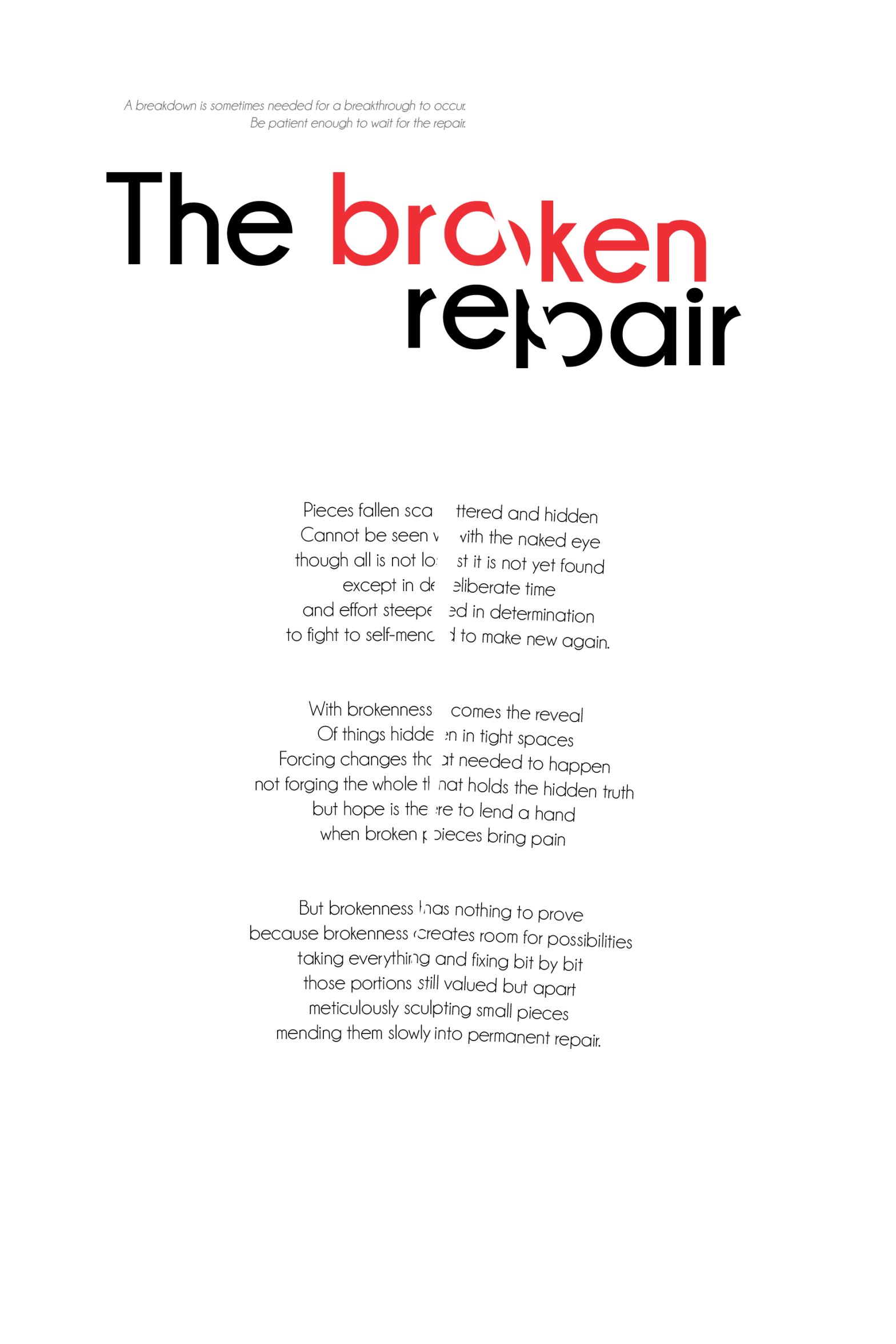
You do yourself and your community a disservice when you keep hidden the ways in which you have successfully navigated certain ills to come out on the better end of it.

————————————-

I was chatting with a friend who hinted that an acquaintance was trying to figure out how to deal with being publicly smeared and emotionally battered by someone he/she was once close with.  Of course, being someone who has come out the other end of a smear campaign, I cannot help but consider my own experiences with this, and how I navigated, for the most part.

I, therefore, start by saying, if you know anything about a “smearer”, you will know that their attacks are relentless, especially if you appear to be thriving.  They will not stop!
What is a smear campaign and why it happens?

The Cambridge dictionary describes a smear campaign as a planned attempt to harm the reputation of a person or company by telling lies about them.

As Psychology Today puts it, “the smear campaign is born out of a combination of factors, including the need to be right and have his or her “truth” become the prevailing script, retaining status and standing (making sure that his or her inner hidden shame doesn’t become public), and maintaining control of his or her image[1].”

Consider this perspective for a minute:  imagine a political candidate who wants to be elected – wants to be favoured – wants to be revered (as most politicians do.  This person (along with everyone on the campaign trail) literally goes around their city/town/or country (depending on the nature of the office they hope to occupy) and they try to convince voters (and all other stakeholders) that they are the best person for the position, while convincing the public that their opponent is the worst thing on the face of the earth.  They typically do not stop until they have achieved their objective, and they use all the tactics they can think of to ensure that they do. 

The smearer (yes, I am saying “smearer”) operates in pretty much the same way; this is why it is called the smear campaign.  The objective of the smearer is to get all and sundry, especially those with whom they know you will interact, to see you in a way that is typically demeaning and disgustingly lowly and for them to be viewed as the very opposite of that. 

The smearer will intercept and taint places like your workplace, your garbage collector, the gas man, your children’s teachers, your co-workers, your friends, your pastor, your supermarket cashier, the guy who carries your bag, the gardener, your doctor, the mechanic, your family – anyone who will listen; no one or no place is off limits to the smearer.  The unfortunate thing about this is that many will grab the story and take it as gospel, because typically, the smearer is a great narrator, who often comes across as credible (for one reason or another).

One thing is for sure, your REAL friends and those who see through the bullshit, will not come to you to tell you about the nasty things that they have heard about you.  They understand that there is no real value in the relay.  These few people usually understand the campaign play and are fully aware that doing this is like stepping in dog mess and carrying the smell to share with you.  What is the purpose of sharing stench? your real friends will NOT do that to you. 

So what should you do?

DO NOT RESPOND.  DO NOT REPLY.  DO NOT ENGAGE.

There was a time when I did all three.  I responded.  I replied.  I engaged.  It took me a while to learn that doing this is a mistake. All it did was to cause me distress and grief, which provides the smearer with satisfaction. 

Today, you can catch me on the other side of that. 

There is no point nor is there any value in trying to convince those who fall for the stories – the lies – the smear – that none of it is true or that the truth has been twisted to suit the smearer’s campaign.  When you do that, all you are doing is feeding into the lies and giving it additional life.  The persons who have latched on to the smear-narrative have already made up their minds about you, so anything that you say or do in response to what is being said will add to the discourse, which will then be twisted and turned into something else that you did not intend.  Furthermore, the ones who have been convinced are usually those who are quick to spread, thereby activating the wild-fire effect of the smear.

If one of the campaign workers bring the story to you, do not listen.  As hard as it might be, it will prove helpful to your mental health to stop them in their tracks and skedaddle.  This is very difficult, because you will feel the need to defend yourself.  You are encouraged, however, to resist the urge. Do not engage.  I repeat:  DO. NOT. ENGAGE.  Once you hear something, you cannot “unhear” it, and the dirty lies you hear being told about you WILL affect you (in some way), especially if you have not yet developed an antidote to ward off that which will seep into your psyche and mess up your day/week, etc.   Once you understand the reason for the smear campaign and how the tactic works, you WILL get the value of walking away and sitting in prayer.   Once you educate yourself on the pathology of he/she who smears and the campaign that WILL ensue, your ability to not engage WILL improve.

Whilst the smear ensues, so must your prayers.  It is easy to be filled with contempt and hate, because no one likes to be lied on, but this is where you are required to dig deep and let love remain…. Inside you.  This simply means praying for yourself AND for them, even while they attempt to destroy you. Bottom line – do NOT fear the smear!  Just “lay low, and let the storm pass over your head[2].”

While you do that, be inspired by another reading of a poem from the virtual book launch, of “The Chronicles of a Woman:  The Truth-teller”, (my first book of poetry), read by Learrie from Grenada.  This poem, “Lay Low” is the perfect guide on what to do when a proverbial storm rages.  When you are done,  thank you for grabbing your copy from www.amazon.com


[1] https://www.psychologytoday.com/intl/blog/tech-support/201906/dealing-the-narcissists-smear-campaign

[2] Lay Low by Stacey A Palmer from the book of poetry, “The Chronicles of A Woman:  The Truth-teller”

Featured

Just laugh….OUT LOUD!

I am sure there are times when my neighbours wonder what it is that I am laughing about.  As much as I am an introvert is as much as I love a belly full of laughter and will literally do so by myself – loudly; I simply refuse to stifle my laugh.

With all that is happening in this world, and specifically in the land of my birth, many will say that there is NOTHING to laugh about.  I understand the reasoning within the context of this pandemic, that there is hardly anything to smile about let alone laugh out loud about.  I argue, however, that even in the midst of that, we have to find something in each day that brings us laughter…. And if we don’t see it, we must seek it out – somehow – in our work lives, home, or otherwise.

I work alongside someone who loves to joke and laugh, so there is NOT a single day, once we are in the office, that we are not laughing.  We laugh about what some would consider the strangest and most mundane of things.  We laugh about our lunch, our shoes, our walk, our hair, her lunch bag (she has the largest lunch bag I have ever seen), our dry hands (from all the sanitizing), our hunger, the cost of sweet peppers, the cheapness of tomatoes (now as opposed to months ago), her dance, the way she sings without knowing the words… we find laughter in EVERY SINGLE THING, within the ambits of the workplace. 

This type of daily laughter helps to improve the work environment.

Laughter in the home is just as important: my offspring believes she is hilarious, which in itself brings comic relief and laughter.  She likes to give jokes… not true… she loves to give jokes, but is terrible at it.  So the telling of the joke is usually where the laughter resides, for me.  She knows this, which is why she insists…  “My jokes are hilarious,” she says.  I beg to differ.  Your jokes aren’t; YOU ARE!  LOL

Adding laughter to your home, makes for great stress-relief!

There are other impromptu moments of laughter that I enjoy throughout any given day.   For example, my niece makes me laugh; she is the funniest 2-year-old you will ever meet. Driving in my car and singing loudly makes me laugh; some of my outfits make me laugh (because why on God’s earth did I wear those two pieces – TOGETHER. Can someone say CLOWN SUIT). LOL

The same is true for my close friends.  The conversation may begin serious and by the end, we are laughing at ourselves. It might be the way that he or she said something that I found funny… or something that they did that they are sharing… matters not; once there is something to laugh about, I am going to laugh uninhibitedly, unencumbered and unabashedly. 

Me? Naah ask Christ! (something that Jamaicans say when they are very sure and do not need any type of validation or confirmation from any one).

Other sources of laughter can be found in many programmes on TV and YouTube.  Do not get me started on the reruns of Family Feud or the Dumbest Answers on Family Feud compilation; laughter for days!  Or it could just be me attempting a dance routine that I have no business doing.  Aaay sah!

No matter what, I make it my point of duty to seek out my daily laughter when it doesn’t freely find me! 

I have found that memory is also a good laughter-source:  I have very fond memories of living with my sister and cousins in my late teens and the ways in which we would laugh so often and so loudly that my grandmother would get home and tell us that she heard us from all the way down the road.  We would often laugh at the way in which she mimicked our sounds…. Maybe this is from whence my propensity for freely laughing originates!  Whatever the case…

Bottom line, we need to laugh.

 Sometimes while watching a youTube video, I scroll through the comments and burst out in belly-hurting laughter, because human beings are funny.  Have you ever started laughing because you heard someone else laughing?

I have….

Have you ever stifled your laugh because the person giving the joke is not a friend or you are at odds with that person?

I have done this before (a long time ago), but I caution you….

NUH DWEET! Spread out yuh mout and laaf!

So why is laughter so important?

We can all agree that the presence of laughter does not mean the absence of problems.  Nevertheless, every single source I consulted agrees that laughter has many benefits and encourages its daily dose. My findings substantiated what I already knew:

  • Laughter is the best medicine
  • Laughter provides stress relief
  • Laughter makes you lighter
  • Laughter activates many areas of the brain; it strengthens neural connections and helps a healthy brain coordinate its activity. [1]

On the other hand, there is something called “bitter laughter” that comes about because of something negative.  According to Volland (2020),  “while this kind of laughter may seem beneficial on the surface, it can leave you feeling worse afterward. Cortisol—aroused by negative reactions, including angry laughter—triggers the brain to scan for threats. When triggered, the cortisol response lasts within the body for about an hour, making it easy to get caught up in negative emotions[2].”

Prior to doing desktop reading for this blog, I had not thought about this “bitter laughter” concept; it makes sense and is definitely something I will explore further outside of this piece. 

In any event, the next time you find something to (positively) laugh about, let’s throw caution to the wind and allow the laugh to freely travel from your belly bottom and resonate out into the universe.  Trust me when I tell you that it helps with the mind, body and soul.  And if there is no one around to provide comic relief, the way my offspring, co-worker, friends and family do, search for your laughter and you will find it.  I know I do – almost every single day – even when rock-bottom lies to me and tells me I have nothing to laugh about.

Before I end, let me use the opportunity to remind that there IS a difference between a chuckle and laughter.  They are not one in the same nor do they yield the same results (mentioned earlier).  So don’t say you laugh all the time when all you do is chuckle.  A chuckle is merely a quiet internal response, while laughter can be heard by others and felt deep down in the recesses of your soul.

So, as for me and my belly-hurting laughter, I am going to let it go freely – under my mask of course in public spaces.  But while in the comfort of my home (and car), my neighbours will just have to learn to laugh at the sound of my laughter (or become annoyed by it – the choice is theirs), because I aint gonna stop….

…and that’s on Mary had a little lamb!

While you go in search of your laughter, check out one of the readings from my recently launched book of poetry, “The Chronicles of a Woman:  The Truth-Teller (available on Amazon), and have yourself a laugh; everyone in attendance was tickled by Claire’s recital. When you are done listening, etc., thank you for heading over to amazon and getting yourself a copy.


[1] https://www.sciencealert.com/laughter-can-improve-your-mood-and-relieve-your-body-and-mind-of-stress

[2] https://nrchealth.com/the-importance-of-laughter/

Featured

MY PEN SAVED ME.

Today’s post is being made the day after my first book was published and the day that my book launch for “The Chronicles of a Woman:  The Truth-teller” will be held.  As I sit and reflect, heart racing and nail-biting, I remember the days when I felt that all I had was my pen. 

In the days of my youth, I didn’t quite understand how my need for silence could exist with my burning passion for speaking the truth and standing up for what is right.  One minute I was as quiet as a lamb, and the next minute I was using my voice to advocate for some kind of justice in my little corner… either justice for myself or for someone else.  The conundrum I faced (and continue to face) is that neither I nor others could appropriately place or reconcile that my desire for silence (and being alone) and my desire and ability to use my voice could be the whole of me.   As a child/teen, this frustrated me, because I didn’t know how to explain it – not even to myself:  I have something to say, but I don’t want to speak unless I MUST and when I did, I would say it exactly as I saw it, often to my detriment.    How do you reconcile the two?  Most couldn’t. 

But that conundrum didn’t faze me – not fundamentally; I remained in that dichotomy and on the days when things were unbearable – when childhood dreams were interrupted – I reached for my pen.  I wrote about everything, and I read about everything.  I felt life and observed my surroundings and scribbled matching words that hid in plain sight; those scribbling became my release, my escape, my joy, my pain – my poetry.  I realized soon that whatever the story, whatever the feeling, whatever the moment, I could jam pack everything into a few stanzas that told the entire story but which only few were able to see.  I liked that, so I continued to do that.  I told the entire story in one poem.  I REALLY loved that idea.  Aside from that, I realized that my writing was my healing, so I continued.  Then I realized later that my poetry, etc. was someone else’ healing, so I continued to write, but didn’t always share.

Once I discovered the power of the pen, I used it to help myself to navigate those moments of utter darkness and to celebrate the moments of bliss.  I have no idea where many of those early pieces are today, since I would often write in the back of my school book or on pieces of paper or in a diary. 

Today, as I scroll through the pages of this compilation (the first of more to come), I am nervous as heck.  While the anthology is not all about my experiences, I still feel some amount of vulnerability, because the truth does that!  Aside from that, I am not sure what else I am feeling.  These are pieces that I have had for a while and pieces I have written in the last few years and some in the past months. 

The book, as it is meant to be, has something for everyone.  As the name suggests, it chronicles various topics, including love, relationships, friendships, parenting and anything that falls within the realm of heartbreak, healing and self-recovery.  “The Chronicles of A Woman, The Truth-teller,” is honest, raw, soothing, somewhat controversial by mirroring the woman’s pain and joy.  It doesn’t just stop there.  While the book chronicles the challenges that many women face, there are pieces that highlight, and in some instances, celebrate the male’s presence (positive and otherwise) in relationship with himself and with others

I am hoping that as much as my pen saved me that these pieces will shed light on some very important issues and help someone to navigate their life so that they can truly LIVE!

The book is now available for purchase on amazon; follow the link below:

Check out the virtual book launch on zoom. Meeting ID no. 849-1513-3627 on March 14, 2021 at 2 p.m. GMT.

Featured

FORGIVE YOURSELF….

“Hold your head up, and do NOT wear your shame like it’s your skin” – Stacey A Palmer

She has offended you, somehow.  She apologizes and seeks your forgiveness.

You refuse (for whatever reasons internal to you).

You see her smiling and going about her day.

“She doesn’t appear contrite,” you say.

“Farthest from the truth,” she humbly responds.

You want more than that from her; yet, she doesn’t try to convince you. It is pointless, because what you do not know or refuse to understand is that she has already prayed earnestly about the “offense,” and He has forgiven her; she has forgiven herself and have opted to move on, as best as moving on allows.

_______________________________

It sounds easy when you are forgiving yourself for something that you may have done to someone else, doesn’t it? I attest, however, that it is not as clear cut when you are forgiving yourself for the choices you have made that have been detrimental to yourself (and those in your charge) – within the standards you have set for yourself.  Forgiving yourself when you have “offended” yourself takes deliberate self-talk, deep introspection, self-love and a deeper sense of awareness that one must dig deep down into the recesses of ones soul to muster, master and allow to materialize. 

Forgiving yourself for doing or being something to yourself that doesn’t honor yourself is not for the faint of heart, but this is not an impossible feat.

How do I know this?  Because I have taught myself how to do this, and learning to master the art, still!

But this wasn’t always the case.  There was a time when I would have wallowed in the idea of someone else’ forgiveness and would have been bothered until the offense was somehow erased from my psyche.  There was also a time when some of my choices/decisions (work, relationship, friendship, money decisions, purchases, negative self-talk, parenting, etc.) made me feel horrible about myself, and I would have held on to those negative feelings for a while without acting in forgiveness of myself.

That was a long time ago….

Today, I am the opposite of that.

Once I agree that I have “offended” someone, I am not afraid of asking for forgiveness; however, I do not rely on another person’s forgiveness in order to move on. I apologize and leave the “offended” with the choice – to accept my apology or not.  While I hope for the forgiveness, it is not a requirement for me to forgive myself.

Selfish, some may argue, but I won’t belabor that point.

I stay stuck on self-preservation and practicing self-love (something I am still learning to do).

As it relates to forgiving myself for something I have done to myself, the process is almost the same, except it is a lot harder.  There are things about ourselves that no one else knows about us.  There are those things attached to our hopes, our dreams, our fears, our beliefs and those goals we have set for ourselves that will bombard us and lie to us each time we blunder and prevent these things from actualizing.  We hold on to these blunders, because we feel we have somehow failed ourselves.  Then the ongoing self-punishment ensues.  This involves sitting and stewing in our blunders and not letting go of our blunders thereby holding ourselves in indefinite contempt of ourselves, so it eats at us.

This is what it feels like when we do not forgive ourselves.  At least that is what it feels like to me.

When we forgive ourselves for what we have done to ourselves, we are kind to ourselves.  We may feel regret, but we do not dwell in it. We hold ourselves accountable and accept our blunders for exactly what they are.  We go through a process of deep introspection and we accept our role for what it is.  We pray, regroup, reimagine, release and then we move on.  We do not ruminate indefinitely in regret.

Admittedly, the act of forgiving oneself is more difficult when you are privy to the pain that others experience because of your actions… (but that is for another post).

Is it more important to be forgiven by someone else than it is to forgive ourselves?

Some may say that both are equally important; others may also argue that to live peaceably in this world with others, it is important for others to forgive you.

While in an ideal world, both would be the best scenario – to have someone forgive you and for you to forgive yourself, we all will agree that that is not always the case.  When we are sincere, and we apologize, we hope to be forgiven.  However, being forgiven by someone else hinges so much on the other person’s value system, propensity to heal, ability to let go, personal expectations and goals they have set for themselves, traumas they have not healed from, etc. etc. that it makes no sense being stuck in that space with someone trying to navigate their own personal systems in order to get around to them accepting an apology and offering forgiveness.   The forgiveness may never happen or may occur months or even years from the request for forgiveness.

With this in mind, I categorically agree that we must learn to forgive ourselves when we have offended someone and normalize forgiving ourselves when we have blundered against ourselves. 

In a nutshell, when we forgive ourselves, we:

  • We accept responsibility
  • We learn from the blunder.
  • We correct our mistakes
  • We are resolute in being better to ourselves and others
  • We do not sit in regret
  • We release it and move on.

It is true that we all need people, but much of our struggles come from allowing ourselves to be held prisoners by our blunders. The struggles come when we sit in that space of regret and negative stronghold all in the name of waiting to be forgiven.  When we are not, we pine and cause ourselves grief as we stew in the sadness caused by the unforgiveness of others. 

Why should that be our reality?  An alternative should be more appealing, regardless of how this might be interpreted.  The truth is, everyone has a different picture of what it means to look contrite and what it means to forgive and be forgiven. 

So, forgive yourself (no matter what), remember who you are and whose you are, and move on!

Featured

IS THE WOMAN ALWAYS SCORNED?

The story of a man and woman parting and the man quickly moving on to the next available person is not unique.  It is also not unique that the man can easily start a relationship – in whichever way –  with the woman’s best friend, sister, boss, cousin, church sister, mother, perfect stranger or his “friend”.  In fact, in more cases than not, the way in which the “move-on” occurs is done to inflict pain.  These things happen.  There are some men who simply operate like this without thought or consideration, and there are many women who will not see anything wrong with this and will encourage the “interactions” as well as the instructions given. 

Generally speaking and within the context of a “new scenario”, we tend to romanticize our decisions and our position, because we feel like we have come to save the day.  We are often of the opinion that it is our duty to take our new interest out of the horrors that he/she has had to endure with this other person (based on hearsay).  More specific, the stories that the woman is sold is so bad that she feels inclined to join him in his quest to denigrate the other woman whom she is sure has treated this “wonderful man” in a horrendous way, considering all the good he has done for her and how honest and kind he is to her, in the beginning.  In fact, in this new position the “newly elevated” woman is more inclined to believe that this “scorned” woman is pining after him and wants him back.  How desperate can she really be?

But that is the romantic version that many women opt to believe, until her lived experiences (with him) becomes all too familiar.

The story of a woman belittling another woman when she has received what she deems to be the prize is an age old one.  Women have been taught this somewhere, and men know this; some use it to their advantage.  

Why can’t the new woman just date him without helping him to “fight” a woman she knows NOTHING about? 

I do not have enough hands to count the amount of times I have heard (directly or indirectly) a woman speak horribly against another woman because of what she has been told by the man.  What makes it even stranger is that the disparager would have, herself, gone through turmoil with another man – something that lets her identify with the other woman; yet, she would still accept the disparaging story she has been told without even referencing her own experiences for guidance.  It is as common as it is strange.

But what does it profit a man (and his new woman)?

The “woman scorned” mythology has been used to benefit the narrative of many relationships that have ended.  Most are not honest enough to say that the other person was the one who walked away and would therefore not indicate their own efforts made to rekindle.  Plus, humans operate with the mindset that men are the superior being – that patriarchy rules – that to be masculine means to NEVER be “left.”  Thus, if a “relationship” ends, then it is more likely that the woman was “left” – that she was scorned.  This accepted mindset is to the man’s benefit, because he is able to create the narrative to suit his ego retention.

Furthermore, to accept the “woman scorned” narrative is more salacious and entertaining, as well as a more plausible reality that keeps the man at the helm of society.  In this way, his masculinity is never questioned. 

What “weak” man would allow any woman, especially if society deems her to be “below” him, to leave him?

The fallacy of it all.

Some may not agree, but only a few who understand the alternative may accept the truth:  she was the one to have walked away for very sinister reasons that he would NEVER admit, openly.  So, rather than entertain the possibility of an alternate reality, the “better” woman believes herself elevated and must, therefore, perform the “hate” that she has been sold.  Plus, in order to prove that he is done with the “other” woman, (even as he entertains other thoughts), he must perform his disdain, very loudly.  This performance is necessary to him because:

  • It helps to repair a bruised ego
  • His masculinity is maintained
  • It proves the “woman scorned” narrative.
  • It keeps the “better” woman in his grasp.
  • It sends the message to the audience that the “other” woman was “no good”.
  • In his mind, he is inflicting unto the “other” woman the level of pain that he has secretly felt.
  • The new woman feels chosen and special and will therefore treat him special and possibly revere him in the way that he requires.

So what if the reverse is true?

Let us just say, for argument’s sake, that the woman is, in fact, scorned.  How important is this information to the newly-established or newly-public interaction?  Is the performance of hate a necessary binding agent?  Does he have to perform his hate for her to prove his love to the “better woman”?  Why is this even a standard that women seemingly require anyway?

Relationships end all the time for reasons that the parties involved do not always reveal.

Understandably, the new couple (of friends/lovers, etc.) must operate in unison to prove to her, the public and to anyone who cares that “he no longer wants her”.  Whatever the case, he benefits from a society that is more inclined to accept that she is the “woman scorned” than to believe that he is!  

Featured

THE SILENT DILEMMA OF WORKPLACE ABUSE

 “If she causes me so much distress, how does she expect me to perform my job well?”

I could tell that my friend was extremely stressed, and by the end of our tête-à-tête, I was able to garner the issue to be a long-standing one for him.  He explained that he had been working in on-the-job-hell, with no end in sight.  As he continued to relay his experiences to me, I realized one very profound thing: his experience was not unique.  On the contrary, this type of workplace abuse is often experienced by so many, yet it goes unchecked, because often the abuser holds a much higher position than the abused.

I recently happened upon a twitter thread of people discussing their horrendous workplace experiences and the effect those experiences have had on them, which ultimately led to many quitting their jobs without knowing from whence their next dollar would come. One statement that resonated from the originator of the thread, who too had to quit his job, reads:

“…there is nothing unprofessional about making fun of managers who disrespect you or your work… silence around abuse only allows it to propagate.”

As controversial as the first part of the statement might be, I do understand how an abused worker could poke fun at the abusive manager as a coping mechanism when relaying the abuse to others.  The second half of the statement is very obvious and true, but often the abused feels powerless to speak up, because of the inflicted punishment that often follows.  What I found was that the persons responding to the original tweet were based in different parts of the world, which is a clear indicator that workplace abuse is more common than it is not – globally.

It appears that this phenomenon is unavoidable

The truth is that a lot of everything happens in the workplace that shouldn’t, because every single workplace, like every other community within every single society has all different types of people from all different types of background with all different types of angst and all different types of morals or the lack thereof.  There is no one single workplace culture that exists in any organization.   While there are Laws, Acts and Policies that should govern how a workplace operates, the workplace culture and the different personality types and moral compass of each person along with fair/fear management are what allow certain things to continue, unaddressed.  Workplace abuse, which includes “sexual harassment, physical violence and emotional abuse[1],” is often experienced by the person of a lower ranking and is often carried out by the person who is in a supervisory capacity or who holds a higher rank than the abused. 

In as much as there are smart and kind people in every workplace, there are also liars, thieves, sexual predators, abusers, misogynists and narcissists too.  The categories presented here are not specific to any gender – good or bad. People are people despite their sex and their position in the organization.  The core of a person does not change because of their workplace position – good or bad.  In fact, a person’s true self is often revealed the longer they remain in an environment.

The workplace is no different.

As much as one can document the abuse they suffer by keeping a log of the things that occur, some supervisors/mangers, etc. who inflict that which constitutes workplace abuse, specifically workplace emotional abuse can often cite issues such as lack of training, employee insecurities and low self-esteem as reason (Bray, 1995) for the “accusations”, which is why it is important for the abused to maintain a log of things as they occur.   From what I have learned and have too experienced (directly and indirectly) supervisors/managers – high ranking officers within an organization – do not always abide by or are not always given the same accountability requirements.  In the end, instances of workplace abuse go unchecked.

When conflict turns to abuse/how did we get here anyway?

“Conflict can occur in any organization when employees with different backgrounds and priorities work together[2].” While on the-job-conflicts occur that are either dealt with professionally and people move on (in one way or the other) ideally, the opposite is also true:  things happen, things fester and people respond to these things in questionable ways – they internalize rather than resolve.    When this happens, the core of a person is manifested; there are different people coexisting in their fundamental state (some of which were mentioned earlier), which is often enhanced by power dynamics.  If we accept this line or reasoning, then we could see how workplace abuse is pretty much unavoidable.  A twitter poll recently conducted revealed that 65% of respondents have experienced workplace abuse, 22% had never thought about it, while 13% indicated that they had never had that experience.

I was recently in a  meeting and got asked the question about how I handle conflict resolution in the workplace/in a team, etc.  My answer is simple.  “Conflict Resolution” does not look the same for everyone, despite what workplace policy dictates, and despite what the HR specialists instruct.  One person can move on from an incident involving two with the mind-set of moving forward respectfully (you don’t have to respect someone to be respectful – but that is for another blog) and focusing on the tasks at hand, while the other person may decide that the resolve they require is more drastic and “pain-inflicting” than the workplace allows.  When a person’s need to exact revenge supersedes reasoning, how then does conflict resolution occur?  At some point, we have to move on respectfully and get the work done, whether we like each other or not.  If protocols are followed and there is a culture of respectability, then the conflict should be “resolved” within the ambit of the workplace.

Sadly, this is not the case for many, if in their estimation the other person – usually he/she operating in subordination – is not sufficiently “punished”.  There are very subtle ways that these abusers will ensure that the offender is emotionally tortured on the job, with the hopes that in the end they would leave.  For example, withholding of information/resources, etc. inciting others to ostracize, preventing promotions, bad-mouthing, and ignoring staff, etc.  The abuse becomes unbearable when a worker’s punishment for an “offense” is never-ending and overlaps into every single dealing they have in the workplace.  There is a lot of borrowed hate (Stacey A Palmer 2020) that happens in large groups/organizations, and others will take it upon themselves to help to inflict the “required punishment” on behalf of someone else, especially those whose on-the-job power renders them unaccountable in relation to the organizational hierarchy.

The dilemma

It becomes a silent dilemma, because so much of this type of abuse goes unchecked, which means that many people are operating in their “9 to5” spaces in utter discontent and unable to function at their optimal.  For some, the thought of getting up each day to enter into that space is very distressing that it can cause a person to suffer anxiety, which can ultimately lead to health issues; the resulting effects of this can be very sinister.  Within the power dynamics, it is usually easier to prove a person’s under-performance than to address those workplace causalities.  Ultimately, no one cares, especially when the perpetrator holds “an upper level” position.  The way they see it, you are at work to work, so you are expected to perform, despite what is happening and by whom the distress is being inflicted.  Herein lies the dilemma.

(And don’t even think that with the online modality that is required in some organizations that this has changed.  Abusers WILL find a way you use Zoom or any other online platform to inflict emotional abuse, but that is for another discussion).

So, what do we do?

It is all well and good for organizations to establish policies that govern operations, but what is the point if they are not used?  People are generally afraid to speak up, even when they witness or experience first-hand emotional and other types of workplace abuse.  Fear management vs fair management (Stacey A Palmer, 2020) is perpetuated. Higher ranking staff who abuse are typically very aware of the power they hold and are often also aware that they are in contempt of workplace ordinance because more times than not, everyone involved understands that the matter, in light of the power dynamics, is treated with scant regard – your word against theirs.

It is, therefore, important for workers who experience workplace abuse to become familiar with their right as workers and to stand in that right.  It is also critical for proper documentation of the abuse to be maintained.  In an ideal situation, the abuser stands accountable, but often they don’t – not in the workplace – and usually not in real life, because of how emotional abuse is often perceived and handled.  So to maintain one’s sanity, it would best to leave, but we all know that is also not always possible. The workplace is an extension of society, so matters of abuse often go unaddressed.   Regrettably, advocates and unions are slow in addressing these matters, but people are encouraged to speak up so that the abuse is not propagated.


[1] Bray C. Defining Workplace Abuse. Affilia. 1995;10(1):87-91. doi:10.1177/088610999501000108

[2] https://www.shrm.org/resourcesandtools/tools-and-samples/toolkits/pages/managingworkplaceconflict.aspx

Featured

Leisure time is productivity too!

What does it mean that almost everyone I know, (myself included) has multiple streams of income, and are most times too tired to think, because of how hard we are always working to earn the next dollar or to simply make ends meet?

We live in an era that constantly bombards us with overt and subtle messages that we don’t realize that we are constantly being force-fed messages about the significance of having multiple streams of income that if we do not, we are often left feeling a sense of worthlessness and shame because of our inability to achieve the “living my best life” image that the “Insta” photos constantly promote. 

On every single social media platform that I can think of, the testimonials about the luxurious benefits of earning more have inundated our screens and have seeped into our sub-conscious thereby influencing us, in one way or the other.  If what the media theorists and Public Relations Specialists say about the psychology of media messages is true, do we really have control about how we are responding? According to the Science of Influence Report (2017)[1], Social media is influential in decision-making across generational categories. So, as much as we think we are in full control, we are often guided….one way or the other. 

Before those in the back have my head for this, let me hasten to point out that I am not saying that a person with multiple skills and/or specialized training or even a passion for something should not maximize on opportunities to ensure that they derive the best financial outcomes.   Instead, I am suggesting that as important as that is, it is also important to strike a balance and understand the importance of making quality time for leisure.  Most of us, regardless of this understanding are still unable to. 

It is, therefore, not shocking to that I am admitting that I experienced a strong sense of guilt over the holidays when I spent 10 days just chilling, leisurely.  My leisure-chilling involved basking in nothingness and engaging in “Seinfeld moments conversations” with close friends, as well as watching a Series or two or three or ten.  Never mind that the nine months prior (since the start of the global pandemonium) I was preoccupied with school (teaching and learning), workplace woes, pandemic panic, mental health mayhem and writing – A LOT.    So my 10-day hiatus would have been the needed break.

Yet, we have been so brainwashed to believe that to sit and be still – to find time to listen to the world around us – is unproductive. 

How terrible for us! 

Well, in one of our dining room impromptu quick-chats, I was recently reminded by my offspring that “leisure time is productivity.”  Just like that, she put everything into perspective in four simple words.  It was interesting to hear her take on this, and I thought to myself….

She is very correct.  Leisure time IS productivity, too.

We are definitely being productive, when we treat ourselves to leisure days.  When we do, we are recharging the only us that we have.  Without taking part in leisure activities, we would become robotic humans incapable of truly enjoying the very things and people that we work so hard for.  Let the church say… Amen!  I’m sure that we all agree that life is about more than the multiple jobs that we have.  It follows, then, that we all should strive for leisure time – especially those who work more than they rest. 

How can we truly achieve anything when we are, without real break, so locked into ourselves – so insular – that we do not even take time to appreciate the very small things in our surroundings:  to watch a movie, to listen to our favourite genre of music, to read a book or an article on our favourite topic, to spend time with love, to get to know someone (aahhhmm… well … for those people-persons) or to do just about anything that will bring us the needed break that takes us away from our everyday bustle – to find leisure without work looming over our heads.  Leisure is the leave of absence from work that the mind needs to feed the part of us that require rest and recreation. 

I can attest to the fact that to do otherwise will result in pretty much the same outcome:  we work ourselves to a frazzle that the result is diminishing returns. Lord knows that I, too, have experienced this.  I find that when this happens we tend to lose the purpose and passion behind why we were doing the particular thing in the first place.  Creating that deliberate leisure, based on my offspring’s declaration, means that we are creating a healthier us – mentally and physically – that lets us be better to ourselves and ultimately to our loved ones.   How, then, could anyone not agree with her theory?  After all, we are being productive when we care for ourselves, right?

How do we strike the balance and create the leisure time that we need?

I imagine that most of us will find this a very difficult question to answer, especially within the context of trying to attain those individual goals that we have put in place for ourselves, which we cannot achieve without multiple streams of income.   From my perspective, there is there is no one answer for this.  For me, leisure is not just about sitting and doing nothing.  It is also about taking the time to do something that will literally serve to rejuvenate my mind, spirit and body. If I sit still just to worry, then I am not acting in leisure; I am operating in turmoil, and turmoil cannot bring the peace, mental and spiritual rejuvenation that leisure is intended to bring.  Admittedly, I striving daily to take worry completely out of the mix.

In saying that, I do believe that we each must find that thing that we constitute to be leisure and then practice it well when we do.  I bet after we have deliberately allowed ourselves to accept the importance of leisure time, that we will agree with my offspring that “leisure time is productivity”.  As for me, I will no longer adorn myself with the guilt of taking my leisure as seriously as I do my income-generating endeavours.

Having done that for myself, how do I get the offspring to practice what she so beautifully asserts? That is the parenting question of the day.


[1] https://instituteforpr.org/science-influence-social-media-affects-decision-making-healthcare-travel-retail-financial-industries/

The Politics of “I love you”

The politics of “I love you.”

• Supervisors love a worker who overextends. The moment that worker protests and insists on equity, the worker may be accused of insubordination, and the once model worker becomes a problem that needs to be eliminated.

• Constituents love politicians who provide handouts during election season and hate those who refuse to pay for votes.

• Children love the parent who allows them to have their favourite candy in abundance and shows disdain for the other parent who rations their intake for their long-term health.

• A man loves the woman who allows him “to be” without murmur. The woman who requires and demands accountability and respect typically ends up being booted and/or denigrated.

• Women love the man who provides the lifestyle that showcases the trappings of success; the minute he cannot maintain that which she believes sets her apart, she wants nothing to do with him.

• Friendships end with the introduction of boundaries

This is the nature of the human interaction where “love” is explicitly or otherwise declared. Our “I love you’s” take effect or is prolonged only when others operate according to how we believe they should. Fortunately for me, Viris Donaldson, my grandmother (RIP), remains my earthly benchmark for love. She didn’t consider herself beyond reproach and though she never once said “I love you”, her overall posture toward me embodied 1 Corinthians 13:4-7 (NIV):

4 Love is patient, love is kind. It does not envy, it does not boast, it is not proud. 5 It does not dishonor others, it is not self-seeking, it is not easily angered, it keeps no record of wrongs. 6 Love does not delight in evil but rejoices with the truth. 7 It always protects, always trusts, always hopes, always perseveres.”

My interest in the loose use of “I love you” came about some time ago based on my observation and on the lived experience. I find it curious how easy it is for “I love you” to roll off our tongues because people understand the power of those three words, so much so that most become excited at its expression without evidence of it. Conversely, as quickly as it is said, people are even quicker to withdraw their declaration if responses do not match their expectation of how it should be received.

After sitting with the topic for several weeks, I came upon a podcast in mere happenstance titled, “Do we love like Jesus.” My initial thought was that the podcast gave language to much of what I observed and brought to the fore some uncomfortable truths that I believe many of us (Christians) will not readily admit. I identified because in my quest for holiness, I am constantly praying Psalm 139:23 and Psalm 51, because I recognize that I need daily help to be more like Christ. For example, as an introvert, I don’t always want to interact. However, the significance of a church community dictates that I must do more than extend my resources. As I listened intently to the podcast, I also found that the points raised are reminiscent of believers who vocalize love. Well, obviously, since this podcast intends to reach Bible-believing, Sunday-morning (or Saturday morning), church-attending Christians .”

Some of the applicable points raised are:

“….We love being truth-tellers, but we do not love the people we are telling the truth to.” A few blog posts ago, I wrote about adjusting one’s posture to match one’s intention so that people can experience love (through us) as God intended. The challenge is that many of us believe that if we are extending our resources, regardless of the accompanying unpleasant posture that people should accept that this is an act of love, despite how our posture might make them feel.

“We are not honest with ourselves about our weaknesses…. I am afraid to admit I do not love people, because it makes me feel like I am a sinner.” Yikes! Many of us are, indeed, afraid or too prideful to admit that we are weak in many areas of our lives. To extend or even ask for grace and forgiveness, we must first acknowledge that we do not necessarily want to do this because of how we may feel about each other, even while declaring love. It is true that some of us do not like our brothers and sisters in Christ. For some, anyone outside of our church clique is unwelcomed or treated with obvious disdain.

“The confession releases you from that thing so you can receive God’s power.” Obviously, an admission of anything (we struggle with) is usually the first step to repentance, which leads to transformation and makes us like Christ. Unfortunately, fear, pride, unaccountability and lack of love prevent us from receiving God’s power.

“Some people struggle with lovelessness.” It is true that everyone has a vice. And it is especially true that every believer sins against our brothers and sisters in ways that express lovelessness. The problem is that many won’t see it as such because we have defined for ourselves “love,” instead of being guided by 1 Corinthians. In our minds, our human articulation and showcasing of love, based on what we deem it to be, should be enough to sustain relational activities. When in truth, it requires allowing the Word to be our daily guide.

“I have relational weaknesses, which presses me into dependence – into God – to listen, to love, to care, to be compassionate.” Maybe if more of us in the community would admit this, our ability to love would improve. As for me, I identify (with having relational weaknesses); therefore, my reliance on God is ten-fold. I am aware, every day, that I cannot (nor do I want to) navigate this world without Him. I need Him daily to express love.

As the podcast came to an end, the guest concluded that, “we all have sins that we cannot shake… for some it’s lying, pornography, lovelessness, selfishness, anger, impatience….” If we accept this to be true, I believe it will be easier for us to be mindful about our execution of love, as God intended it. I can’t help but think deeply as I kill my flesh daily.

On her last visit home, my daughter pointed out to me that I had caused her hurt. Instead of immediately accepting her lament and apologizing, I found myself negating her experience on the premise that “I have always loved” her as if to say I should not be held accountable for this specific “wrong doing.” As I sensed her disappointment for my initial response, I regrouped and gave her a real listening ear, then offered a sincere apology, which validated her experience with me. The fact that I have been my daughter’s support system and have given her my all does not excuse or exclude me causing her pain. In fact, I have caused her pain despite all that I believe I am and have been to her, and I must respect her for pointing it out. I must also apologize and correct how I proceed with her. It is important to me that she feels my love – not just of last year or yesterday, but in all my interactions with her. Truthfully, she had every right to feel how she felt by my actions, because it did not present as love. The reverse is also true that we those of us who have been hurt even in those “loving” relationships must understand that people will do things that are unloving.

My observation about our community is that many of us believe that because we have extended ourselves in ways we deem grand, that should be enough to sustain the relationship, regardless of our blunders. In that way, we operate as if we are beyond reproach. But for love to reign, there must be honesty, openness, and a willingness to self-evaluate or to be evaluated by our brothers and sisters in Christ; otherwise, the space will be unsafe. As in the case with my daughter, though I have spent twenty-one years echoing “I love you” sentiments, I do not always operate in love. As I was recently reminded, sustainability of that relationship, as important as it is to me, calls for my humility, accountability, and introspection, which allows her feelings to be validated in that space. Accordingly, it is my sincere hope that with my intentional quest to be more like Jesus, she will know and ultimately be confident in my love in the same way that when I cause her hurt, which I am positive I will again, I will be contrite and offer a genuine apology as I adjust the ways in which I re-present.

As I explored the topic through the writing of this blog, I am reminded that:

• A person cannot truly love if they do not know God’s Word.
• Though “I love you” is an excellent bartering tool, it is weak on its own if love is absent.
• It is not in our nature to love ALL THE TIME. Sometimes our flesh wants to hold grudges, to be unkind, and keep tabs of hurts, etc. The execution of love relies on the daily killing of our flesh and the Church community to hold us accountable – to serve as a mirror – our reminders of what is required of us.
• We are more inclined toward the performance of love than we are our actual heart posture.
• When relationships exist within the confines of just two people (platonic or otherwise), i.e. without outside interaction, we often do not know how a person will respond when other variables are introduced. It’s like the Love is Blind effect: interactions appear genuine when the two are focused on each other. However, as soon as the pair is back to “normal life,” people stop performing and start being themselves. The outcome of this is either the solidification of their bond or the dismantling of a foundation built on a facade.

Ultimately, while we may successfully politicize “I love you,” we certainly cannot politicize Love; “I love you” and Love are not one and the same. Love is of God which is not up for the grabs. We either love or we don’t, regardless of how beautifully we say it.

THE POWERFUL PROMISE

Each time I visit this place to conduct business, we enjoy a friendly exchange. Within this context, I would say we have a good relationship. His greetings are kind, and our banter is always respectful.

Today, I was simply passing by, so we greeted each other in the same manner we would if I were going in for business. We had our usual back-and-forth, and he gleefully announced that the day was a special one for him. I offered him a small token, which I said I would have taken to him the following day.

He smiled, and I went about my business.

The following day, I bought the token and returned with it like I promised I would have. Upon entering to conduct business, I handed the inconspicuously bagged item to him and instantly saw the surprise on his face, when he peaked in. Not only was he taken aback, but he let out a slight gasp, and his eyes welled up with tears, which he tried to hide by avoiding eye contact. In the bag was one of the two things he had indicated he liked. I saw him; his energy communicated several things:

• A gift once promised but never given
• The love needed but missed
• The pain of no one remembering
• The rejection instead of acceptance
• The childhood pains not healed

He fought hard to hold it in. I guess one could argue that, in some way, he did; unless you knew would you have known. As he hurried by me to put the parcel in the back, his energy palpable, I thought about the many times us folks say we are going to do something for someone, and we don’t. I know I have had many instances of a promise not kept to me, and how disappointing those times were, especially when I was in need and by those who take a lot from me. I am sure that I have also had instances of not keeping a promise. Whatever the reason for a promise not kept, I am happy to have had a first-hand reminder of what it means when we do what we say for someone who is holding on to the hope of receiving it. Although I saw his pain, I saw something else too; I saw the restorative power of a promise.

When he returned from storing his “gift”, he gave me a very subdued thank you, because that’s all he could muster. Although his gratitude was obvious, I took no credit for any of it, and I hope he didn’t give me any of the credit for any of it. God is good! Truthfully, when I asked him about what he liked and promised to take it to him the following day, it was not even my doing. I was simply led, and I chose to obey.

Mark 12:30-31 instructs us to Love God with all our hearts and to love our neighbours as we do ourselves. The problem is many of us do not even know what it means to love ourselves (but that is for another blog), so we really do not possess the capacity to make the connection of the effects of a word not kept. Thank God that in my obedience to keep my word to this man, I was reminded of the role we play in bringing people to God. Extending ourselves tangibly does more than just showcase our ability to give; it serves as an indicator of God’s love and gives hope to the hopeless and mends the broken-hearted and in turn highlights that God works in mysterious ways.

Unfortunately, many rely on the “oh my goodness, I forgot. I am sorry” excuse and go about their day without ever giving a second thought to the impact of not giving a gift promised. We know, however, that the ripple effects of a continuous stream of disappointment can have dire consequences on a person. These may include, but not limited to:

• Feeling unloved
• Believing you are not good enough.
• Becoming untrusting
• Being closed off and reclusive
• Self-condemnation

Once we are led to give and we indicate our intention to do so, and I am speaking specific to those gifts rooted in Christ, we are obligated to honor the person by keeping our word.  Ultimately, many of us want to experience compassion and love, which the promise kept has the power to do.

FIX YOUR POSTURE.

We all have scriptures that we rely on to take us through each day.  For me, there are several, but the two that remain constant utterances are:

Psalm 139:23-24

23 Search me, O God, and know my heart: try me, and know my thoughts:  24 And see if there be any wicked way in me and lead me in the way everlasting.

And

Psalm 51 v 10

Create in me a clean heart, O God; and renew a right spirit within me.

These scriptures, combined, form a daily and effective prayer in my quest to honour God.  I do this because I do not always have the capacity or wherewithal to recognize my own shortcomings and therefore need a daily dose of divine intervention to help me to not give voice and privilege to my flesh. 

I also observe that many others (like me) need a daily cleansing of their minds as well as guidance on how to interact with and extend themselves to others. This observation is not unique to “unbelievers” or those who are “unsaved” but applicable to all, and certainly those who consider themselves mature in their Christ Walk.   

The amazing thing about this daily prayer is that I usually receive divine insight into areas within me that need adjustment.  With this, I see that The Word is true:  “…seek, and you will find…” (Matthew 7:7) and “…I will give you a new heart and put a new spirit in you…” (Ezekiel 36:26).  God does work in mysterious ways.  So, on the drive home, where I usually spend time talking to God and reviewing the workday that was, The Holy Spirit revealed to me that earlier in the day, I may not have come across with love, though I was feeling it, while helping someone with something they needed.  In that moment, my thought went to mindfulness of posture when extending kindness.  An online dictionary defines Mindfulness as “the quality or state of being conscious or aware of something.”  In my mind’s eyes if you are aware of something (good or bad), you are in a position to positively impact your environment, in one way or another. Researchers declare that “Learning to be mindful is a powerful skill that can help you face the stresses of day-to-day life and improve both your psychological and physical health,” which they also state is not difficult to practice. 

Even so, we do not always focus on our external disposition when giving, but more on the thing (tangible or intangible).  While deconstructing the day, I was reminded of my own assertion to “give a gift with kindness or do not give a gift at all”.   When giving, most like to declare that “I am giving with a pure heart.” Or “I did it with good intention,” with very little thought to how they may have come across to the person receiving the gift.  But we do not quite consider that (outside of the performance of it) a pure heart and good intention cannot really be seen; it occurs on the inside.  In other words, people do not have access to the nature of our hearts (and I say this with the understanding that the performance of a thing is not always it).  They, instead, have access to how we come across in our giving state and can only go by what we say and the actions that follow our words, that includes how we say the words.  Furthermore, how pompous of us to assert pureness of heart, when His Word tells us that “the heart is deceitful above all things and beyond cure. Who can understand it?”  (Jeremiah 7:9, NIV).  Therefore, the fact that we can fulfil a person’s need does not mean that we should ignore our giving posture or the general tone in which we give.  And I am saying all this with the awareness that no matter what we do, there are some people who will always read wrong into our actions despite our presentation.  Instead, I am speaking specific to those situations where we can genuinely do better, but don’t. 

Our posture on any given day (pun intended) may not be tied to how we feel; it may simply be something about how our day might be going or our natural disposition or propensity to seriousness or something else that may cause a person on the receiving end of our “kindness” to feel robbed of their dignity while stretching their hand to receive your gift.    A wise communication theorist once said, “the medium is the message,” which (within this context) means that the wrapping, and the delivery are just as important as the gift itself.  Since people do not have access to how we truly feel, we must ensure that we are mindful of:

  • What we say when we extend that needed thing:  our words must match the love we say we feel.
  • How we say what we say when we extend that needed thing:  our tone must be one of kindness (specific to the language of the giftee), which requires for us to read the room.
  • The environment in which we give that needed thing: many people in need require privacy of gift giving.  Love is not about self-aggrandizement or publicity in giving.
  • The hastiness in which we give that needed thing: make time to extend the gift without feeling rushed.
  • Our dismissive nature when we extend that needed thing: for some, giving does not require engaging and therefore very little consideration is placed on how we make time to ensure that we are humanizing the gift-giving process.

As someone who has been on the receiving end of hate from people performing friendship, I know what it feels like to be given a gift while simultaneously being robbed of my dignity.  It is unpleasant and something I would not want to do to anyone…But guess what, we don’t often realize that we are doing the same thing, even when we believe our intentions are the purest.   We do not operate in isolation of our personal struggles.  This means that even with the purest of intentions, life is happening, and we may not be able to operate in a manner that reads well.  Even so, we must ensure that we are honoring those in need as we provide what they need.

But what does this mindfulness of posture do to the person receiving the gift? 

We each have an insecurity that follows us; for some it may be situational, while for others, it is permanent.  People are struggling with something and are sometimes on the edge of a sinister outcome.  As obedient believers and disciples, we are our brothers’ keepers.  A posture of love when giving can:

  • Provide hope in what they have deemed hopeless.  This hope can impact other areas of their lives.
  • Encourage a changed mindset that leads to a gift-giving chain reaction.
  • Motivate others to operate in kindness
  • Confirm the goodness of God in a person whose faith was waned.
  • Restore a person’s dignity
  • Foster personal growth.

It is not so far-fetched the thought that “my tone (and by extension my posture) can make you misinterpret my heart[i].”  If we can readily grasp this, then we shouldn’t mind examining ourselves and ultimately adjusting our giving posture, if love is at the centre of our giving.  Plus, the incentive is that our reward will be great in heaven, regardless of how we are received.  Surely, as children of God we must exercise wisdom in how we give; I assert that the mindfulness of our posture is a gift itself.  Despite our best efforts, we all sin, sometimes daily. 

Whatever interferes with our love-signalling tone or posture, we are called to work daily to kill our flesh and operate in the renewal that God gives us, in our repentant and contrite state.

At the end of the journey home, I made the call and offered reassurance by way of corrective tone and adjusted posture. In so doing, I heard, on the other end of the phone, the relief and sense of empowerment that the act of kindness gave.  As much as I would want to promise to always ensure that my posture matches the love I feel (or should feel), I am sure my humanness won’t allow it.  Hopefully, I will always correct myself and the situation in a timely manner, especially as I remind myself of the scripture, “I am the vine; you are the branches. If you remain in me and I in you, you will bear much fruit; apart from me you can do nothing.” John 15:5 (NIV).


[i] Pastor Phillip Mitchell, 2025

JUST BE A BLESSING….

The scratch on the black BMW was evident, but so too was the look of despair on the face of the man in the blue Honda Fit who caused it. 

“I don’t know what happened.  I just didn’t see you.  Sorry!”  He lamented as he sat in his vehicle looking up at the owner of the BMW who stood staring down at the scratch.  His tone was contrite and hopeful. 

From where I sat in my car, I could see it too.  It was a scratch that held the colour of the blue honda fit, and not a tiny one.

“It’s okay; don’t worry about it.  It’s just a scratch.  I will sort it out,”  the tall and strapping BMW owner said as he scrutinized the damage, in a most understanding tone.  His hands were at his side.   “We good,” he reassured.  Though he was tall, his presence was non-threatening.  He spoke in a manner that put the other man at ease. 

Still seated in his vehicle and looking over at the scratch and then up at the BMW owner, the Honda Fit man said, “Thanks, boss.”  I could feel his struggles.   I could tell that had he been required to fix the car, it would have been too much for him, emotionally and financially.

As I drove out of my spot in the parking lot, I smiled.  His gratitude was palpable.  Though I had nothing to do with the incident, I thanked the Lord for His presence in that situation.  There was no fuss, and there was consideration.  There was love.  “What a blessing that was!”  I shared his relief.

The Oxford Learner’s Dictionaries defines “blessing” as “God’s help and protection….”  The Holy Bible does not fall short of reminding us what it means to be blessed and what it means to be a blessing.  For example, Proverbs 10: 22 states that “The Blessing of the Lord makes one rich, and He adds no sorrow with it.”   

One of my daily prayers is for the Lord to help me to be a blessing to someone.  Often, the Lord answers my prayers by presenting situations that allow me to do so.   I am also sure that sometimes I am a blessing and don’t even realize that I was, because God, as we know, works in mysterious ways.  I know this is true, because I have seen where a person may extend their appreciation for something I didn’t even categorize or consider to be a blessing.  You never know.  The truth is, the blessing we are to a person may not always occur in tangible ways.  Blessings occur at varying degrees and in different ways.  The key is to want to be one and to act in obedience when instructed by God. As I think about the BMW man, who could have easily escalated that situation by insisting that the Honda Fit man fix his vehicle (after all, he admitted culpability), it reiterates what it means to be a blessing.  We are called to please God with our ways.  One of the ways to do so is to operate in service of each other.  Although the Bible talks about the return of God’s favour when we operate in service (“Give, and it will be given to you.  A good measure, pressed down, shaken together and running over, will be poured into your lap.  For with the measure you use, it will be measured to you.”  Luke 6:38), we are also encouraged to give without expecting anything in return, because our reward shall be great in heaven.  After all, the instructions are clear and reiterated at several points in the Holy Bible; for example, “Live out your God-created identity.  Live generously and graciously toward others, the way God lives toward you.”  Matthew 5:48.  MSG

Many of us start our day with a prayer, which usually involves being thankful and/or asking for something.  Even when we don’t ask, God will fulfill a need that we are not aware we have, through someone else.  Therefore, being a blessing usually means that we are the answer to someone’s prayer.  But it is not always easy to do, because it requires obedience, which often takes us out of our comfort zone.  For example, there is someone with whom you may have had a tiff and let’s say that person has been unkind to you.  You may be instructed to extend an act of kindness to that person, but because of your history with the person, you ignore what God has placed on your heart to do.    When we operate in obedience and extend ourselves, we are giving people hope and showcasing God’s goodness.   Admittedly, I have had instances where I didn’t obey obvious instructions because of my own discomfort. But I am not unique; many of us are guided on what to do (to be a blessing) and to whom to do it, but we don’t always obey.

What a world it would be if we all operated in obedience and exercised our capacity to be kind – to be like the BMW man who saw the Honda Fit man’s distress and was able to extend himself to be the blessing that I am certain the Honda Fit man will not soon forget.

For many, kindness is not a default.  Therefore, the idea of obedience to God, let alone intentionally extending love does not form part of their daily modus operandi.  The way God works, however, is that He could literally use the deliberate effort to hurt another as a way of getting them where they need to be.  For example, when one person or group ostracizes a person, this could be a way to get them to leave a situation that God wants them out of, so that they can move on to that fulfils their purpose, in Him. 

Instead of wreaking havoc, which many spend time doing, we could work toward being someone’s light – the light that someone else, at some point, has been to us.

As we go about our day, the first thing for us to do is to ask the Holy Spirit to guide us.  The response/instruction may not always be comfortable.  We may be asked to show up for someone, but we don’t because we are afraid of their reaction or rejection. I recently heard Pastor Phillip refer to someone showing up for him and sitting with him in silence, in a very dire situation, as the “Ministry of Presence.”  In that presentation, he outlines how massive a blessing that was to him and what could have potentially happened had Tiffany not obeyed.   As we ask in earnest today about how to be a blessing, be still and listen; then trust and obey.

MAYBE IT’S ME!

In The Chronicles of a Woman: The Truth-Teller” (Vol.2), I introduced a section called “Introspection,” where I presented a series of poems titled “Maybe It’s Me” 1 – 7.  For clarity, there are seven poems that explore the notion that we all have a role to play in the events in our lives – directly or indirectly.  These pieces suggest that there are instances (good or bad) where we need to introspect and deconstruct the ideology that maybe, just maybe, it is us and not them or that maybe it is us AND them.   This exploration is something that happens to many of us once we decide to give our lives to Christ.  On our road to transformation, He will make us see ourselves AND the people around us within the context of His Word.  So, while I was in that space of contextually looking within, I was examining the demise of certain relationships along with the people in my life as well as those who are no longer in my life, for one reason or the other.   The pieces of “Introspection” live up to the name of the book and chronicles what I deem to be internal struggles and the manifestations of that in relation to my experiences with others.  The poems also present my perspective on my observations of what I also deem to be the internal struggles of others and how those manifest in relation to their own interactions and outcomes with the people in their lives.    What was borne was the consideration that maybe what is happening to us is simply because of us… maybe… just maybe, we are the cause, which is sometimes good and sometimes bad and other time neither good nor bad (fortunate nor unfortunate).

As I continue to explore this ideology and observe human nature, especially those who believe they are at the pinnacle of their professional career and lack the accountability compass, I realize that we are all so flawed in our perception of ourselves and operate with some amount of dishonesty and superiority in relation to the reality of the space we occupy.    Of course, this is not absolute since there are those of us who recognize that it is, in fact, us but are somewhat averse to openly admitting that it is, in truth, us.  Our reason for doing this is a myriad of things attached to our human complexities. 

Not to mention, the internet is bombarded with memes and reels of people encouraging others on how to navigate being hurt and/or betrayed.  There is no shortage of people guarding us from the hurt of others and showing us what to do when we are hurt, discarded, disregarded, or lied on by others, especially those we trust or who convinced us that we could trust.  But what do we do when we are forced to accept or even consider that we are to blame – that we are the betrayer, the liar, the cheater, the discarder – the true antagonist – and the ultimate reason for the demise of these relationships/interactions.  Do we sit with this consideration long enough to accept that it is us, maybe?

It is important to sit with this, after we have experienced the pain of whatever the situation because “Maybe it’s me” forces us (whether we want to or not) to:

Be accountable, which doesn’t happen without truth.  Accepting responsibility means that you would have seen where you went wrong, and typically a person who is willing to accept responsibility (and I am not talking about people pleasers who will blindly accept responsibility to save face) are those who are willing to work on being better people.  Of course, all of this is occurring within the context of our walk with God – being guided by scripture of who we should be in Christ.

The questions that beg to be asked are:

  • Why are we so unwilling or afraid to delve into the idea that maybe, it is us? 
  • What is it about this exploration that frightens us or shames us out of giving this real thought?

Psychologists already have some answers about why we shift blame and not honestly explore our role in life’s demises.  They assert “Blame Avoidance Behavior” as a key reason.  One blog highlights that it is easier to blame others than to confront the uncomfortable truth of self-examination.  This, they say, is a form of emotional avoidance, which benefits (in my estimation), at least publicly, those who refuse to look within.  This “integrity-protecting activity,” which psychologists aptly sum up as a pattern, is an understandable alternative, especially if the benefit of pointing the finger far outweighs that of self-reflection.  Be that as it may, I believe this is something worth exploring.

In our quest to ascertain if it was us (and not them), here are some things to consider:

  • Maybe we were too hasty with our decision
  • Maybe we didn’t listen to our gut
  • Maybe we could have been honest
  • Maybe all of what is happening is by God’s design
  • Maybe we needed to be silent
  • Maybe we didn’t lead well
  • Maybe we should have leaned into our calling
  • Maybe we didn’t listen to sound council
  • Maybe we were too greedy
  • Maybe leaving was right.
  • Maybe we valued the wrong things
  • Maybe we were unkind
  • Maybe we responded to fear
  • Maybe we did not seize the day
  • Maybe we were unwise.
  • Maybe we could have chosen forgiveness.
  • Maybe we didn’t trust God.

Whatever the “maybe” in our own situation, it is worth the consideration.  In fact, I have found that it is only in accepting where we went wrong, or where and how we sinned that we are able to seek forgiveness, repent and move on from that situation in peace.  Conversely, the long-term effects of not owning our role and laying blame elsewhere are more sinister.    And if after honestly checking if it was us and we find that it was not, we would have at the very least, gained insight into our situation, which will help us to heal faster and/or forgive (ourselves and others), than we would if we had spent our time in denial and lacking accountability.

And 2024 was a success… not BUT!

Many of us started 2024 with a list of things we hoped to achieve.  For many, the desires of our heart were attached to the house, the car, the job, the improved relationship with loved ones, or a new romantic relationship.  Despite the efforts of many, it seemed that none of those things would come to fruition.  Instead, many were meted with disappointment of some sort: rejection, betrayal, alienation, and uphill battles in relationships, jobs, and other key parts of your life.      OR, if you received some of those material things, you still felt unfulfilled.

If, however, those disappointments or feeling of unfulfillment led you to a closer walk with God, then you would have achieved greater than what money could ever buy!  What I know for a fact, is that every pain has a purpose.  The problem is that some of us do not pay close enough attention to what our pain is telling us, so we miss the mark.  We miss the mark to let our pain teach us and change us.  In many instances, it is because we focus on the pain itself and feeling sorry for ourselves, instead of using the pain as the opportunity to improve our relationship with God.   Invariably, life has a way of giving us what we need and not necessarily what we want, especially if at our core, we have the desire to serve God. 

We go through battles for many reasons.  Often the reasons is not made known to us until the pain has passed.  Maybe, there is something that we need to learn.  Maybe, we are somewhere we shouldn’t be.  Maybe, we are in a relationship we KNOW does not serve us, that we need to leave.  Maybe, there is something that we are doing that we shouldn’t be doing.  Maybe there is a space where God wants us to enter that our stubbornness is preventing.  Our battles are designed, in many cases, to take us to the space (mental, physical, spiritual) that we are supposed to be, and no amount of intervention on the part of our friends and/or family will prevent that happening. 

Whatever the case, we are encouraged that instead of looking at our pains and disappointments as failures, maybe we should change our perspective to see if maybe… just maybe, there are other moments that we should give consideration to; for example:

  • If, in 2024, you learned to replace worry with worship, you succeeded.
  • If, in 2024, you improved your prayer life, you succeeded.
  • If, in 2024, you forgave those who hurt you, you succeeded.
  • If, in 2024, you forgave yourself, you succeeded.
  • If, in 2024, you sat in self-reflection and changed for the better, you succeeded.
  • If, in 2024, you gave your life to Christ, you succeeded.
  • If, in 2024, you focussed on getting to know God through HIS Word, you succeeded.
  • If, in 2024, you operated in obedience of God’s Word, you succeeded.
  • If, in 2024, you exercised faith, you succeeded.
  • If, in 2024, you treated your body as the temple of God, you succeeded.
  • If, in 2024, you turned away from sin and killed your flesh, you succeeded.
  • If, in 2024, you operated in repentance, you succeeded.
  • If in 2024, you truly loved yourself, based on God’s love for you, you succeeded.
  • If, in 2024, you testified and brought someone closer to God, you succeeded.

If the end of 2024, despite the challenges you continue to face, brought you peace beyond understanding and joyful for what 2025 will bring because you know who you are and whose you are in Christ, you have succeeded.  Ultimately, the other desires of your heart (in Christ) will be met.

Do not focus on the betrayal, the illness, the alienation, the lies, the deliberate efforts to hurt you, the losses, the hurt, the pain, the disappointments, or worry about the future.  God has you in your quest to serve HIM.

Are you there yet?  I know I am! 

As we ponder our true success moments of 2024 and improve our walk with God, let us ruminate on the following scripture:

Psalm 37 v 3 – 6 (NKJV)

3. Trust in the Lord, and do good; dwell in the land, and feed on His faithfulness. 4. Delight yourself also in the Lord, and He shall give you the desires of your heart. 5. Commit your way to the Lord, trust also in Him, and He shall bring it to pass.  6. He shall bring forth your righteousness as the light, and your justice as the noonday.

WELCOME TO 2025, where continued success awaits!

WORRY LOVE

It had only been a week since the passing of a colleague’s parent, and when asked how he was doing he said he was doing fine.  “I am calm, so maybe it has not hit me yet,” he said.  “Soon, it will.  I am sure,” he continued.

 “Maybe, this is the peace beyond understanding that God is giving you.  The peace beyond understanding that we always pray to receive… maybe this is it,” I said.

“Yes, you are so right,” he agreed.

As we spoke more about how he actively cared for his loved one during his ailment, I expressed my observation that this is what we do whenever we feel peace in situations that the world tells us we should worry.  We tend to question peace when we should really be thanking God. 

He emphatically agreed.

Curious it is that this scenario presented itself to me when I have been walking around with the notion of associating worry with love for the past six weeks.  It’s been bugging me the way I talk myself out of peace and into worry as an act of showcasing (to myself) love for close friends/family.  The question that’s been bugging me is:

Why do we believe that if we don’t worry about our loved ones (during their time of turmoil), we are somehow not exhibiting love?   

The last six weeks have been intense, because there has been a myriad of eventualities in relation to my offspring being in another country that have caused me distress, because I genuinely feel everything she experiences, whether good or bad.  I literally experience the emotion (or what I deem it to be) and then some.

Luckily for me, I have learned to replace worry with worship.  In other words, whenever I start to fret and become anxious, I read His word, pray, and wear my prayer like my second skin.   I stay in praise and worship and operate in faith until I feel “peace beyond understanding”. 

“Be anxious for nothing, but in everything by prayer and supplication let your request be known to God.” Philippians 4 vs 6

The struggle

I wish I could tell you that was it… that all’s well that ends well. For some strange reason, I suffer a sense of guilt when I feel peace and joy and find myself moving back into worry as if to justify my love (for her).  It’s not like she requires that of me.  It is simply something that just happens.  After the worry begins to, once again, latch itself I usually catch myself and pull myself up and out of that negative space.

Why is permanently removing worry such a struggle?    As I reflect on my own response over time, I recognize that many do this because:

  • Worry is a habit – a tradition almost:  I recognize the association of worry and love is not something that I did of my own.  It is what we see and have known since childhood, in movies, in family, in friendships, and the other communities for which we are a part.  I get it though; since worry is emotional, it helps us to validate our feelings and connections with our loved ones.
  • Our faith is weak or non-existent:  The Bible teaches us, through His word, that obedience and faith go hand in hand.  We are shown many reasons for this; still, we don’t believe.  We have evidence that we are currently existing today because of His grace and mercy and even our display of faith at other points in our lives.  Yet, we conveniently forget, each time a situation arises.
  • We associate worry with care: Although we understand worry to be counterproductive, there is something that forces us to accept that the lack of worry when our loved one is in distress equates the lack of care.  For some strange reason, the more pain or discomfort we feel and exhibit, the more it showcases the love we have for our people.
  • Worry is a preparation/problem-solving technique:  There are many of us who like to feel prepared for the guaranteed challenges of life.  Pace (2020) highlights that people conflate worry with problem-solving.  This, her article went on to say, causes us to focus on trying to figure out how to avoid those worst-case-scenario outcomes.
  • There is a mental health challenge:  For some, worry and anxiety are manifestations of serious issues hinged on poor mental health and can lead to sinister outcomes.  They may suffer from an anxiety disorder, which often results in them becoming physically ill.   

Navigating worry

Obviously, the problem doesn’t disappear because we worry.  Essentially, worry changes nothing, except that it might age us and make us appear older than we are.  We know this!  How, then, do we stop ourselves?

I replace worry with praise and worship, and it works!  This involves immersing ourselves in scripture and trusting that God WILL take care of us.  We are here today, because He took care of us yesterday.   God has shown me on numerous occasions that He has me covered.  We now see, however, that this thought process must be continuous and intentional.

There are benefits to reminding ourselves of the counterintuitive nature of worry. Worry is connected to fear, and fear is not of God.  I am sure that I am not unique when I say that worry is heavy and silly. For those who recognize that their worry is more than a bad habit or a lie we tell ourselves, and more of a mental help challenge, it helps to seek professional help and utilize the tools given. 

Whatever our reason for worry, we must remind ourselves of who we are in Christ as well as reflect on what He has already done for us, which we do by immersing ourselves in scripture and applying them to our situations.    This will help us to see clearly that the extent of our love for the people in our lives is not attached to the extent of our worry.  But we cannot be wishy-washy about our approach. When we pray, we must operate in complete faith by believing that Our Father is who He says He is to us.

“The Lord is my light and my salvation, whom shall I fear?  The Lord is the strength of my life of whom shall I be afraid.”  Psalm 27 v 1

Disobedient adults

Romans 7 vs 15 – 18 (NKJV)

15 For what I am doing, I do not understand. For what I will to do, that I do not practice; but what I hate, that I do. 16 If, then, I do what I will not to do, I agree with the law that it is good. 17 But now, it is no longer I who do it, but sin that dwells in me. 18 For I know that in me (that is, in my flesh) nothing good dwells; for to will is present with me, but how to perform what is good I do not find.“

The car ride home is a short yet winding one, but this is where I usually reflect on the day that was and have a chat with my Father.  In my quest to serve Him, I am always examining my day and repenting for that which I didn’t do to honor Him, no matter how small.  As I took the sharp corner to make my way through the hills and valleys (literally), I burst out laughing.  It occurred to me that if I, as an adult, have such a challenge with obedience, what say my daughter. 

I spoke out loud, in contemplation.

“I am an adult who understands right from wrong, especially in Christ.  I am a full-blown adult who knows what my Father requires of me, especially now that I am immersed in His word.  I understand that the wages of sin (no matter how small) is death (literally and figuratively) and that He requires us to keep His Commandments, have faith, live according to the Fruit of the Spirit, etc.).  Now, if I, as an adult, understand all of this and do the wrong thing still (no matter how small), how hard must it have been for my daughter, especially as a toddler, and as a teenager to do the “right” thing.   Dang!”

Now that my relationship with God sheds daily light on my own blunders, I cannot imagine (not true… I can actually imagine) the difficulty she must have faced doing all the things she was instructed to do amidst getting to know herself, the childhood distractions and influences all around. Had I connected my own adult disobedience with her natural progression sooner, I wouldn’t have been as hard as I was on her, because Lord knows I make mistakes every. Single. Day. 

I burst out laughing again, because I am certain that there are many adults, who like me, struggle with obedience.

The realization hit me that I was sometimes too hard on her in her own quest to do “the right thing” – to be obedient – while trying to navigate the hormonal dandy-shandy that must have been her mind. 

“Jah know,” I thought to myself as I continued to do a side-by-side mental assessment of me now and her then (and even now). 

The truth is parents who are committed to parenting right (even when we don’t because of our humanness) want what’s best for our children.  If we are open enough, we will see that the intensity (as well as the lax) with which we parent/correct/discipline, etc. stem from fear (which we understand is not of God).  We simply do not want them to fall by the wayside.  If only we could simultaneously examine our own adult shortcomings as adult children of God while parenting them, I believe we will agree that maybe we were a little too hard (and sometimes unforgiving) in how we responded to their blunders.  Poor little things.  The grace us adult children of God ask for daily is the grace we need to give our own children on their journey to becoming.

In any event, I am thankful that my FATHER is not like one of us, because Lord knows the times I have had to repent and ask for forgiveness.   

To my daughter, I will again say, “Pumpkin, please forgive me.”

DisappointHIM

Has anyone ever expressed the extent to which they are disappointed in you?

Did that expression hurt, or did you simply shrug your shoulders and kept it moving?

More importantly, have you ever disappointed yourself?

If so, from whence does that disappointment stem?

According to an online source, “The noun disappointment comes from the Middle French word disappointer, meaning “undo the appointment,” or “remove from office.”   Today, disappointment has taken on a new meaning that is mostly relating to what happens with and between people when things do not go as planned or to their liking. Though our response to being disappointed or being considered a disappointment can be an unpleasant experience, we should make a deliberate effort to examine and correctly assess the situation and contextualize our response.   In fact, Kets de Vries, from Harvard Business Review (2018) asserts that a positive response to disappointment can be a self-curative process that can contribute to personal growth and make for greater resilience.  It is from a self-curative and faith-based angle that I tackle the notion of being considered a disappointment (by others and/or by myself).

That self-disappointment usually comes from the standards you have set for yourself.

But those standards don’t usually just fall from the sky.  Now do they?  Those standards are usually attached to your own value system… a value system that is greater than oneself.  For me, that value system is guided by the Word of God and His purpose for my life.

Though I have always believed in God and have always prayed, it is only in the last two or so years that I have made a conscious and consistent effort to study The Bible to get to know who God is and what He means to me.  The more I study and get to know HIM is the closer I feel to Him and the more pronounced the presence of the Holy Spirit has been in my life.  In fact, this walk has revealed in me things about myself that I now come to see as problematic and have forced me to adjust those things in keeping with The Fruit of the Spirit, the Commandments and every other righteousness and faith instructions The Holy Bible presents.  The reverse is also true that I have also seen those things in me that are good and am kinder with the things I say to and about myself.

It is on my relationship with God that my value system is hinged:  i.e. doing RIGHT in Christ.  So, when I accept my action to be “disappointing,” whether in myself or someone in me, it is because I have accepted that I have operated outside of what God considers to be Righteous, which usually means I have, in some way, disobeyed Him and in some way sinned.   That is how I NOW operate in relation to disappointments.  I don’t accept someone’s disappointment in me in isolation.  If I am to accept the disappointment as applicable, it must be hinged on me operating outside of what God wants of me.  Once this occurs, my disappointment is mine to humbly own.

When you “disappoint” (someone), you fail to fulfil the expectations of that person.   But expectations are nuanced, especially because, as I have loosely explored earlier, we do not all possess the same value system.   Some people expect you to lie for them; give them more of you than you can give; expend your resources in a way that you can’t; respond positively to their manipulative tactics, operate in perfection or simply live the life they want to benefit their agenda.  In fact, once we agree to have people in our lives, we are going to disappoint and be disappointed… but we should taper that.

Obviously, a person’s expressed disappointment can either be accepted or rejected and ultimately acted upon, either way.  For example, if you tell me that you are disappointed that I didn’t write your research paper for you, I definitely don’t have to accept that. If I agree with someone (anyone) that I have operated in a manner that is disappointing, I have acknowledged and accepted that I did not honor my Heavenly Father. In this case, I am showcasing my vulnerability because this is an admission of a blunder and an act against HIS value system that I have established as my own, and which requires humility.  Conversely, If I reject the expressed disappointment, it is because I recognize that your expectations of me are outside of who I am or am becoming in Christ; therefore, that disappointment is that person’s to resolve.  Ultimately, an expressed disappointment should typically yield one of two responses; please forgive me or I am sorry.  And guess what?  Those two responses are not one and the same, so they are expressing two different things.

Essentially, we can’t always accept an expressed disappointment in us as gospel nor should we always take it personal.  We must examine ourselves to ensure that we are not putting undue stress on ourselves to accept the expectations that others have placed on us, especially when those expectations do not reconcile with our own value system – in CHRIST.

Bottomline, whenever, I refuse to operate in obedience and work toward the plans HE has for my life (which must work in tandem with having a faithful walk with HIM), I will always be disappointed in me because I believe I have disappointed Him.  So, telling me, from that angle, is a necessary salt on a wound to help me acknowledge and break up my fallow grounds.  But that’s me.  At the end of the day, what we do with that disappointment because of our failure to honor our walk with Him is a discussion for another time.  In addition to my own response, I stand with Pierre (2021) who states that our disappointments should provoke two actions from us: lamentation and seeking.