YOUR BEST MAY NOT BE THEIR ENOUGH, BUT IT SHOULD ALWAYS BE GOOD ENOUGH!

I was recently placed in a situation that forced me to sit in that quiet space and truly introspect deeply.  Within that time of quiet introspection, I remember something that someone had said to me prior that “the way we THINK people experience us is not always how they do” (and I’m paraphrasing).  Even though this is not a new concept to me, I couldn’t help but think, once again, about how this could possibly affect our relationships, especially when we are operating at and in our very best.

Consider this scenario, if you will.  There is a person with whom you must constantly interact – on some level.  Within this constant, there is an expectation.  You are being yourself and giving of yourself, to the best of your ability; yet, what you give or give off is not what the other person interprets it to be and invariably not what they receive.   You know that you are giving the best of you, so the question that begs to be asked is….

“is it your responsibility to ensure that what they perceive and receive is as you intended?”

As complex human beings, the ways in which our best manifests are not always constant, because the ways in which our best changes depend on many variables, which may include but not limited to the following:

  • Past traumas   
  • Current traumas
  • Daily interference
  • Pre/post menstrual syndrome
  • Loneliness
  • Illness
  • Depression
  • Erectile issues
  • Financial concerns
  • COVID fatigue
  • Evolved value system
  • Breakups, etc.

The truth of the matter is that something may have emerged from a past experience or a current situation that prevents you from operating as you normally would; in that instance, you are giving your redefined best.  The recipients (of this redefined best) may not appreciate this, because it is below the standard they expect from you.  You know this is your best, at the time, so it is what you give. 

Despite the variables that may affect one’s ability to give of their best in their different relationships, people are generally selfish by nature, so we want what we want when we want it and in a way that we have grown accustomed to receiving it.  When we don’t get that which we are accustomed, we have a tendency to throw tantrums.  Yes, adults, children, husbands, wives, boyfriends/girlfriends, co-workers, friends, family members, etc. throw tantrums when a person’s best goes through situational evolution.  While the tantrum does not necessarily look like that of a two-year-old, it is similar to that of a two-year-old in the sense that we act out when we do not get what we want or what we are typically used to getting; we do this without any consideration that things are changing, because they must, for whatever reason. 

When this happens, the way we think that a person is experiencing us – at our best – is not always what they perceive or how they receive that best.

Approximately two years ago, I overheard an acquaintance telling someone about another person they had ran into and expressed how haggard the person looked in comparison to how this person usually did.  As I look back on this scenario, I remember thinking what could it be that this person was going through that would have made them deviate from their normal way of being to this “haggard” look?  The truth is, onlookers may never truly know nor is it really necessary for them to know.  Things happen.  The haggard that this person exhibited could have been this person’s very best at the time.  Further, a person should be allowed to go through their version of “haggard” without the sense of guilt that their best is not good enough, especially to people who are not a part of their circle and especially if the person IS a part of your circle. 

As simple as this recount is, it can be applicable to just about any of life’s scenarios that prevent our typical best from manifesting; for example, the man whose sexual prowess is no more/interrupted, the child whose grades may have fallen, the worker who is no longer operating optimally/as the supervisor has grown accustomed, the wife who has lost her oomph, the friend who has grown silent, the mother who has nothing left to give and has simply tapped out….  Bottom line, like the woman above, we have all had our moment of haggard that prevents our best from looking the way it usually does.

Relationships are as complex as they are necessary, and it doesn’t matter the nature of the relationship.  The level of complexity and how we respond to the level of complexity is incumbent on the value we place on the relationship, ie, who that person is to us in the grand scheme of things.

Within that relationship space, we try to do that which is necessary to sustain those we value, but our best is sometimes not good enough (for them)!  In last week’s blog, I spoke about the fickle nature of friendships and how it can be misinterpreted because a person may just not be in a position to give us what we require.  Within the context of ones best not being good enough, I find that if we operate in gratitude for what we get from people when they are at the best that we accept, we will be more forgiving and gracious when their best no longer reconciles with the standard we expect. 

With the “best-interfering variables” mentioned earlier, anything is possible – life happens, and changes occur (temporarily or permanently).  However, if a person doesn’t receive you in the way you think they should, despite your efforts, find peace in knowing that you are doing the best you can within your given situation.  Your flaws/vulnerabilities are your sacred truths that should be shown in that safe space (but you don’t always realize that a space is not safe until you realize).  So if a person doesn’t see your best within those flaws/vulnerabilities/traumas/fatigue, etc., give the best you can still, but don’t let the worry of not meeting the best-expectation seep into your spirit and trouble your soul – not in destructive ways, regardless of and especially because of the relationship space they may occupy in your life!

In the end, your best may not be good enough for them, but it should ALWAYS be good enough for you!

IS A FICKLE FRIENDSHIP FAKE OR IS A FAKE FRIENDSHIP FICKLE?

Can anyone say today’s blog title five times without being tongue-tied?   Try it and let me know….

I couldn’t.

Friendship is an important part of every person’s life.  It contributes to the overall well-being and happiness of an individual.  Even the recluse relies on “friendship” of some kind in order to survive, at some point – in some way, shape or form. Similarly, the introvert also enjoys a small circle of people with whom they share friendships in the same way an extrovert has their own group of friends that is important to their well-being.   Whoever you are, Psychologists argue that friendship, in its different degrees, adds value to a person’s life.

Before we delve into the question posed in the title, let us define (and later deconstruct) the key words.

The Oxford dictionary defines fickle as “changing frequently, especially as regards one’s loyalties or affections[1]”. According to Leibowitz (2018), friendship is a relationship between two people in which each participant values the other and successfully communicates this fact to the other.”  Finally, and from my perspective, when something is fake, it is not real.  It is contrived and it is made up to look like the real thing, except it isn’t.

Now that we have gotten that out of the way.  I do not know a sane person who would, out of nowhere, declare a friendship without there being a mutual exchange of such.  Arguably, this mutual exchange isn’t always explicitly stated but often involve actions that serve as relationship-forging/defining indicators.  When this happens, we start to treat each other in a manner that reflects the nature of the relationship we have forged, over time.  With this, there are certain expectations that we would have established of those relationships that we do not necessarily require of regular interactions.  After all, when two people operate in a friendship space – where they both enjoy an equal exchange of agreed upon behaviours – bonds become tighter and a person’s quality of life improves, in an ideal world.

The problematic nature of relationships that make a person question the friendship they believe they may have forged comes from the discovery that those things that the person requires of you, which is given to them and taken from you by them is NOT reciprocated.  It is either not always reciprocated or the exchange happens sporadically or only when it is convenient to them or only done in private. 

When this happens continually is when you begin to question if this friendship that you thought you had with someone is real or fake.  The fickle and convenient nature of the friendship is exposed when one person realizes that they are not getting what they are giving.  Let me make something clear here:  the definition of friendship being used within this context is the one mentioned earlier.  Therefore, consider that within that mutually established space, and try to garner how it would become problematic when the friendship “agreement” is breached. If you require, are given and then take the spoils of a friendship that you only sporadically return, then the friendship is no longer a friendship but something else.  The question that begs to be asked is…Is this friendship fake? 

The fickle nature of a relationship is what will cause it to crumble.

Let me just go off track (or maybe the analogy is fitting) and just say that this notion of a fake friendship shouldn’t be a surprise to any of us really.  If orgasms can be faked and have been by many for many different reasons usually beneficial to all involved, then I imagine that it is easy for a person to fake their closeness to you, if they discover early that there are benefits to this.

The flip side to all of what I just said is that the nature of a person’s friendship with you may change for a myriad of reasons.  A person’s ability to reciprocate within that mutually-agreed friendship space is sometimes interrupted by the challenges of life that he/she may be experiencing but unable to say.  While this does not necessarily need further discussion, I believe that most would agree that this interjected scenario is not that which may cause the crumble and problematic nature of the relationship.  Within the ambits of a true friendship (as opposed to a fake one), this scenario is often understood, discussed and forgiven.  This happens when this type of lull in the friendship is not usually the modus operandi within the friendship space

Whether a relationship is romantic or platonic, the levels of friendship defined and discussed here are applicable still.  Whatever the case, close friendships can only be sustained when both parties operate in “Sacred Reciprocity”.  Once something is sacred to us, we treat it with the love of God.  Anything outside of that will result in unmet expectations, which will ultimately result in strife.   We are encouraged to understand and accept that relationships/friendships end every day when realizations occur.  Sometimes we are just not meant to be, and that is alright too.  After all, people do fall out of friendship in the same way we fall out of love.

So, to answer my own question – “is a fickle friendship fake or is a fake friendship fickle, I will say this…

Even though I feel like the answer can be found within each unique friendship situation, the question seems null and void If we operate on the premise that sometimes people come into our lives not for us but for them.  It wouldn’t matter, either way, if we accept that maybe we were sent to fulfill a purpose in their lives (almost like doing the work of the Lord), so we won’t necessarily gain what we give – that simply would not be an expectation that we hold.   Honestly, we won’t always have access to what our purpose is/was in that person’s life, and sometimes they won’t even be able to fully understand what our purpose was until the time comes for the lesson to be applicable – sometimes long after our “friendship” with them has ended.

As difficult and disappointing as this is to swallow, we have to accept the idea that people are people, who operate in time and season.  Some are for now; some are for later, and some are forever!  If we truly get this, falling out of a friendship or have a friendship leave us, is a lot less painful.  You may even find that there is no pain in the end, there is only well-wishes.

With that being said, the ones who are constant – those who return exactly what they require and take from you – are operating in “Sacred reciprocity” and should, therefore, be cherished, because those are also blessings.  When friENDships end, those should be celebrated too, because there is ALWAYS lesson to be garnered, no matter how disappointing or painful.  

If you have not gotten anything else from the title, etc., I’m sure you will get a little laughter from attempting to say it five times straight without tongue-twisting…

….“Is a fickle friendship fake or is a fake friendship fickle”

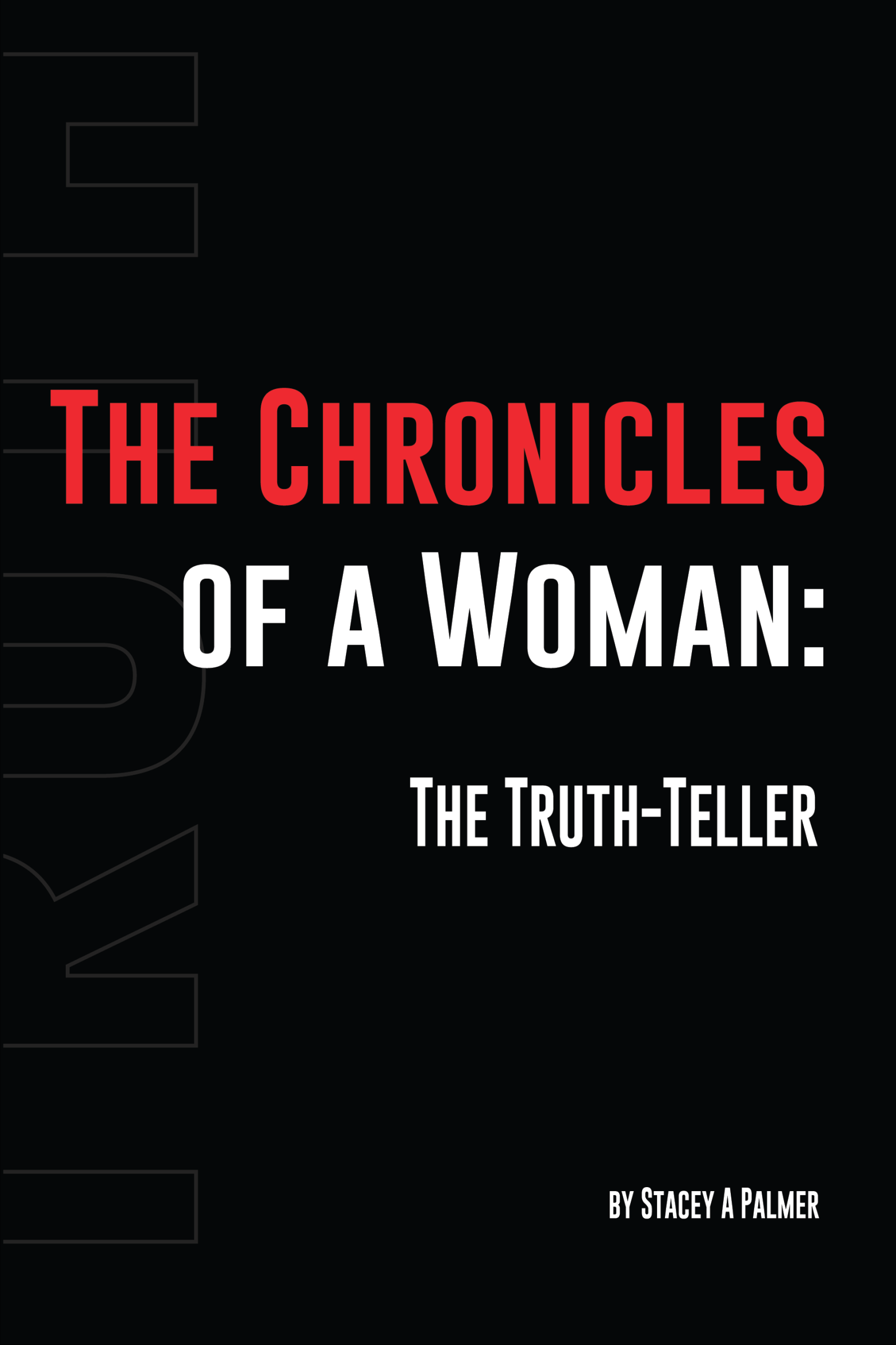
As you ponder on the friendships in your life, please enjoy a member of NEAT[2] reading of my poem, “Sacred Reciprocity”, which she performed on March 13, 2021, at the virtual book launch of my first poetry anthology, “The Chronicles of a Woman:  The Truth-teller”, which is now available on www.amazon.com or contact me, if you are in Jamaica and would like to purchase a copy.  The poem highlights the significance of returning the love (friendship) you receive, in Christ!


[1] https://www.researchgate.net/publication/330476073_What_is_Friendship

[2] The New English American Theatre (NEAT) is a German non-profit theatre troupe in Stuttgart, Germany. The troupe presents an annual fundraising project called “V-Day Stuttgart” to raise money in order to fight gender-based violence in and around Stuttgart.

THE AUDACITY….Boys to men!

I am literally experiencing a kaleidoscope of emotions right now.  I am tired, drained, angry and confused from all the news about women being beaten, raped, abused in one way or the other and killed.  I just don’t get what is happening.  I know that this is nothing new and that women have been suffering at the hands of men for ages and that this is a global crisis, but it just seems more prevalent now than it has ever been, and I feel …. HELPLESS!

I thought about all the other adjectives I could use to describe how I feel, but literally could not come across anything else that correctly sums it up than helpless.  In fact, it made me scared to write that word, because I felt that admitting my situational helplessness was making me more vulnerable and endangered than I have been feeling of late, and I do NOT want to even echo that out into the universe, for VERY obvious reasons.  So, there you have it.

But really and truly, what is going to happen to us women?  What do we need to do to put an end to this violence that is being meted out to us?  What is it that we are missing in this man-woman equation?  Why is the man-woman math not adding up?  WHAT ARE WE MISSING AS A WORLD that allows so much hate to be projected and perpetuated toward the female species by our male counterparts. 

I wrote an entire three-page blog on the matter of rejection and it being a main reason, but I just didn’t feel like posting that, because my heart feels so broken, and I didn’t feel like appearing to rationalize the male’s response to us, nor did I feel like confusing the issue with what may come across as justification, even if that weren’t my intention.  I made the decision to abandon that three-pager (for now) and just let my emotions guide this piece, because there is a time and place for one’s emotion, and this Gender-based violence pandemic, is such a time; YES, GBV is a global pandemic! 

Women are hit hard with a double whammy since the bulk of the COVID-19 pandemic responsibilities have landed on our heads and statistically we have been the most affected; plus, we are also forced to deal with a continued GBV pandemic that appears to have no end in sight!

Enough already!

As women, we have had so much to deal with.  We carry the man’s seed to bear his children. But it doesn’t end there; we are responsible for mothering children (even those that are not our own), which involves everything from feeding the children to transforming society.  And it doesn’t end there.  We are responsible for raising girls who should know how to protect themselves from men who violate.  We are also supposedly responsible for raising girls who should know what to do to PREVENT men from violating us.  We are also responsible for raising boys to become men who love and respect women. BUT GUESS WHAT?  This is not going so well, because they end up killing us.  It is too much!

With this in mind, is it, therefore, wrong of me to stand resolute in my assertion that ….

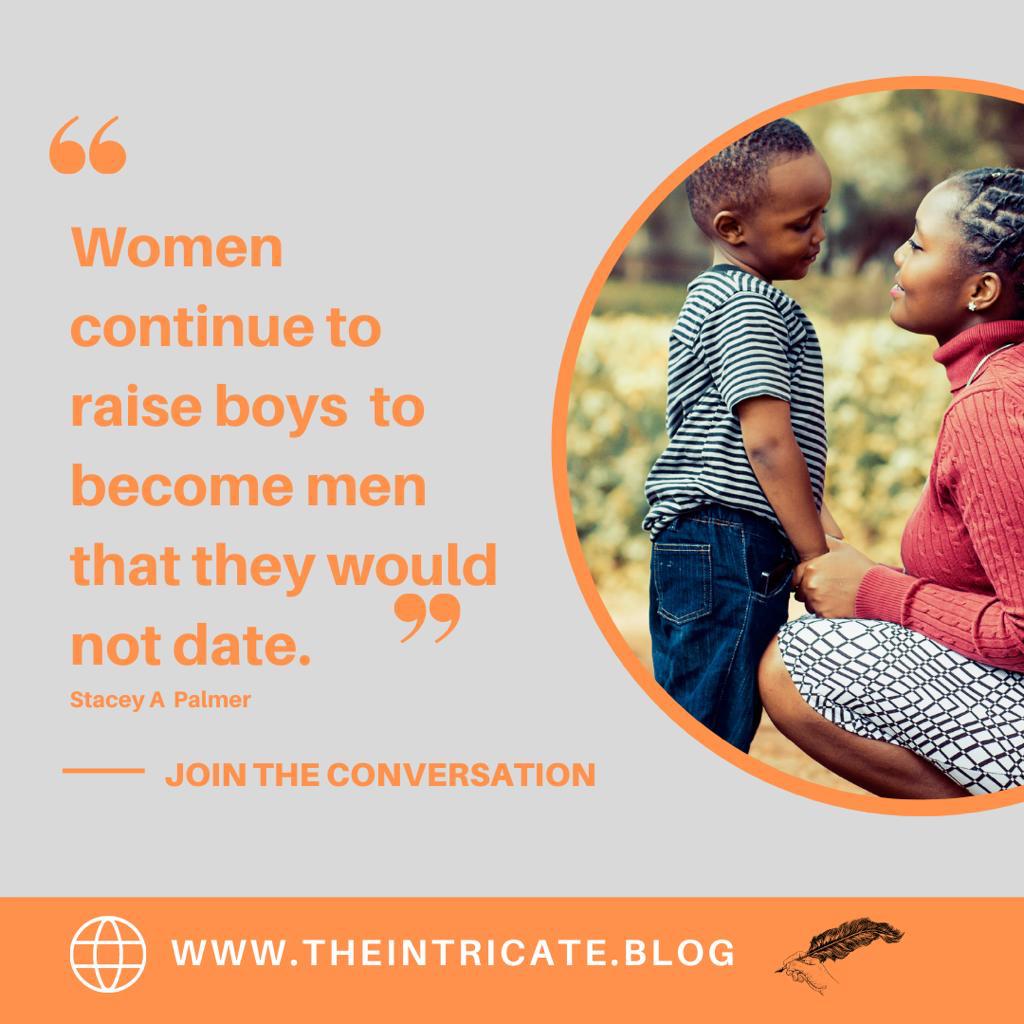
women continue to raise boys to become men that we would NEVER date. 

But why though?

I concur with Psychotherapist, Barth (2018) that “the social context in which many of these men have grown up teaches that emotions like sensitivity, sympathy, kindness, understanding and dependency are signs of weakness, and that “real men” are tough and hard[1].”  We teach our sons not to cry.  We tell them that the kitchen is the woman’s place.  We don’t teach accountability from an early age.  We equate bad behaviour with cute behaviour – to “boys will be boys” behaviour.  The discipline of boys is luke—warm, while we are hard and fast with our daughters, and the boys witness this in their homes, and in society.  We are unkind to girls, and little boys see this, which continues into their adult lives.  We chase boys from the room when “female matters” are being discussed, so they are clueless when they get older.  We do this, then we normalize these behaviours that spill over into society, and the vicious cycle continues. 

What a heavy burden for the woman to carry.  It seems that we carry the burden of societal ills on our heads, (and I am deliberately not saying shoulders).  We do so much, yet we continue to be hated.  It has to be hate that allows a man to kill a woman who may have offended him in one way or another.  Why is it so necessary to eliminate the woman’s body – her entire being – when she offends you?  Why isn’t leaving the situation a viable option.  Why isn’t conflict resolution an alternative?

Admittedly, I am so conflicted, because even while writing this in my attempts to understand this frightening madness, I feel like I am doing the exact same thing that society continues to do to victims of GBV  –  BLAME WOMEN!  It is our fault for failed parenting, and it is our fault for a failed society.  We blame a woman when she is beaten by her partner/lover…. She deserves it, because she shouldn’t have cheated or lied, or she should have taken better care of HIS children (never mind that the man is not playing his role).  We blame a woman when she is raped… she deserves it, because her butt cheeks were out – her shorts were too short.  We blame a woman when she is killed by her lover/the man who takes her to work in the mornings …. She deserves it, because she took his money and his gifts, and she knew she didn’t want him.  

The audacity of me – a woman – to be talking about the role that a woman is expected to play in the upkeep of society within the context of its moral standing.  This is what we have been taught though. This is what society dictates.  Even as I have some discomfort in my own assertion (because it feels “blamey”), I cannot help but agree that the role of the mother IS a significant one that cannot be ignored.  Be very mindful, though, that mothering is not limited to she who gave birth to him; we send our boys to school for 8 hours out of the day where 75% of the teachers are females; they are being mothered there too. Let that sink in for a bit. The global society tells us that she should bear the children, rear/raise the children/ teach boys what it means to be a man.  She is responsible for teaching a boy how to treat a woman, and when she raises a boy who becomes a man who hates women, she is chastised, because she failed to ensure that he acted in accordance.  It is her fault.

Women are not able to catch even one break!

The audacity of society to burden the woman simply because she is woman. But… we cannot ignore our role and the impact that we are making (positively or negatively).

So where are the men in the parenting process?  What is the role that the men are expected to play in the boy—rearing process and why is it the woman’s fault for raising someone who becomes a murderer, rapist, abuser, etc.

The interesting thing about this is that men who abuse women would confront anyone who violates his own mother.  Yet, he has no qualms about massacring the one who operates in his mother’s likeness.  She who bears his child.  She who is contributing to the growth of society.  She who is simply trying to make ends meet to care for her family.  She who has just started life.  She who is loving her growth and contributing to his.  She who cares for him.  What foolishness is this, and from whence does this foolishness stem?

The audacity of these men who continue to abuse, rape and murder our women to think that somehow, their mothers are the only ones worthy….

(The question that begs to be asked here is, “Could it be that the “protection” of his mother is simply a performance of what is expected rather than a true enactment of the respect they ACTUALLY have for their mothers?”…. since maybe they have NO respect for their own mothers?)

Why then, having suffered so much at the hands of men who hate women, who were raised by women whose pain have been evident to them (men the world over), do we (as women) continue to raise boys that we would never date?

Evidently, I have answered nothing really, because I have NOT the answers.  No one does, apparently.  This is why there have been so many Conventions, Treaties, international think tanks, global meet-up, global funding, advocacy groups, public outcry etc. established to figure this out, but NO ONE has been able to quell the noise – to eliminate the concern – or to stop the violence against women.  Gender-based violence is that enigma that we have not been able to decipher….

… not a single solitary soul knows why!

Do these men not realize that the women they abuse, rape and murder are their own mothers (I am her; she is me)….. or is their knowing the reason for their doing?!!!

Loads of food for thought to ponder.  May God help us all!

As we pray for each other while we navigate this GBV pandemic, please enjoy another reading from my recently-held virtual poetry book launch (March 14, 2021), The Chronicles of a Woman:  The Truth-teller.  This performance of Worthy Too is quite fitting, since it examines the connection between the man’s treatment of his mother in relation to the treatment of other women.  When you are finished,  thank you for heading over to www.amazon.com, and purchasing your copy.


[1] https://www.nbcnews.com/think/opinion/why-are-men-so-terrible-what-can-we-do-about-ncna895306

No fear for the smear!

You do yourself and your community a disservice when you keep hidden the ways in which you have successfully navigated certain ills to come out on the better end of it.

————————————-

I was chatting with a friend who hinted that an acquaintance was trying to figure out how to deal with being publicly smeared and emotionally battered by someone he/she was once close with.  Of course, being someone who has come out the other end of a smear campaign, I cannot help but consider my own experiences with this, and how I navigated, for the most part.

I, therefore, start by saying, if you know anything about a “smearer”, you will know that their attacks are relentless, especially if you appear to be thriving.  They will not stop!

What is a smear campaign and why it happens?

The Cambridge dictionary describes a smear campaign as a planned attempt to harm the reputation of a person or company by telling lies about them.

As Psychology Today puts it, “the smear campaign is born out of a combination of factors, including the need to be right and have his or her “truth” become the prevailing script, retaining status and standing (making sure that his or her inner hidden shame doesn’t become public), and maintaining control of his or her image[1].”

Consider this perspective for a minute:  imagine a political candidate who wants to be elected – wants to be favoured – wants to be revered (as most politicians do.  This person (along with everyone on the campaign trail) literally goes around their city/town/or country (depending on the nature of the office they hope to occupy) and they try to convince voters (and all other stakeholders) that they are the best person for the position, while convincing the public that their opponent is the worst thing on the face of the earth.  They typically do not stop until they have achieved their objective, and they use all the tactics they can think of to ensure that they do. 

The smearer (yes, I am saying “smearer”) operates in pretty much the same way; this is why it is called the smear campaign.  The objective of the smearer is to get all and sundry, especially those with whom they know you will interact, to see you in a way that is typically demeaning and disgustingly lowly and for them to be viewed as the very opposite of that. 

The smearer will intercept and taint places like your workplace, your garbage collector, the gas man, your children’s teachers, your co-workers, your friends, your pastor, your supermarket cashier, the guy who carries your bag, the gardener, your doctor, the mechanic, your family – anyone who will listen; no one or no place is off limits to the smearer.  The unfortunate thing about this is that many will grab the story and take it as gospel, because typically, the smearer is a great narrator, who often comes across as credible (for one reason or another).

One thing is for sure, your REAL friends and those who see through the bullshit, will not come to you to tell you about the nasty things that they have heard about you.  They understand that there is no real value in the relay.  These few people usually understand the campaign play and are fully aware that doing this is like stepping in dog mess and carrying the smell to share with you.  What is the purpose of sharing stench? your real friends will NOT do that to you. 

So what should you do?

DO NOT RESPOND.  DO NOT REPLY.  DO NOT ENGAGE.

There was a time when I did all three.  I responded.  I replied.  I engaged.  It took me a while to learn that doing this is a mistake. All it did was to cause me distress and grief, which provides the smearer with satisfaction. 

Today, you can catch me on the other side of that. 

There is no point nor is there any value in trying to convince those who fall for the stories – the lies – the smear – that none of it is true or that the truth has been twisted to suit the smearer’s campaign.  When you do that, all you are doing is feeding into the lies and giving it additional life.  The persons who have latched on to the smear-narrative have already made up their minds about you, so anything that you say or do in response to what is being said will add to the discourse, which will then be twisted and turned into something else that you did not intend.  Furthermore, the ones who have been convinced are usually those who are quick to spread, thereby activating the wild-fire effect of the smear.

If one of the campaign workers bring the story to you, do not listen.  As hard as it might be, it will prove helpful to your mental health to stop them in their tracks and skedaddle.  This is very difficult, because you will feel the need to defend yourself.  You are encouraged, however, to resist the urge. Do not engage.  I repeat:  DO. NOT. ENGAGE.  Once you hear something, you cannot “unhear” it, and the dirty lies you hear being told about you WILL affect you (in some way), especially if you have not yet developed an antidote to ward off that which will seep into your psyche and mess up your day/week, etc.   Once you understand the reason for the smear campaign and how the tactic works, you WILL get the value of walking away and sitting in prayer.   Once you educate yourself on the pathology of he/she who smears and the campaign that WILL ensue, your ability to not engage WILL improve.

Whilst the smear ensues, so must your prayers.  It is easy to be filled with contempt and hate, because no one likes to be lied on, but this is where you are required to dig deep and let love remain…. Inside you.  This simply means praying for yourself AND for them, even while they attempt to destroy you. Bottom line – do NOT fear the smear!  Just “lay low, and let the storm pass over your head[2].”

While you do that, be inspired by another reading of a poem from the virtual book launch, of “The Chronicles of a Woman:  The Truth-teller”, (my first book of poetry), read by Learrie from Grenada.  This poem, “Lay Low” is the perfect guide on what to do when a proverbial storm rages.  When you are done,  thank you for grabbing your copy from www.amazon.com


[1] https://www.psychologytoday.com/intl/blog/tech-support/201906/dealing-the-narcissists-smear-campaign

[2] Lay Low by Stacey A Palmer from the book of poetry, “The Chronicles of A Woman:  The Truth-teller”

Just laugh….OUT LOUD!

I am sure there are times when my neighbours wonder what it is that I am laughing about.  As much as I am an introvert is as much as I love a belly full of laughter and will literally do so by myself – loudly; I simply refuse to stifle my laugh.

With all that is happening in this world, and specifically in the land of my birth, many will say that there is NOTHING to laugh about.  I understand the reasoning within the context of this pandemic, that there is hardly anything to smile about let alone laugh out loud about.  I argue, however, that even in the midst of that, we have to find something in each day that brings us laughter…. And if we don’t see it, we must seek it out – somehow – in our work lives, home, or otherwise.

I work alongside someone who loves to joke and laugh, so there is NOT a single day, once we are in the office, that we are not laughing.  We laugh about what some would consider the strangest and most mundane of things.  We laugh about our lunch, our shoes, our walk, our hair, her lunch bag (she has the largest lunch bag I have ever seen), our dry hands (from all the sanitizing), our hunger, the cost of sweet peppers, the cheapness of tomatoes (now as opposed to months ago), her dance, the way she sings without knowing the words… we find laughter in EVERY SINGLE THING, within the ambits of the workplace. 

This type of daily laughter helps to improve the work environment.

Laughter in the home is just as important: my offspring believes she is hilarious, which in itself brings comic relief and laughter.  She likes to give jokes… not true… she loves to give jokes, but is terrible at it.  So the telling of the joke is usually where the laughter resides, for me.  She knows this, which is why she insists…  “My jokes are hilarious,” she says.  I beg to differ.  Your jokes aren’t; YOU ARE!  LOL

Adding laughter to your home, makes for great stress-relief!

There are other impromptu moments of laughter that I enjoy throughout any given day.   For example, my niece makes me laugh; she is the funniest 2-year-old you will ever meet. Driving in my car and singing loudly makes me laugh; some of my outfits make me laugh (because why on God’s earth did I wear those two pieces – TOGETHER. Can someone say CLOWN SUIT). LOL

The same is true for my close friends.  The conversation may begin serious and by the end, we are laughing at ourselves. It might be the way that he or she said something that I found funny… or something that they did that they are sharing… matters not; once there is something to laugh about, I am going to laugh uninhibitedly, unencumbered and unabashedly. 

Me? Naah ask Christ! (something that Jamaicans say when they are very sure and do not need any type of validation or confirmation from any one).

Other sources of laughter can be found in many programmes on TV and YouTube.  Do not get me started on the reruns of Family Feud or the Dumbest Answers on Family Feud compilation; laughter for days!  Or it could just be me attempting a dance routine that I have no business doing.  Aaay sah!

No matter what, I make it my point of duty to seek out my daily laughter when it doesn’t freely find me! 

I have found that memory is also a good laughter-source:  I have very fond memories of living with my sister and cousins in my late teens and the ways in which we would laugh so often and so loudly that my grandmother would get home and tell us that she heard us from all the way down the road.  We would often laugh at the way in which she mimicked our sounds…. Maybe this is from whence my propensity for freely laughing originates!  Whatever the case…

Bottom line, we need to laugh.

 Sometimes while watching a youTube video, I scroll through the comments and burst out in belly-hurting laughter, because human beings are funny.  Have you ever started laughing because you heard someone else laughing?

I have….

Have you ever stifled your laugh because the person giving the joke is not a friend or you are at odds with that person?

I have done this before (a long time ago), but I caution you….

NUH DWEET! Spread out yuh mout and laaf!

So why is laughter so important?

We can all agree that the presence of laughter does not mean the absence of problems.  Nevertheless, every single source I consulted agrees that laughter has many benefits and encourages its daily dose. My findings substantiated what I already knew:

  • Laughter is the best medicine
  • Laughter provides stress relief
  • Laughter makes you lighter
  • Laughter activates many areas of the brain; it strengthens neural connections and helps a healthy brain coordinate its activity. [1]

On the other hand, there is something called “bitter laughter” that comes about because of something negative.  According to Volland (2020),  “while this kind of laughter may seem beneficial on the surface, it can leave you feeling worse afterward. Cortisol—aroused by negative reactions, including angry laughter—triggers the brain to scan for threats. When triggered, the cortisol response lasts within the body for about an hour, making it easy to get caught up in negative emotions[2].”

Prior to doing desktop reading for this blog, I had not thought about this “bitter laughter” concept; it makes sense and is definitely something I will explore further outside of this piece. 

In any event, the next time you find something to (positively) laugh about, let’s throw caution to the wind and allow the laugh to freely travel from your belly bottom and resonate out into the universe.  Trust me when I tell you that it helps with the mind, body and soul.  And if there is no one around to provide comic relief, the way my offspring, co-worker, friends and family do, search for your laughter and you will find it.  I know I do – almost every single day – even when rock-bottom lies to me and tells me I have nothing to laugh about.

Before I end, let me use the opportunity to remind that there IS a difference between a chuckle and laughter.  They are not one in the same nor do they yield the same results (mentioned earlier).  So don’t say you laugh all the time when all you do is chuckle.  A chuckle is merely a quiet internal response, while laughter can be heard by others and felt deep down in the recesses of your soul.

So, as for me and my belly-hurting laughter, I am going to let it go freely – under my mask of course in public spaces.  But while in the comfort of my home (and car), my neighbours will just have to learn to laugh at the sound of my laughter (or become annoyed by it – the choice is theirs), because I aint gonna stop….

…and that’s on Mary had a little lamb!

While you go in search of your laughter, check out one of the readings from my recently launched book of poetry, “The Chronicles of a Woman:  The Truth-Teller (available on Amazon), and have yourself a laugh; everyone in attendance was tickled by Claire’s recital. When you are done listening, etc., thank you for heading over to amazon and getting yourself a copy.


[1] https://www.sciencealert.com/laughter-can-improve-your-mood-and-relieve-your-body-and-mind-of-stress

[2] https://nrchealth.com/the-importance-of-laughter/

MY PEN SAVED ME.

Today’s post is being made the day after my first book was published and the day that my book launch for “The Chronicles of a Woman:  The Truth-teller” will be held.  As I sit and reflect, heart racing and nail-biting, I remember the days when I felt that all I had was my pen. 

In the days of my youth, I didn’t quite understand how my need for silence could exist with my burning passion for speaking the truth and standing up for what is right.  One minute I was as quiet as a lamb, and the next minute I was using my voice to advocate for some kind of justice in my little corner… either justice for myself or for someone else.  The conundrum I faced (and continue to face) is that neither I nor others could appropriately place or reconcile that my desire for silence (and being alone) and my desire and ability to use my voice could be the whole of me.   As a child/teen, this frustrated me, because I didn’t know how to explain it – not even to myself:  I have something to say, but I don’t want to speak unless I MUST and when I did, I would say it exactly as I saw it, often to my detriment.    How do you reconcile the two?  Most couldn’t. 

But that conundrum didn’t faze me – not fundamentally; I remained in that dichotomy and on the days when things were unbearable – when childhood dreams were interrupted – I reached for my pen.  I wrote about everything, and I read about everything.  I felt life and observed my surroundings and scribbled matching words that hid in plain sight; those scribbling became my release, my escape, my joy, my pain – my poetry.  I realized soon that whatever the story, whatever the feeling, whatever the moment, I could jam pack everything into a few stanzas that told the entire story but which only few were able to see.  I liked that, so I continued to do that.  I told the entire story in one poem.  I REALLY loved that idea.  Aside from that, I realized that my writing was my healing, so I continued.  Then I realized later that my poetry, etc. was someone else’ healing, so I continued to write, but didn’t always share.

Once I discovered the power of the pen, I used it to help myself to navigate those moments of utter darkness and to celebrate the moments of bliss.  I have no idea where many of those early pieces are today, since I would often write in the back of my school book or on pieces of paper or in a diary. 

Today, as I scroll through the pages of this compilation (the first of more to come), I am nervous as heck.  While the anthology is not all about my experiences, I still feel some amount of vulnerability, because the truth does that!  Aside from that, I am not sure what else I am feeling.  These are pieces that I have had for a while and pieces I have written in the last few years and some in the past months. 

The book, as it is meant to be, has something for everyone.  As the name suggests, it chronicles various topics, including love, relationships, friendships, parenting and anything that falls within the realm of heartbreak, healing and self-recovery.  “The Chronicles of A Woman, The Truth-teller,” is honest, raw, soothing, somewhat controversial by mirroring the woman’s pain and joy.  It doesn’t just stop there.  While the book chronicles the challenges that many women face, there are pieces that highlight, and in some instances, celebrate the male’s presence (positive and otherwise) in relationship with himself and with others

I am hoping that as much as my pen saved me that these pieces will shed light on some very important issues and help someone to navigate their life so that they can truly LIVE!

The book is now available for purchase on amazon; follow the link below:

Check out the virtual book launch on zoom. Meeting ID no. 849-1513-3627 on March 14, 2021 at 2 p.m. GMT.

FORGIVE YOURSELF….

“Hold your head up, and do NOT wear your shame like it’s your skin” – Stacey A Palmer

She has offended you, somehow.  She apologizes and seeks your forgiveness.

You refuse (for whatever reasons internal to you).

You see her smiling and going about her day.

“She doesn’t appear contrite,” you say.

“Farthest from the truth,” she humbly responds.

You want more than that from her; yet, she doesn’t try to convince you. It is pointless, because what you do not know or refuse to understand is that she has already prayed earnestly about the “offense,” and He has forgiven her; she has forgiven herself and have opted to move on, as best as moving on allows.

_______________________________

It sounds easy when you are forgiving yourself for something that you may have done to someone else, doesn’t it? I attest, however, that it is not as clear cut when you are forgiving yourself for the choices you have made that have been detrimental to yourself (and those in your charge) – within the standards you have set for yourself.  Forgiving yourself when you have “offended” yourself takes deliberate self-talk, deep introspection, self-love and a deeper sense of awareness that one must dig deep down into the recesses of ones soul to muster, master and allow to materialize. 

Forgiving yourself for doing or being something to yourself that doesn’t honor yourself is not for the faint of heart, but this is not an impossible feat.

How do I know this?  Because I have taught myself how to do this, and learning to master the art, still!

But this wasn’t always the case.  There was a time when I would have wallowed in the idea of someone else’ forgiveness and would have been bothered until the offense was somehow erased from my psyche.  There was also a time when some of my choices/decisions (work, relationship, friendship, money decisions, purchases, negative self-talk, parenting, etc.) made me feel horrible about myself, and I would have held on to those negative feelings for a while without acting in forgiveness of myself.

That was a long time ago….

Today, I am the opposite of that.

Once I agree that I have “offended” someone, I am not afraid of asking for forgiveness; however, I do not rely on another person’s forgiveness in order to move on. I apologize and leave the “offended” with the choice – to accept my apology or not.  While I hope for the forgiveness, it is not a requirement for me to forgive myself.

Selfish, some may argue, but I won’t belabor that point.

I stay stuck on self-preservation and practicing self-love (something I am still learning to do).

As it relates to forgiving myself for something I have done to myself, the process is almost the same, except it is a lot harder.  There are things about ourselves that no one else knows about us.  There are those things attached to our hopes, our dreams, our fears, our beliefs and those goals we have set for ourselves that will bombard us and lie to us each time we blunder and prevent these things from actualizing.  We hold on to these blunders, because we feel we have somehow failed ourselves.  Then the ongoing self-punishment ensues.  This involves sitting and stewing in our blunders and not letting go of our blunders thereby holding ourselves in indefinite contempt of ourselves, so it eats at us.

This is what it feels like when we do not forgive ourselves.  At least that is what it feels like to me.

When we forgive ourselves for what we have done to ourselves, we are kind to ourselves.  We may feel regret, but we do not dwell in it. We hold ourselves accountable and accept our blunders for exactly what they are.  We go through a process of deep introspection and we accept our role for what it is.  We pray, regroup, reimagine, release and then we move on.  We do not ruminate indefinitely in regret.

Admittedly, the act of forgiving oneself is more difficult when you are privy to the pain that others experience because of your actions… (but that is for another post).

Is it more important to be forgiven by someone else than it is to forgive ourselves?

Some may say that both are equally important; others may also argue that to live peaceably in this world with others, it is important for others to forgive you.

While in an ideal world, both would be the best scenario – to have someone forgive you and for you to forgive yourself, we all will agree that that is not always the case.  When we are sincere, and we apologize, we hope to be forgiven.  However, being forgiven by someone else hinges so much on the other person’s value system, propensity to heal, ability to let go, personal expectations and goals they have set for themselves, traumas they have not healed from, etc. etc. that it makes no sense being stuck in that space with someone trying to navigate their own personal systems in order to get around to them accepting an apology and offering forgiveness.   The forgiveness may never happen or may occur months or even years from the request for forgiveness.

With this in mind, I categorically agree that we must learn to forgive ourselves when we have offended someone and normalize forgiving ourselves when we have blundered against ourselves. 

In a nutshell, when we forgive ourselves, we:

  • We accept responsibility
  • We learn from the blunder.
  • We correct our mistakes
  • We are resolute in being better to ourselves and others
  • We do not sit in regret
  • We release it and move on.

It is true that we all need people, but much of our struggles come from allowing ourselves to be held prisoners by our blunders. The struggles come when we sit in that space of regret and negative stronghold all in the name of waiting to be forgiven.  When we are not, we pine and cause ourselves grief as we stew in the sadness caused by the unforgiveness of others. 

Why should that be our reality?  An alternative should be more appealing, regardless of how this might be interpreted.  The truth is, everyone has a different picture of what it means to look contrite and what it means to forgive and be forgiven. 

So, forgive yourself (no matter what), remember who you are and whose you are, and move on!

IS THE WOMAN ALWAYS SCORNED?

The story of a man and woman parting and the man quickly moving on to the next available person is not unique.  It is also not unique that the man can easily start a relationship – in whichever way –  with the woman’s best friend, sister, boss, cousin, church sister, mother, perfect stranger or his “friend”.  In fact, in more cases than not, the way in which the “move-on” occurs is done to inflict pain.  These things happen.  There are some men who simply operate like this without thought or consideration, and there are many women who will not see anything wrong with this and will encourage the “interactions” as well as the instructions given. 

Generally speaking and within the context of a “new scenario”, we tend to romanticize our decisions and our position, because we feel like we have come to save the day.  We are often of the opinion that it is our duty to take our new interest out of the horrors that he/she has had to endure with this other person (based on hearsay).  More specific, the stories that the woman is sold is so bad that she feels inclined to join him in his quest to denigrate the other woman whom she is sure has treated this “wonderful man” in a horrendous way, considering all the good he has done for her and how honest and kind he is to her, in the beginning.  In fact, in this new position the “newly elevated” woman is more inclined to believe that this “scorned” woman is pining after him and wants him back.  How desperate can she really be?

But that is the romantic version that many women opt to believe, until her lived experiences (with him) becomes all too familiar.

The story of a woman belittling another woman when she has received what she deems to be the prize is an age old one.  Women have been taught this somewhere, and men know this; some use it to their advantage.  

Why can’t the new woman just date him without helping him to “fight” a woman she knows NOTHING about? 

I do not have enough hands to count the amount of times I have heard (directly or indirectly) a woman speak horribly against another woman because of what she has been told by the man.  What makes it even stranger is that the disparager would have, herself, gone through turmoil with another man – something that lets her identify with the other woman; yet, she would still accept the disparaging story she has been told without even referencing her own experiences for guidance.  It is as common as it is strange.

But what does it profit a man (and his new woman)?

The “woman scorned” mythology has been used to benefit the narrative of many relationships that have ended.  Most are not honest enough to say that the other person was the one who walked away and would therefore not indicate their own efforts made to rekindle.  Plus, humans operate with the mindset that men are the superior being – that patriarchy rules – that to be masculine means to NEVER be “left.”  Thus, if a “relationship” ends, then it is more likely that the woman was “left” – that she was scorned.  This accepted mindset is to the man’s benefit, because he is able to create the narrative to suit his ego retention.

Furthermore, to accept the “woman scorned” narrative is more salacious and entertaining, as well as a more plausible reality that keeps the man at the helm of society.  In this way, his masculinity is never questioned. 

What “weak” man would allow any woman, especially if society deems her to be “below” him, to leave him?

The fallacy of it all.

Some may not agree, but only a few who understand the alternative may accept the truth:  she was the one to have walked away for very sinister reasons that he would NEVER admit, openly.  So, rather than entertain the possibility of an alternate reality, the “better” woman believes herself elevated and must, therefore, perform the “hate” that she has been sold.  Plus, in order to prove that he is done with the “other” woman, (even as he entertains other thoughts), he must perform his disdain, very loudly.  This performance is necessary to him because:

  • It helps to repair a bruised ego
  • His masculinity is maintained
  • It proves the “woman scorned” narrative.
  • It keeps the “better” woman in his grasp.
  • It sends the message to the audience that the “other” woman was “no good”.
  • In his mind, he is inflicting unto the “other” woman the level of pain that he has secretly felt.
  • The new woman feels chosen and special and will therefore treat him special and possibly revere him in the way that he requires.

So what if the reverse is true?

Let us just say, for argument’s sake, that the woman is, in fact, scorned.  How important is this information to the newly-established or newly-public interaction?  Is the performance of hate a necessary binding agent?  Does he have to perform his hate for her to prove his love to the “better woman”?  Why is this even a standard that women seemingly require anyway?

Relationships end all the time for reasons that the parties involved do not always reveal.

Understandably, the new couple (of friends/lovers, etc.) must operate in unison to prove to her, the public and to anyone who cares that “he no longer wants her”.  Whatever the case, he benefits from a society that is more inclined to accept that she is the “woman scorned” than to believe that he is!  

THE SILENT DILEMMA OF WORKPLACE ABUSE

 “If she causes me so much distress, how does she expect me to perform my job well?”

I could tell that my friend was extremely stressed, and by the end of our tête-à-tête, I was able to garner the issue to be a long-standing one for him.  He explained that he had been working in on-the-job-hell, with no end in sight.  As he continued to relay his experiences to me, I realized one very profound thing: his experience was not unique.  On the contrary, this type of workplace abuse is often experienced by so many, yet it goes unchecked, because often the abuser holds a much higher position than the abused.

I recently happened upon a twitter thread of people discussing their horrendous workplace experiences and the effect those experiences have had on them, which ultimately led to many quitting their jobs without knowing from whence their next dollar would come. One statement that resonated from the originator of the thread, who too had to quit his job, reads:

“…there is nothing unprofessional about making fun of managers who disrespect you or your work… silence around abuse only allows it to propagate.”

As controversial as the first part of the statement might be, I do understand how an abused worker could poke fun at the abusive manager as a coping mechanism when relaying the abuse to others.  The second half of the statement is very obvious and true, but often the abused feels powerless to speak up, because of the inflicted punishment that often follows.  What I found was that the persons responding to the original tweet were based in different parts of the world, which is a clear indicator that workplace abuse is more common than it is not – globally.

It appears that this phenomenon is unavoidable

The truth is that a lot of everything happens in the workplace that shouldn’t, because every single workplace, like every other community within every single society has all different types of people from all different types of background with all different types of angst and all different types of morals or the lack thereof.  There is no one single workplace culture that exists in any organization.   While there are Laws, Acts and Policies that should govern how a workplace operates, the workplace culture and the different personality types and moral compass of each person along with fair/fear management are what allow certain things to continue, unaddressed.  Workplace abuse, which includes “sexual harassment, physical violence and emotional abuse[1],” is often experienced by the person of a lower ranking and is often carried out by the person who is in a supervisory capacity or who holds a higher rank than the abused. 

In as much as there are smart and kind people in every workplace, there are also liars, thieves, sexual predators, abusers, misogynists and narcissists too.  The categories presented here are not specific to any gender – good or bad. People are people despite their sex and their position in the organization.  The core of a person does not change because of their workplace position – good or bad.  In fact, a person’s true self is often revealed the longer they remain in an environment.

The workplace is no different.

As much as one can document the abuse they suffer by keeping a log of the things that occur, some supervisors/mangers, etc. who inflict that which constitutes workplace abuse, specifically workplace emotional abuse can often cite issues such as lack of training, employee insecurities and low self-esteem as reason (Bray, 1995) for the “accusations”, which is why it is important for the abused to maintain a log of things as they occur.   From what I have learned and have too experienced (directly and indirectly) supervisors/managers – high ranking officers within an organization – do not always abide by or are not always given the same accountability requirements.  In the end, instances of workplace abuse go unchecked.

When conflict turns to abuse/how did we get here anyway?

“Conflict can occur in any organization when employees with different backgrounds and priorities work together[2].” While on the-job-conflicts occur that are either dealt with professionally and people move on (in one way or the other) ideally, the opposite is also true:  things happen, things fester and people respond to these things in questionable ways – they internalize rather than resolve.    When this happens, the core of a person is manifested; there are different people coexisting in their fundamental state (some of which were mentioned earlier), which is often enhanced by power dynamics.  If we accept this line or reasoning, then we could see how workplace abuse is pretty much unavoidable.  A twitter poll recently conducted revealed that 65% of respondents have experienced workplace abuse, 22% had never thought about it, while 13% indicated that they had never had that experience.

I was recently in a  meeting and got asked the question about how I handle conflict resolution in the workplace/in a team, etc.  My answer is simple.  “Conflict Resolution” does not look the same for everyone, despite what workplace policy dictates, and despite what the HR specialists instruct.  One person can move on from an incident involving two with the mind-set of moving forward respectfully (you don’t have to respect someone to be respectful – but that is for another blog) and focusing on the tasks at hand, while the other person may decide that the resolve they require is more drastic and “pain-inflicting” than the workplace allows.  When a person’s need to exact revenge supersedes reasoning, how then does conflict resolution occur?  At some point, we have to move on respectfully and get the work done, whether we like each other or not.  If protocols are followed and there is a culture of respectability, then the conflict should be “resolved” within the ambit of the workplace.

Sadly, this is not the case for many, if in their estimation the other person – usually he/she operating in subordination – is not sufficiently “punished”.  There are very subtle ways that these abusers will ensure that the offender is emotionally tortured on the job, with the hopes that in the end they would leave.  For example, withholding of information/resources, etc. inciting others to ostracize, preventing promotions, bad-mouthing, and ignoring staff, etc.  The abuse becomes unbearable when a worker’s punishment for an “offense” is never-ending and overlaps into every single dealing they have in the workplace.  There is a lot of borrowed hate (Stacey A Palmer 2020) that happens in large groups/organizations, and others will take it upon themselves to help to inflict the “required punishment” on behalf of someone else, especially those whose on-the-job power renders them unaccountable in relation to the organizational hierarchy.

The dilemma

It becomes a silent dilemma, because so much of this type of abuse goes unchecked, which means that many people are operating in their “9 to5” spaces in utter discontent and unable to function at their optimal.  For some, the thought of getting up each day to enter into that space is very distressing that it can cause a person to suffer anxiety, which can ultimately lead to health issues; the resulting effects of this can be very sinister.  Within the power dynamics, it is usually easier to prove a person’s under-performance than to address those workplace causalities.  Ultimately, no one cares, especially when the perpetrator holds “an upper level” position.  The way they see it, you are at work to work, so you are expected to perform, despite what is happening and by whom the distress is being inflicted.  Herein lies the dilemma.

(And don’t even think that with the online modality that is required in some organizations that this has changed.  Abusers WILL find a way you use Zoom or any other online platform to inflict emotional abuse, but that is for another discussion).

So, what do we do?

It is all well and good for organizations to establish policies that govern operations, but what is the point if they are not used?  People are generally afraid to speak up, even when they witness or experience first-hand emotional and other types of workplace abuse.  Fear management vs fair management (Stacey A Palmer, 2020) is perpetuated. Higher ranking staff who abuse are typically very aware of the power they hold and are often also aware that they are in contempt of workplace ordinance because more times than not, everyone involved understands that the matter, in light of the power dynamics, is treated with scant regard – your word against theirs.

It is, therefore, important for workers who experience workplace abuse to become familiar with their right as workers and to stand in that right.  It is also critical for proper documentation of the abuse to be maintained.  In an ideal situation, the abuser stands accountable, but often they don’t – not in the workplace – and usually not in real life, because of how emotional abuse is often perceived and handled.  So to maintain one’s sanity, it would best to leave, but we all know that is also not always possible. The workplace is an extension of society, so matters of abuse often go unaddressed.   Regrettably, advocates and unions are slow in addressing these matters, but people are encouraged to speak up so that the abuse is not propagated.


[1] Bray C. Defining Workplace Abuse. Affilia. 1995;10(1):87-91. doi:10.1177/088610999501000108

[2] https://www.shrm.org/resourcesandtools/tools-and-samples/toolkits/pages/managingworkplaceconflict.aspx

Leisure time is productivity too!

What does it mean that almost everyone I know, (myself included) has multiple streams of income, and are most times too tired to think, because of how hard we are always working to earn the next dollar or to simply make ends meet?

We live in an era that constantly bombards us with overt and subtle messages that we don’t realize that we are constantly being force-fed messages about the significance of having multiple streams of income that if we do not, we are often left feeling a sense of worthlessness and shame because of our inability to achieve the “living my best life” image that the “Insta” photos constantly promote. 

On every single social media platform that I can think of, the testimonials about the luxurious benefits of earning more have inundated our screens and have seeped into our sub-conscious thereby influencing us, in one way or the other.  If what the media theorists and Public Relations Specialists say about the psychology of media messages is true, do we really have control about how we are responding? According to the Science of Influence Report (2017)[1], Social media is influential in decision-making across generational categories. So, as much as we think we are in full control, we are often guided….one way or the other. 

Before those in the back have my head for this, let me hasten to point out that I am not saying that a person with multiple skills and/or specialized training or even a passion for something should not maximize on opportunities to ensure that they derive the best financial outcomes.   Instead, I am suggesting that as important as that is, it is also important to strike a balance and understand the importance of making quality time for leisure.  Most of us, regardless of this understanding are still unable to. 

It is, therefore, not shocking to that I am admitting that I experienced a strong sense of guilt over the holidays when I spent 10 days just chilling, leisurely.  My leisure-chilling involved basking in nothingness and engaging in “Seinfeld moments conversations” with close friends, as well as watching a Series or two or three or ten.  Never mind that the nine months prior (since the start of the global pandemonium) I was preoccupied with school (teaching and learning), workplace woes, pandemic panic, mental health mayhem and writing – A LOT.    So my 10-day hiatus would have been the needed break.

Yet, we have been so brainwashed to believe that to sit and be still – to find time to listen to the world around us – is unproductive. 

How terrible for us! 

Well, in one of our dining room impromptu quick-chats, I was recently reminded by my offspring that “leisure time is productivity.”  Just like that, she put everything into perspective in four simple words.  It was interesting to hear her take on this, and I thought to myself….

She is very correct.  Leisure time IS productivity, too.

We are definitely being productive, when we treat ourselves to leisure days.  When we do, we are recharging the only us that we have.  Without taking part in leisure activities, we would become robotic humans incapable of truly enjoying the very things and people that we work so hard for.  Let the church say… Amen!  I’m sure that we all agree that life is about more than the multiple jobs that we have.  It follows, then, that we all should strive for leisure time – especially those who work more than they rest. 

How can we truly achieve anything when we are, without real break, so locked into ourselves – so insular – that we do not even take time to appreciate the very small things in our surroundings:  to watch a movie, to listen to our favourite genre of music, to read a book or an article on our favourite topic, to spend time with love, to get to know someone (aahhhmm… well … for those people-persons) or to do just about anything that will bring us the needed break that takes us away from our everyday bustle – to find leisure without work looming over our heads.  Leisure is the leave of absence from work that the mind needs to feed the part of us that require rest and recreation. 

I can attest to the fact that to do otherwise will result in pretty much the same outcome:  we work ourselves to a frazzle that the result is diminishing returns. Lord knows that I, too, have experienced this.  I find that when this happens we tend to lose the purpose and passion behind why we were doing the particular thing in the first place.  Creating that deliberate leisure, based on my offspring’s declaration, means that we are creating a healthier us – mentally and physically – that lets us be better to ourselves and ultimately to our loved ones.   How, then, could anyone not agree with her theory?  After all, we are being productive when we care for ourselves, right?

How do we strike the balance and create the leisure time that we need?

I imagine that most of us will find this a very difficult question to answer, especially within the context of trying to attain those individual goals that we have put in place for ourselves, which we cannot achieve without multiple streams of income.   From my perspective, there is there is no one answer for this.  For me, leisure is not just about sitting and doing nothing.  It is also about taking the time to do something that will literally serve to rejuvenate my mind, spirit and body. If I sit still just to worry, then I am not acting in leisure; I am operating in turmoil, and turmoil cannot bring the peace, mental and spiritual rejuvenation that leisure is intended to bring.  Admittedly, I striving daily to take worry completely out of the mix.

In saying that, I do believe that we each must find that thing that we constitute to be leisure and then practice it well when we do.  I bet after we have deliberately allowed ourselves to accept the importance of leisure time, that we will agree with my offspring that “leisure time is productivity”.  As for me, I will no longer adorn myself with the guilt of taking my leisure as seriously as I do my income-generating endeavours.

Having done that for myself, how do I get the offspring to practice what she so beautifully asserts? That is the parenting question of the day.


[1] https://instituteforpr.org/science-influence-social-media-affects-decision-making-healthcare-travel-retail-financial-industries/