POSITIVE PARENTING: It is NEVER too late!

While the challenges of the pandemic are mounting, we are forced to dig deep within the recesses of our soul and everything we have been taught in Sabbath/Sunday school about God’s goodness and His grace, in order to get through it all.  I know that I cannot be the only parent who has said “I’m over it” at points, because I am also the parent who says “everything happens for a reason…” or “in God’s timing….”.  Even though we are not always one way, we MUST ensure that we maintain a positive outlook, for the most part. 

Though difficult, it is NOT an impossible feat.

Within this context, I do not know any parent/guardian interested in “parenting right” who has never once said, this is hard.  As a parent of an almost 17-year-old, I agree.  Parenting is one of the most challenging tasks I have ever undertaken, because it requires every single facet of who I am as an individual – mental, physical, psychological, emotional, financial,, etc.  All the ALs you can think of, parenting requires it and does not care if one or all are depleted.

Parenting requires you to dig deep into the reserves you don’t even know you possess.

I literally was minding my other business outside of the parenting scope and happened upon UNICEF’s definition of “positive parenting” (which motivated today’s post) and realized that it is not just a concept to be read and left in the pages of UNICEF’s document.  It truly is something that must be deconstructed, ruminated and acted upon.  So as UNICEF puts it, positive parenting involves

“educating parents on children’s rights and development to improve parenting practices, with the goal of ending violence, abuse and exploitation of children.  Helping parents improve their skills to manage their children’s behaviour.  Positive parenting is the foundation of curbing violence at home and in the community.  It encourages the engagement of fathers and men and considers the various stages of a child’s life cycle”

Well dang!  That was quite a mouthful and is not for the faint of heart. At first glance, you wonder… am I even capable of achieving this. 

Within most cultural context, children are often told to be quiet; parents do not encourage arguments, because this is seen as a sign of disrespect.  Therefore, when we are speaking to the child about a sensitive and often “disciplinary” matter, we do not require their feedback.  Is this always correct?  We must consider the rights of children[1].

In order for us to truly improve how we parent, we must be willing to do so.  I know, for me, my daughter has complained bitterly bout my PMSing stage, and I have had to check myself and truly correct myself in order to become to her and for her and myself a better version of me right before that menstrual cycle hits. 

Pre Menstrual Syndrome (PMS) is no joke. 

During this time, it affects how the woman may or may not respond to many things in different facets of life.  It is something that can be carefully monitored and corrected, but it takes serious monthly deliberation and concentration.  Me.  Naah. Aks. Christ.  While this PMSing stage is one such example of what can contribute to negativity and how we can improve, there are many other examples that both mother and father can draw upon and work toward positive change for the benefit of child, self and society.

When we teach our children their worth, they learn to value themselves.  The sad thing is that this is not the end all be it all to violence and exploitation against children.  Children continue be harmed in so many ways by their parents, family friends, and members of society who are supposed to be protecting them.  I want to make it clear that the harm is not specific to just physical, but psychological/emotional.  Parents continue to inflict emotional and psychological traumas unto their children by virtue of the things we say as well as our actions (or the lack thereof).  While children are often said to be resilient, the effects of these unseen traumas are life-altering and damaging and often very hard to correct.  As parents, we have that responsibility to check ourselves and correct ourselves. 

It is never too late.

The fact that the mother is not mentioned anywhere in the definition suggests that the bulk of the parenting responsibility lies with her – that it is a given.  I find that somewhat problematic (but that is for another post).  Still, the engagement of fathers is very vital in every child’s life – true –  but I often argue that it should not just be the engagement of fathers, but it should be the engagement of a positive father.  A father who wants to do right by his child. A father who understands his role in his child’s life and will do that which is necessary to ensure that his positive presence is felt.  Children observe.  Children ruminate.  Children deconstruct.  And then they carry with them those key points that they, too, garner.  So fathers are also REQUIRED to understand that the nature of their “engagement” is critical to who the child become as adults.

Honestly, it is difficult, because within the deconstruction of this positive parenting definition lies a ton of variables that must be considered in order to get to the crux of achieving that which is required for the various stages of a child’s life cycle, especially in parenting situations that are not ideal.  Nevertheless, I am sure even those situations that appear ideal, parents will quickly argue that all that things are not always what they appear to be.   

The half has never been told.

Notwithstanding, as parents, we do have that responsibility to help ourselves to improve ourselves so that we can properly raise children who will, in turn, become good citizens, who will be of benefit to society and in turn become “positive parents” too.  It is important, however, that within this very great responsibility for us to recognize our weaknesses, discrepancies and blunders throughout the various stages, and learn from them.  In other words, we must strive to be better each time.  I have had my share of shouting when I shouldn’t have.  I have had my share of being quiet, when I needed to have said something. This is something that my daughter hates, and it doesn’t matter that in my mind I am very warranted.  Her response to my shouts (and me being too quiet) forces me to be introspective. 

The truth is that as parents, guardians, caregivers, we are NOT always positive.  While some of us never shout, we have certain bad habits and behaviours that are just as damaging when observed by our children.  As parents, we have to learn to be honest with ourselves, but especially our children (throughout this parenting process).  An apology followed by corrected actions do wonders to the positive parenting process. We should allow our children to witness our growth, so that we can help them to grow into who they have the potential to be thereby making positive contributions to society when they become adults.


[1] https://www.unicef.org/child-rights-convention/convention-text-childrens-version

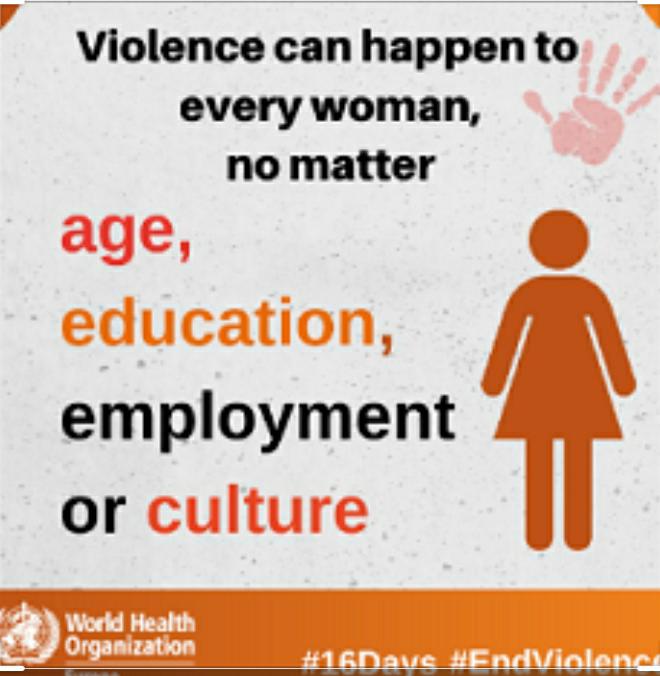
Low blows: the mask of GBV/IPV[1]

He is relentless in his attacks.  Day after day, month after month, year after year – his “blows” keep coming. 

He just does not stop

But where does she turn?  To whom does she report this?  Down-trodden, brow-beaten, belittled and disparaged all describe her wounds, so no one takes them seriously.  They can’t see them, because they manifest on the insides and affect her sleep, the way she eats, her liver and her heart.  And he knows this so he continues….

…..him unaccountable and her unaccounted for!

At least he doesn’t hit you, they say.

At least he provides for the home, they say.

At least he puts gas in the car, they say.

At least he carries your bags, they say.

At least he still “loves” you, they say.

Is she alone in the know?  Doesn’t anyone else realize the repercussions of his in-actions? 

So she questions herself, and she blames herself for ALLOWING the proverbial beatings to continue.  It should be easy for her to cut him off – to leave the space they created together.  It should be easy to ward off his attacks – to stop him from the words he spews that no one sees or hears.

“you know he doesn’t really mean it, because his bark is worse than his bite…just ignore him…” They all tell her.

The “It is because he doesn’t respect you…” statement takes the responsibility from him and places it solely unto her. 

So are you saying she is deserving?  Are you saying he is well within his rights…?

Let us take a few minutes out of our 24-hour day to understand that gender based violence/intimate partner violence (GBV/IPV) is not just about the obvious bruising of a physical beating or rape.  It happens in other ways that are not discussed nor accepted, because of the mask it wears.  It is an uncomfortable conversation that few are willing to have, so it is often left out of the loud discourse.  So here are some real-life perspective-putters to indicate a few ways in which the mask is worn to cover up the GBV/IPV:

  • It is the money that is withheld for the child-rearing

If the child is to continue attending school and keeping up appearances then mommy has to keep up appearances too, and keep down her voice.  She must keep up her silence and keep her suffering as part of relationship-rearing or else half the usual monthly amount is put on the table halfway into the next month, then nothing for several weeks past the next month end. He is upset about something, so he is done talking and acting now.  

  • It is the remarks about her to other women who rumour-mill and chastise:  Yes, he doesn’t hit you, but to keep your man you must please your man, that’s why he tells others about how boring, etc. (or worse) you are, so you could get your act together and start working on what he wants you to become (in his image and likeness, for him to call you niceness)
  • It is the withholding of sex:  Withholding sex doesn’t stop there; it is often a pre-cursor to withholding anything next, like withholding his “ok” for you to go out with friends because he doesn’t like that you are finding your voice and talking back.
  • It is the public love and private shame:  Whenever you meet his friends you can’t “bad talk” him because he is sweet when you’re out together in public and even if you do (yes you tell them the truth about his indoor stain) they won’t believe you. In the house you’re called names, shouted at, given the cold shoulder and scolded in advance before going out to be part of his fake show.  Whenever you start to love going out with him and hate coming home with him – you hate to have to come home to him – to the different person he becomes, then you must accept that you’ve been battered and bruised.  
  • It is the public shame and private love:  You may not fit his “ideal” in public. It could be because of your appearance or your lack of social graces (or pretenses). It could be any number of reasons. At home he wants you to satisfy him, so he “loves you” when you do the things he likes in bed.  
  • It is the belittling:  A woman (or man) who internalizes their frequent belittling could suffer debilitating forms of low self-esteem and often is unsure why she/he is always listless and tired.
  • It is the false-witnessing:  False-witnessing loves blame-taking.  When combined, they are often the most emotionally draining and damaging feature of these low blows.  The resulting effects is typically a complete break-down.  The climb back to better emotional adjustment is very demanding especially if pursued in that same false witnessing – blame-taking environment.
  • It is the unpaid bills:  He seeks total control of the household, so as children become teenagers and as they become more assertive or less of their usual pliable selves, he will have none of it. You seek to negotiate a little bit of understanding from him on their behalf, but in response he draws another weapon.  Two bill cycles and the arrears building up on light, water, internet, and cable, you cannot add those to your share of bills so you retreat, and you tell the children “you know all you father, so he is”, and you allow the “weaponizing” of bills to “cuff” you back to silence.
  • It is the gaslighting:  This takes many very damaging forms, but if you’re lowly educated then you would often hear “…that you can’t do? Well you get worse…” (even if you have been exceptional at other things – many other things). If you’re well educated then look out, the gaslighting stings – it really stings. “how you cannot understand this simple thing, how many times we went through this? As a matter of fact, if you didn’t misunderstand me – as usual, we would not have been in this situation…like is only book sense you have…it have a book about why educated people do stupid things, that book is about you?”
  • It is the lambasting:  You’re always criticized – it doesn’t matter about what – you’re criticized. Worse, it’s when the lambasting comes on top of the belittling, false witnessing and game-playing come gas-lighting.  If this is not challenged, it becomes a normal part of the relationship, and it will occur anywhere, anytime – public or private. It can be very embarrassing. Be careful. If lambasting increases, and in the opinion of the “lambaster” the “lambastee” getting worse, frustration can build up, and out of the unexpected comes a vicious slap or an intensifying of all of the low blows or hidden blows above.

WARNING! These things are not easy to recover from – man or woman.

All things considered, the next time you are tempted to participate in chastising into silence anyone who suffers the low blows that mask GBV/IPV, understand that the effects are sometimes more sinister and could take a lifetime of recovery efforts. The next time you scoff at her for speaking her truth about the silent pain she suffers through his unaccounted acts of violence, understand that the outcome is often more devastating than meets the eye.  Understand that this is not a “downtown thing”, but an everywhere thing.

Understand that GBV/IPV continues to survive in higher places because of the mask it wears!

So, tell your daughters and your sons….

Tell your sisters and brothers….

Tell your aunties and uncles….

Tell your mother and father…..

Tell your co-workers and your friends…

Tell anyone who listens or who are willing to hear….

…that instead of shunning the other manifestations (of GBV/IPV) that have similar devastations… to lift a sister (and brother) up in prayer of hope and healing.

Let us endeavour to help by using our words to heal the wounds that we are often not equipped to see!  After all, GBV/IPV is like a nuclear weapon – like a virus – though not seen, it silently disintegrates….

Thanks to Kaydia Allen, BSc, MSc, Mental Health Nurse (UK based) for her insight and expertise.

Thanks to Learrie Barry, MA Development Planning (Grenada based) for providing real life references to substantiate the “GBV mask” indicators, based on his extensive experience of working in the field and at the policy levels.


[1] Gender Based Violence/Intimate Partner Violence

Unsilencing the female voice

Have you ever been in a situation where you wanted someone to stand up for you, and they didn’t.? How disappointed were you that your expectations that this person whose experiences were similar to yours and who “looked” like you did not open their mouth or do anything to defend you? 

Many of us are able to identify with this – man and woman.

It seems that women have had the most unpleasant experiences with not getting the assistance from their female counterparts and have suffered the greatest disappointments because of this.  So much so, that women have been re-socialized to have zero expectations, for the most part; female to female assistance is no longer a requirement or an expectation among many women.

Was it ever though?

There are many references of this within the Jamaican landscape and certainly the world over with the prevalence of the continued lack of pro womanhood being played out in our society, and recently seen by the beating of a teenage girl by a group of women, which has unearthed so many issues that women and girls face in this world – by other women – and by society in general.  I am reminded of a simple, yet profound situation that was relayed to me ….

_________________________

Sandra enters the room with trepidation, grappling between utilizing her voice for the greater good or being silent in order quell the concerns of the irate few.  The day before, she was made aware of a “complaint” that was lodged against her. 

“Why do you always allow Sandra to speak?”  quipped Beatrice to the instructor.

“When given the chance, you have nothing to say, so what is your real problem with her?”  the instructor hastily replied.

The instructor was clearly annoyed for more reasons than one.  She was tired of the unfounded complaints.  Also, she was very tired of the way she observed a few of the young ladies chastising Sandra for utilising her voice, when it was evident that the entire group benefitted from what she had to say. Further, many of them refused to speak up, even when given the opportunity to do so. 

Beatrice really didn’t know how to answer the question, because she knew that the instructor was correct.  There really was no legitimate reason for wanting Sandra, the person of her exact likeness, to be silent other than what she had been taught – inadvertently.   The lack of support, for no real reason, made no sense.  Still, it was what she knew.

Agatha, who was in ear shot of the conversation, agreed with the instructor (quietly to herself) that the Beatrice’ and the other girls’ complaints were invalid. Even though she could identify with being silenced, she has never spoken up for Sandra.  After all, it wasn’t her fight.

In the end, Sandra decided to ignore the “silencing” and continued to utilize her voice – for herself and for the greater good – as she should (something that the instructor encouraged).

__________________________________

This is a familiar story[1] not unique to Sandra’s experience. 

(Some) women do not like to hear the “voice” of other women.   

When asked what gave her the courage to continue to speak, etc., Sandra (in her late teens) expressed the following:

  • Her intention was not to expose anyone else’ limitations.
  • She spoke when she asked….
  • Only very few chose to speak in the sessions, despite being asked/begged.
  • She always pre-read and therefore had contributions to make.
  • She was taught very early to utilize her voice, especially to edify.
  • She refused to cater to the insecurities and unfounded chastisement of others.

Having listened to her, I explained that attempts to silence the woman is an age old one that would, more likely than not, follow her into adulthood, because it existed before her and would, more likely than not, be around after her.  It happens at the workplace, in the homes, in marriages, in the church, in politics, etc.

The fact is that women have had to overcome many historic barriers in order to enjoy the right to speak up in many forums.  Unfortunately, there are others who are working twice as hard as we have fought to secure our space to ensure that we don’t forget our “place” and stand in the silencing.

The plight for us is that there are also some women who continue to do what has been done to us; we attempt to silence each other (sometimes in sinister ways), and we are taught this from very early in our childhood, whether directly or indirectly.  Despite this, women are encouraged to utilize our voice, because it is in this use that major societal transformations are made.  Even so, there are times when our lack of speech is necessary and will send a strong message.  In this case, the power attached to the silence is ours – we would have exercised agency – which at one point we didn’t have.

The questions that beg to be asked within the parenting scope are:

  1. How do we raise our daughters to be aware of the power of her voice and not be afraid to utilize it?
  2. How do we raise our sons to reject the “silencing of the woman’s voice”?
  3. How do we change the mind-set of those who have been taught to silence the woman’s voice thereby perpetuating and projecting this mind-set unto our children and society at large?
  4. How do we normalize women supporting each other instead of taking part in the silencing?

Evidently, within each question lies the answer. 

The silencing happens so early in the socialization of our children that if we become more aware of its effects, we can strive to raise children to become more supporting human beings, thereby normalizing the UNSILENCING OF THE FEMALE’S VOICE.  This is not an impossible feat. 

Honestly (and maybe uncomfortably), every person (man or woman) falls into the category of one of the four characters (or is a combination) presented earlier; so….. 

Are you Beatrice?       Are you Sandra?      Are you the instructor?     Are you Agatha?

Regardless, it is never too late to change one’s disposition/position…. for the better.

After all, “When you know, you grow”.


[1] A true experience with some embellishments/name change, etc.

Pivot: A Re-imagined dance

Beyoncé’s “Already” is blasting through the speakers, while the TikTok compilation of the accompanying dance routine is being shown on the screen.  As a lover of the Afrobeat, I am already mirroring perfectly the routine – except only in my head!

I am Jamaican; dance is in my blood…. right?

There is no one else more convinced than me that the routine is mine to conquer, so I rise from the sofa with the level of confidence to be matched by Beyoncé herself only to quickly discover, not so much!  Of the 10 different movements that make up the choreographed 30-seconds routine, I was only able to do 3 – and that’s pushing it a bit.  Even with the 3 I was able to grasp (because of their ole time referencing), for the life of me, I was unable to smoothly transition from one move to the next.  Evidently, choreographed dance is not my thing. The problem is that my brain and my ability to actually execute do not reconcile.  So, instead of cancelling my desire to dance, I re-imagined the routine, and I put my own 80s and 90s twist to it by adding a butterfly or two, a della move,  a few pon di river, and a tatty, thereby making it more flavorful and more to my liking (that’s my story and I’m sticking to it).

All’s well in my dance world!

What was gained you may ask?  Aside from providing comic relief to the offspring, I was delighted with myself for having gotten up and trying.  Further, having realized my resources were limited (hand, foot and eye coordination), I pivoted, and incorporated something new – something more aligned with my capabilities.   

Morale of the story (cause every weh u tun, lesson deh deh fi learn):  

  • Everything that we want to achieve exists in our mind before it can exist in actuality, but we can’t know what it requires to execute and achieve our desires if we remain seated on the couch day-dreaming about the what-ifs. 
  • Once we get up and try, we may find that we have to taper our dreams just a bit to fit our specific expertise and where we are at in our lives at the time.
  • Also, while the idea for something may come from one source, we are encouraged to adjust to suit a different niche, based on our own unique offerings.
  • So, get up and dance… the way YOU know how, and everything else WILL fall into place. 
  • Ignore the idle chatter that may criticize your efforts/routine, and focus on those who support the movements.

How many desires of the heart have we had to cancel, because we wanted to utilize those resources not available to us?  The pandemic has forced many of us to re-imagine the steps that we take – to recreate a new normal without the comfort of the many things that were once available to us.  Just like my dance routine, we have to pivot, regroup, and re-imagine new steps in order to fulfill those desires of our hearts.

Ok… lemme go back to my re-imagined routine…. In the meantime, you may check out the original, and dance today!

Keeping your word….TO YOURSELF!

“Mommy, I am going to take a bath and go to bed now….”

“Ok….”

Although it is only 7:35 p.m., I know that for her to say this (at this time) means that she recognizes that she is dead beat and needs rest, since she is usually up working until too late. 

It is now more than one hour later, and I hear the silence of her working hard.  Yes… I said it… the silence of her hard work is different than that of her deep slumber.  Needless to say, she did not take a shower nor is she asleep.  She is working, I am sure of it!

It is just as I thought.  She is in her room fine-tuning her School Based Assessment (SBA), because for as long as it is not submitted is as many things that she will find that needs to be fixed, revamped, adjusted, etc.  This offspring of mine will NOT stop until she is finished.

______________________

While I admire her work ethic, and I say this to her all the time, I find myself asking the question, why is it so difficult for us to keep our word/promise to ourselves, but find it easier to keep our word to others.  We keep our word sometimes even to a perfect stranger – sometimes to our own detriment and inconvenience. 

Human beings are interesting.

Many of us have included on our list of deal-breakers in friendships, romantic interactions and even those with family members as “people who do not keep their word”.  In other words, we will declare publicly that we do not like someone who does not keep their word.  Let me hasten to say that I am not suggesting that keeping our word to others is not important.  Hear me out, please.

I argue that as important as it is to keep our word to others, it is MORE important, in my estimation, to keep our word TO OURSELVES.  I am not talking about keeping our word about buying ourselves that one gallon of ice-cream and eating it in a day (touché) or drinking that big bottle of wine with that huge chocolate in one go or promising to finish an entire season of our favourite TV series or treating ourselves to a meal that is calorie-riddled, when we get paid.  After all, these are all promises that we have no problems keeping for very obvious and temporary gratification reasons….

….still, no judgements here.

I speak, categorically, about keeping our word in relation to all other things that are good for us – mind, body and soul; for example, rest and recreation, worshipping more, being positive, cutting toxic energy, being kinder to ourselves (and others), getting regular check-ups, setting high standards for ourselves and KEEPING those standards, the promise to exercise, being deliberate about our mental health, and the list can go on for days.

Why are we afraid of doing those things that we have promised ourselves that we would do to help us to be the better version of ourselves?

It is time for us to take this deliberate mandatea step further.  We must be honourable to ourselves before we can even think about being honourable to someone else.  I find it sad that we would operate above and beyond for others and not give ourselves the same commitment and love. 

___________________

It is now three hours later, and the offspring is finally showered and off to bed.  However, my duty as her mother is to gently remind her about being deliberate about rest and keeping her word to herself.  The fact that she told me earlier that she was going to shower and rest is her “need-for-rest indicator”, so I will remind her about that.  This way, I am helping her to keep her wordto herself.

In the meantime, who is going to remind me to keep my word to me to get up and exercise tomorrow….?  LOL.  No one should have to do that…. 

….I need to keep my word to myself!

On a serious note, we all need to be held accountable when we do not honour ourselves.   If we are not at the point where we can keep ourselves accountable, we are encouraged to find someone out of our core group, who will be willing to help us do that, and do it!

Let us endeavour to love ourselves a little bit more each day by keeping our word to ourselves.

Blessings!

40-legs: my 40+ years fear!

SAS CRISE!

I want to write this entire blog post in the Jamaican Creole, but I can’t, because my readers consist of non-Jamaicans and Jamaicans alike.

But OH MY GOD!!!! I Just had another encounter with another 40-leg (centipede), and it was HUGE!  Anyone who knows me knows that I am deathly afraid of these things.  I HATE CREEPY CRAWLERS WITH A PASSION. 

“Mommyyyyyyyyyyyyyyyyyyyyyyyyyyyyyyyyyyyy!!!!! There is a centipede in the bathroom, and it is HUUUUGGGGGGEEEEE.”

I lifted my head from the laptop, and I took a very deep breath and thought to myself, “I am tired of being held hostage by this darn fear”. 

It is bad enough that the pandemic has had me pondering about what’s to come, so I will be damned if I continue to let this 40-leg for 40 plus-years fear continue to cripple me.  Hell to the NO!  Centipede plus pandemic – one has to go NOW!

So I grabbed my machete from its hiding place and set out to commit a felony on this creature. I wonder now, though, does this constitute animal cruelty?  Should I have bottled it alive and call NEPA?  LOL…. I digress…

Before today, I would have been bawling literal tears and talking loudly to myself while doing what was necessary to get rid of it.  Either that or I would have found the help of a male (first option) and then I would not have been able to fall asleep that night thinking one is gonna crawl on me….  NOT TODAY.  NO MORE.  I am going to massacre this thing….

….Mi naah ask Christ!!

As I went into the bathroom in search (because those things hide well), I sprayed in the general location that the offprsing pointed to. I saw the 6-foot bugger (obviously not 6 foot, but it was HUUUUGGEEE) wriggling its way to my bedroom.  With machete in hand and fear discarded, I chopped it dead!  Not only did I do that, but I also scooped it up and disposed of it, not a tear rolling down my cheeks as it usually would have.  Under normal circumstances, I would NOT have been able to interact with this thing without heart palpitations the way I did tonight – dead or alive.  But I was adamant….

CHANGE HAS COME!  Bless God!

What is the point of this, you may ask?  Lemme tell you…becaaw every weh yuh tun, lesson deh deh fi learn (everywhere you turn, there is a lesson to be learnt).  So here goes:

  • The way that my daughter called out to me was an indicator that I had transferred my fear of this thing unto to her.  Hmmm….. I didn’t even realize this until tonight. 
  • As parents we tend to inadvertently transfer our fears, etc. unto our children; we must be very mindful of this.
  • I conquered a fear that I held on to for as long as I have been alive! 
  • Not only did I manage to conquer a fear, but she witnessed my transformation.

Great, right?! 

But what was the purpose of holding on to this fear for as long as I did?  It didn’t serve me well at all.   Why did it take me simply making up my mind to let go of the fear for me to actually let it go – literally?  Why didn’t I do this sooner?

In response to these questions, I highlight the following:

  • We have to stop letting our fears cripple us. 
  • We have to be deliberate about stepping outside of our fears in order to create the lives that we want for ourselves. 
  • It is NEVER too late to step outside of our fears, despite the decades that have passed. 
  • We should NEVER be hard on ourselves, because of how long it may have taken us to let go of any fear….
  • It is important for our children to witness our growth as we navigate our human selves, because NEWSFLASH….  Parents/guardians/adults are humans too!
  • The young people (our children – offspring, nieces, nephews, students, etc.- those in our charge) are watching us, and they are learning from us. Let us, therefore, be deliberate about conquering those irrational fears, so that they can witness us become better versions of our adult selves.

To be completely honest, I am not 100 percent over the fear (I am about 89 percent there), and my daughter knows this, but she also knows that I am no longer crippled by it.…

A weh 40-leg a guh?!!!

It is prudent to point out that I am not saying we should never have fears; not all fears are irrational (but that’s for another blog post).  I am saying that we should find a way to let go of those that we can – those that prevent us from operating at our optimal.  Sometimes all it takes is self-talk, and sometimes it will take therapist talk and sometimes friend/spouse, etc. talk… whatever works.  Let us be deliberate about letting those fears go….

but seriously though … can those things leave me alone now? mi really hope seh di duppy 40-leg tell di rest a dem seh I am not to be messed with!

CO-PARENTING DURING THE PANDEMIC

“In the midst of the pandemic, people will show you one of two things:  the magnitude of their LOVE, or the extent of their hate.” – Stacey A Palmer 2020

PREAMBLE: The interesting thing about chronicling the pandemic parenting experience is that not every parent – mother or father (guardian, etc.) will identify with each post, because our unique situations place us into different parenting categories.  It is the hope, however, that at the very least, there is something to be garnered from each post, no matter one’s categorization.  So, let us talk a little about co-parenting….

Since the pandemic struck, there has been a multiplicity of research about the impact of COVID-19 on different groups.  One thing that is evident is that women have been the most affected group, specifically mothers.  As the cases continue to rise, I find myself thinking more and more about those children who are a part of a co-parenting situation and how this may impact them, one way or another.

When this pandemic began, it was reported that children were not susceptible to the virus.  Recently, the reports show something completely different, as more and more children are being infected, some of whom have even died.  The CDC has reported that “while fewer children have been sick with COVID-19 compared to adults, children can be infected with the virus that causes COVID-19, can get sick from COVID-19, and can spread the virus that causes COVID-19 to others”[1].

With this report comes the many concerns that parents have about keeping their children safe.  Parents must work, so children are either left in the care of another person or are required to stay with a caregiver or must interact with someone else that is not a member of their immediate household or are simply left by themselves (age permitting).  This concern is further compounded by those who are required to co-parent.  With co-parenting comes visitations by the parent with whom the child does not reside, fully.

Aside from the daily co-parenting challenges that existed prior to the pandemic, there are added stressors associated with parents keeping themselves and the children covid-free.  As such, parents are left asking pertinent questions such as:

  1. How do we navigate the risk of infection to fulfil our parenting responsibilities?
  2. How can we be assured that the other parent is operating at the same Covid-19 awareness levels and doing everything to keep themselves safe?
  3. What can each parent do to ensure that the child spends quality time with the other parent and protect both parent and child(ren).

I have spoken to several mothers who are having a challenge with how to ensure their child remains covid-free especially in light of the co-parenting situations.  Because of this, visitations are minimal or sometimes non-existent.  What makes this even more problematic is that the challenges extend to other fundamental concerns, such as maintaining the parent-child bond.

As adults responsible for the parenting of our children, it is important to establish co-parenting strategies that will help to ensure that the children are beneficiaries of our parenting presence and that their new normal is a lot less confusing. Still, the parent who resides elsewhere may decide to stay away to protect the child or to protect themselves from contracting the virus or for any other reason they deem significant to them.  While one can argue the validity in each parent’s choice, it is prudent to ensure that the decisions of the adults, within this pandemic context, work to the betterment and not to the detriment of our children.  They are paying attention.

So while I will not propose to have the all-encompassing solutions to suit every co-parenting scenario, there are suggestions that I believe would be helpful if safety is the number one concern:

  1. New visiting schedules must be established and maintained. Agree on a time/date when the visit(s) will take place each week/month, etc.  and stick to the agreed time/date etc. Children respond positively to routines.
  • Come prepared in your masks and face shield, etc. and maintain the appropriate physical distance by setting up a physical- distant seating for parent and child(ren).
  • As the adult, plan the time you have with the child.  Plan a game.  Talk about something light.  Find out what you can help with re homework. etc.
  • If/when you can, take the child’s favorite snack/fruit/book, etc.
  • If visits are few, establish a call/facetime, etc. pattern/schedule and stick to it.  Checking in is better than checking out. 
  • Without realizing, the deliberate strategies of adults will help our children to reimagine the time spent with the other parent.  Before you know it, a new co-parenting norm is accepted because it is thoughtfully established. 
  • My observation is that once we are interacting with those people we love – who do not reside with us – we tend to relax our covid-prevention stance.  As co-parents, it is important to be careful not to do that with our children; unless tested, we cannot be sure of our status, etc.

It doesn’t matter your parenting background, every adult I have encountered/heard of, etc. is finding this a challenging time.  What I do know, too, is that the children are finding it quite the task to process all the changes that this situation has created.  It is, therefore, the responsibility of the co-parents to put on their adult undies and “solutionize” the heck out of this, because this will be with us for a while; no one knows for how long.

Evidently, this post does not provide an exhaustive list on how to operate in every single parenting situation, because the age of the child will determine how the co-parents operate.  The idea is to encourage parents to be strategic and deliberate in our efforts to ensure that our presence is felt in our children’s lives and that the entire pandemic parenting responsibility does not lie solely on one parent  – the effects of which are many, and for another post.

REMEMBER:  For our children’s sake, it is better to check in than to check out!


[1] https://www.cdc.gov/coronavirus/2019-ncov/daily-life-coping/children/symptoms.html#:~:text=While%20fewer%20children%20have%20been,causes%20COVID%2D19%20to%20others.

Parenting through a Pandemic: A LESSON IN VENTURING OUT!

The pandemic and the ensuing infodemic have forced many of us to retreat, indefinitely.  However, we all know that as parents, we have had to reimagine everything about how we typically operate, if not for ourselves then for our children’s sake.  With this in mind and operating on the deliberate mandate I proposed in my last post, I was deliberate in my decision to leave the house. 

I decided to take the offspring to get a few small needed items that I knew would have put a smile on her face and lift her out of the mundane of online schooling and being at home AALLLL the time.  While the textbook introvert that I am would have been completely fine keeping the house colour and avoiding those who refuse to wear a mask, I was deliberate.  I was deliberate, because I knew that she needed to be outside and away from that space.  

So we set out, all masked (she was literally double masked) and wearing our face shields.  All’s well with us.  Before we left home, I was in the process of telling her that she didn’t need to wear two masks and the shield, but I quickly stopped myself, because I recognized that she, too, like many of us existing on this earth for way longer, experiences pandemic anxieties.  It is with this thought that I let it be and indicated that I was okay with whatever made her feel comfortable about venturing out.  And we are on our way, double-masked and shielded with a prayer and spray bottle of alcohol in hand.

I knew before leaving that our outing would have been a short one – just a few hours, because she had an online engagement later in the day.  Again, mattered not… we were out.  As we got that which was needed, we engaged in light chatter on the ride to our second to last stop.  She was in a better frame of mind; it was evident.  This made me glad.

Little did I know that this little trip of ours would have resulted in a lovely and profound lesson/reminder for us both.  During the ride she said, “Mommy, I have a question?”  

“ What’s up?”

“Should I feel bad, because I do not feel regretful about a decision that I have made.  A few of my friends think that I should…….” (redacted)

I paused and thought about her question for a short while, and then I said…

“absolutely not”.

I told her that many people do not learn the art of walking away from things (person, job, addiction, philosophy, etc) that do not serve them well until very late in life.  Some because they are just too afraid, some because they do not have the discipline, others because they are in an abusive (physical/mental, etc) situations and others for a myriad of reasons.  I told her that at 16, I applaud her for taking the stance to walk away from something that doesn’t suit her soul and that she should never feel badly for doing that – ever! 

She further explained that she felt great about her decision and wondered if this was okay, because she just didn’t feel badly….. 

I reminded her about how, when she was much younger, I would often drill in her the importance of setting standards on how people should treat her – her parents included.  She remembered how I would not let up on that.  I also used the opportunity to tell her that in those moments that she doesn’t follow through with “walking”, she should forgive herself, regroup and do what she needed to do when….

I again expressed my delight in her growth and the fact that she is learning these lessons at the age/stage that she is. We discussed very briefly one of my own situations in order to make the lesson more relatable and further reinforced the importance of knowing when and listening to that when and acting on that when

After all, when tells us when to….; we just don’t always listen to when.

So kudos to the offspring for learning this “when-to-walk-away” lesson soon!

Truthfully, I am yet to meet an adult – a parent (male or female) – myself included, who has not had a struggle with “when to….”, at some point.  Therefore, it is important having had those struggles ourselves to use our own struggles as learning tools for our children.  They are paying attention, even when we think they are not. 

Further, as much as the pandemic is forcing us into a new normal, we must insist on venturing out – changing the scenery, if only for a short while.  Go for a walk, take a ride – venture out.  It is from these little acts of getting up and going out that we often learn something more about our children and learn a little more about ourselves in this very challenging time.

Venturing out can help with reinforcing a lesson.

Parenting through the pandemic: a DELIBERATE effort at protecting our mental health.

There is no talking about the effects of the pandemic without talking about the mental health pandemonium that has ensued.  Parents everywhere are struggling mentally, and so are our children.  I am yet to come across a parent who has not had their own levels of stress or a breakdown of some kind.  For some, however, the stress is more nail-biting than it is for others. 

It is easier to give someone a bag of grocery or to make a small deposit to their account in order to alleviate some of their physical or financial needs during this very challenging time.  However, the matter of asking a person how they are REALLY doing, aside from their physical needs, is often overlooked.   More importantly, the matter of knowing exactly what to say or do or in which direction to point a person whose mental health is compromised, is a very daunting experience that many of us have not necessarily stored in our “how to” repertoire.

As the months have progressed and the challenges continue to intensify (for parents and children), we are now seeing that “mental health” has become the new buzz phrase.  In this case, it is not a fad.  The mental health concern is just as real and cripplingly damaging as its predecessor, Covid-19.  There is a reason for this.  We are simply not coping – parents and children alike!

The question that begs to be asked is, “how do we navigate our own mental health struggles to ensure that our children’s mental health is secure?”  

While I, like many mothers (parent) across the world, have felt the impact on my mental wellness, I have had to come up with very deliberate ways in which to cope.   I have also had to witness my own 16-year-old adjust her mindset as she struggles to understand and reimagine her life in the midst of this confusing newness.  She, too, based on interventions, has become very deliberate, and this makes me glad.

What the pandemic has thrust upon me is the fact that being deliberate is key to my own survival and, therefore, should not be taken lightly.  Aside from being deliberate about how we carry our bodies to protect ourselves from contracting this virus, we must also be very deliberate in how we approach our mental health.  The minute we awaken from our slumber, we must talk ourselves into being deliberate about protecting ourselves and our children – mind, body and soul.  Yes, clichés are sometimes necessary!  We have to be deliberate about paying attention to our children’s needs – not just what they eat, but what they process, mentally.  We have to be deliberate about listening to their silence as well as their actual words.  We have to be deliberate about the words that we choose when responding to their “feedback” or response to this new normal.  We have to be deliberate about pushing ourselves beyond that which we have been taught about mental health and strive for something positively different.  We have to be deliberate about learning coping strategies that will help us to help our children.  We have to be deliberate about utilizing those members in our village who are so inclined and who are able to offer the mental breaks necessary.  We have to be deliberate about stepping outside of our mental health belief system and utilize the services of a mental health professional who can help our children and help us too.  Essentially, every single day must be a deliberate effort. 

While I have had talks with my daughter about protecting her mental space, I find that as of late our talks about how to do this have increased.  At 16, she understands and have taken heed and has also been utilizing the services of a mental health professional who has given her additional tools. 

From my perspective, I see the lack of conversation with our children about protecting their mental health as a parenting gap.  Notwithstanding, I do believe that now is as good a time as any to incorporate this in the tools we provide our children in preparation for adulthood.  While the need is more immediate than adulthood for them, we now have the perfect opportunity to reimagine our parenting focus and be deliberate in our efforts in teaching our children how to protect their mental health as we strive to help them to survive – mind, body and soul!

I do understand that the level of mental health awareness is not the same for all, but that is just an excuse that I refuse to accept.  We have to be deliberate about helping others to help themselves and their children too.  I am very pleased that agencies such as United Nations, Centre for Disease Control and World Health Organization are doing a great job at pushing mental health forward as part of their covid-19 recovery mandate/efforts.  The global mental health reports, especially in our children, have become sinister.  Therefore, we need to handle this mental health treatment as a daily deliberate effort toward a greater good, and pay attention to the tips that these agencies are making available.

 The following are a few pointers that I have given to my daughter, and I will also throw in a few that her therapist has given to her:

  • Pay attention to your body, and take a break when you need to.
  • Create a source of release and utilize this source when required.
  • Listen to music or read a book (or do something that works for you)
  • Know when to say no, and say it!
  • Pray
  • Go for a walk or a drive out.
  • Allow your negative emotions to pass through you; do not let it sit with you for longer than it needs to.
  • Do not dwell on your future.
  • Exist in gratitude
  • Do not immerse yourself in daily pandemic news.
  • When you are not feeling at your best, do not be hard on yourself. 
  • Create time to REST.  Sleeping is different than resting. 

As we strive to navigate this new normal and recover, I invite you to share your own pointers that have served you well.

Blessings!

Parenting through a pandemic: my return!

What better time than now to reestablish my parenting blog while in the midst of a pandemic – something that I had never thought about happening – not in my lifetime.  Plus, what a time it is for us all – let alone mothers who must parent through a pandemic – not to mention those of us who are doing it as single parents – mom or dad.  By single parents I mean those of us who are solely responsible for the day to day care of our children, despite the other parent making (or not) contributions (financial or otherwise) to some of needs of the children.

But wait, did I just say PANDEMIC?!!

I am truly still operating in some disbelief that this happening.  While I have seen documentaries and have read about the Spanish flu, a pandemic was never something that I thought about happening, so I still cannot believe that this is real – that is our new normal, but it is.  For us parents, it is even more frightening to think of the many impacts as seen on TV and in the news as well as for those parents who are impacted first hand, while navigating that and trying to protect those in our care.  Who would have thought?  Who could have thought?!  To think it or not, the pandemic is here and will be for a while.  For how much longer?  No one truly knows.  But it is here!!

When the pandemic hit in March 2020, we were all scrambling for items such as toilet paper, water, food and other non-perishables.   In addition, we were also struggling keeping ourselves safe and locked away while trying understand what was happening.  It was frightening for us adults and for our children too. Now that we are fast approaching a year since it first hit and have seen its many effects, our concerns have evolved from stock-piling toilet paper to include other major concerns such as, education, health care, child care, mental health care, nutrition, finances, housing, job security, recreation (to name a few).  Even though these concerns would have existed before, they are now compounded by our current dilemma, making these things even more difficult to attain for many. 

What are we to do, as parents – as single parents.  How do we help ourselves so that we can help our children to cope?  How do we make use of the village that we may have established, when our village is clueless too? Parents are afraid and confused, and so are our children.  What do we do?  How do we cope?  Where do we turn? 

So, my intention, from here on, is to discuss everything pandemic, from a parenting perspective – a single parenting perspective – as well as from a teenager’s perspective (my daughter) and try to provide possible solutions/recommendations/tips, etc. on how to navigate the elements involved while parenting through a pandemic!!